







Etiquette in Japan, what to do and not to do in the land of the Rising Sun
I am deeply influenced by my love for Japan, but I am convinced that in all the countries of the world there should be rules of conduct followed by the entire population as inherent in their mind.

photo credits: yabai.com
The Rising Sun manages to maintain impeccable behavior within its borders. In fact, the etiquette to which it abides is the same that every tourist must (or at least should) respect. For this reason it is essential to know what is possible or should be done and not done in Japan.
Here is our guide for you:
Recycle and don't be messy!
When you walk down the street in Japan you will not find garbage bins and despite this, there will be no shadow of garbage around town. Recycling for the Japanese is very important. Separate collection is an obligation and there are special bins to which people go and throw garbage.

photo credits: green.it
Don't gamble!
Gambling in Japan is illegal! There is only one way for fans who cannot resist betting: Pachinko.
Pachinko is practiced in special rooms where players must buy steel balls to play. They must be inserted in a sort of flipper, or in the "pachislot" which works similarly to the slot machines. If you win, you get more balls. By law the spheres cannot be exchanged for cash within the rooms in which they are distributed. They are simply changed with chips or with symbolic prizes that can then be converted into cash outside the venue itself at specific desks.

photo credits: agbnippon.com
Take off your shoes, put on your shoes
Not only at home, but also in many restaurants and historic buildings may be required to remove shoes. So make sure you wear clean, hole-free socks! If it is midsummer and you have no socks, it is always good to have a pair with you because it is not polite to enter the house barefooted. The landlord usually supplies his guests with slippers, but these too must be removed before walking on the tatami!

photo credits: villapola.com
Visit temples and shrines
Calm and respect are a must. Keep to the traditions: on the outside of the temple, throw a coin in the offer box and say a short prayer. If there is the possibility of burning an incense (osenko) do it turning off the stick by waving your hand and not blowing on it. If you go inside the temple, take off your shoes and leave them on the shelves or take them with you in the little bags available and I recommend you remove the hats! Do not be distracted by letting yourself be taken by the tourist's enthusiasm, pay attention to what is allowed, photography is not always permitted.
When you go to a sanctuary instead, it is important to go to the purification fountain at the entrance, take one of the provided ladles, fill it with water and rinse your hands. Next, pour a little water into your hand and rinse your mouth by spitting out the water next to the fountain.
While entering, leave a coin in the offer box by bowing deeply twice, clap your hands as many times, bow again and pray by ringing the bell or gong (this will attract the god's attention).

photo credits: japan-guide.com
Dine outside the home
After the waiters have greeted you and made you sit down, you will be offered water or tea for free and the oshibori (wet towel) to clean your hands before eating. After that you can choose the dishes you want from the menu, often illustrated to help tourists who are not familiar with the Japanese language.
It is not customary to pay at the table. The meal bill is presented facing down and you will pay by going to the cashier when you are about to leave the restaurant. As you come out it is courtesy to say 「御馳走様(でした)!」which reads: "Gochisou sama (deshita)" and means “thank you for the delicious meal".

photo credits: jellyfishhr.com
Table manners!
As usual and one of the first rules of bon ton, after ordering, it is polite to wait until all the guests have received their course. Then, we start the meal by saying いただきます (itadakimasu) that is "I take with great respect", which well away from our "enjoy your meal". If you find yourself in a situation where everyone has not been served at the table yet, but the dish we have is consumed immediately, then we will hear dire さきにどうぞ (osaki ni dōzo, please go ahead) or we can say おさきにすみまん (osaki ni sumimasen, forgive me if I go ahead).
Never feed food on the plate, in Japan it is considered rude and wasteful.
Another very important thing is the way of using chopsticks. You should never place the chopsticks in your rice bowl vertically, it is a mode that is used exclusively at funerals! It is good to always place the chopsticks on their special support when you have to put them down and I recommend you do not pass the food from your chopsticks to the chopsticks of another diner, this is also a custom of the funerals in which the bones of the cremated body are passed on in this way.
In case you need to take food from a common plate, use the opposite ends of your chopsticks. In the picture below, you can see everything not to do with chopsticks.

photo credits: yourmagictour.wordpress.com
Toilets
In Japan you can also find Western-style services, especially in the most recent and modern public bathrooms. They mostly have a heated seat, hand shower (equivalent to our bidet) and dryer. Each toilet usually has two discharge modes: "small" (小) and "large" (大), which differ in the amount of water used. However, toilet paper or towels are not always provided in the bathrooms, so it is always a good idea to bring kleenex and a small towel (the famous "tenugui", small towels that you always see with the Japanese and that have various uses, such as drying sweat in summer!).
In private bathrooms there are always toilet slippers to be used exclusively in the bathroom. You will then have to leave your normal slippers outside the bathroom door and wear those available.

photo credits: leganerd.com
Respect on public transport
On the train, metro, bus or any other public transport, it is not polite to speak loudly and it is good to keep the phones in silent mode so as not to disturb anyone.

photo credits: getaroundjapan.jp
Blowing your nose? Oh no !!
Blowing one's nose in public is one of the greatest lack of respect and a gesture of true rudeness because it means spreading germs! For this reason, in case of a cold (and not just that), the Japanese always wear a mask.
A curiosity: the masks do not serve only to avoid epidemics and for one's own health, but also to hide imperfections! It's a good trick, don’t you think so?

photo credits: gogonihon.com
No smoking
It is strictly forbidden to smoke in the street, walking and anywhere there are no smoking areas. In this way, those who do not smoke or do not tolerate smoking will not be bothered. There is a special police that constantly checks that the law is respected and fines otherwise. Strangely, however, in closed places smoking is allowed and there are not always separate smoking and non-smoking areas, unfortunately!

photo credits: tobaccoreporter.com
To bow
There are various types of bow and each with its own meaning. If we are to greet in informal situations we bow slightly, while in the formal ones it’s required a deeper bow, especially if the person in front of us is of a higher rank. If, on the other hand, we want to thank someone, it is sufficient to slightly bow the head, but also to apologize and in this case the inclination arc varies from mild (only the head), normal (part of the trunk, up to an angle of 45°) and serious. In this case the bow is deep, kneeling with the forehead touching the floor. A beautiful illustrated guide on the perfect way to bow is made available by Tongufu.com:

photo credits: tofugu.com
What about these rules of behavior? I find that they are very fascinating, apart from the smoke that, since I don’t tolerate it, I would forbid it anywhere!
During your travels in the land of the Rising Sun, have you noticed something curious about ways of doing things and not common in the West? Tell us about your experience!


Kitsunebi Matsuri, when folklore comes to life
In ancient Japanese folklore, the Kitsunebi (狐火, foxfire) was a yōkai that, overnight, suddenly appeared as a glowing red-orange and sometimes blue light. The Kitsunebi gradually increased to cover vast areas, reaching even 4km! It was believed that they were torches of a procession of foxes marching for their wedding. The lights were sighted by farmers in the mountains and were considered a good harbinger for the harvest. In fact, the greater the number of lights seen, the more fruitful was the harvest. However, no human was allowed to approach: those who tried were condemned to vanish.
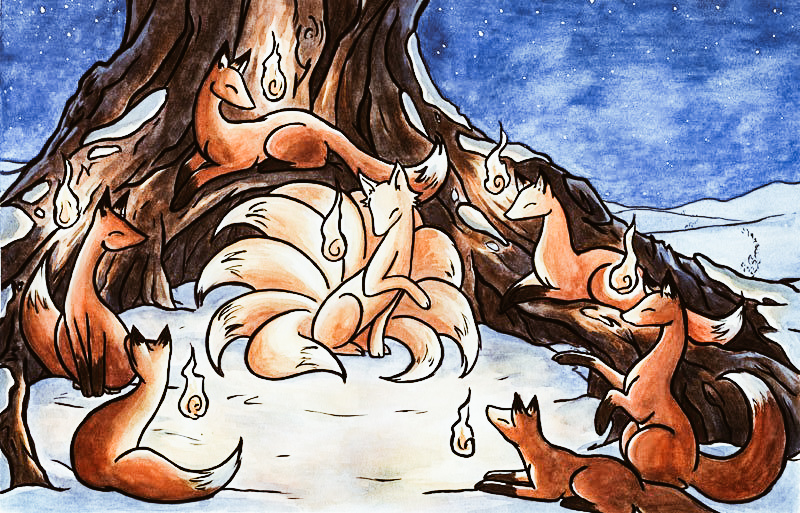
photo credits: tradurreilgiappone.com
In particular, the stories tell of the marriage between Otonosama, the king who lived in Furukawa, and Okon, the daughter of the fox God. This fascinating image is the origin of the Hida Furukawa Kitsunebi Matsuri (騨古川きつね火まつり). This festival is celebrated every year, on the fourth Saturday of September in Hida Furukawa, a picturesque and rural town full of beautiful landscapes, where even today you can breathe a life far from the frenzy of the metropolis.
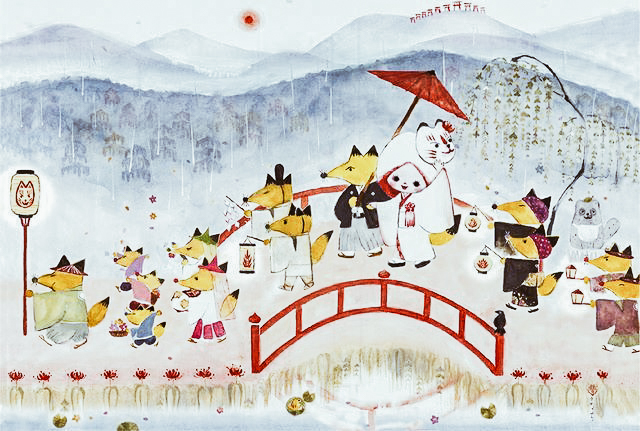
photo credits: tradurreilgiappone.com
Happiness and prosperity!
Like almost all the festivals we are used to now, the Kitsunebi Matsuri also aims to bless the harvest, happiness and prosperity for families.
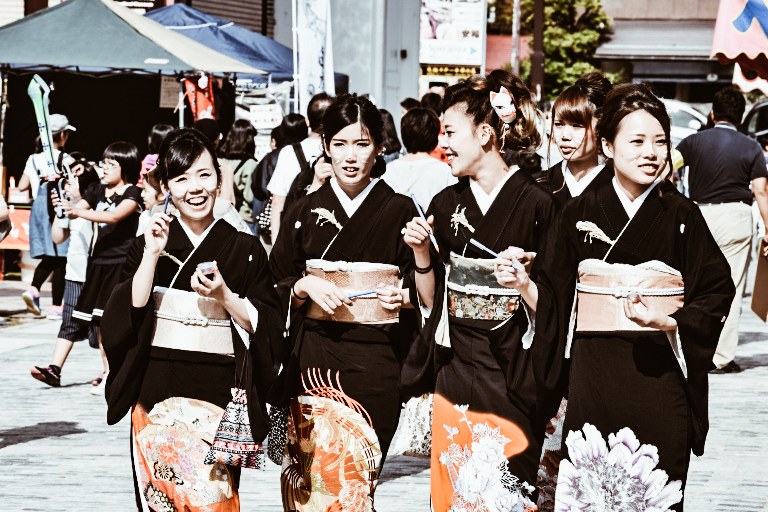
photo credits: myjapantravels.wordpress.com
But what exactly does the Kitsunebi Matsuri consist of??
First of all, all the participants have fox mustaches drawn on their faces, be they children or elderly, shopkeepers on the road or tourists. It begins with the blessing of local businesses: the dancers carry a dongamaki, a 5 meter long snake, door to door.
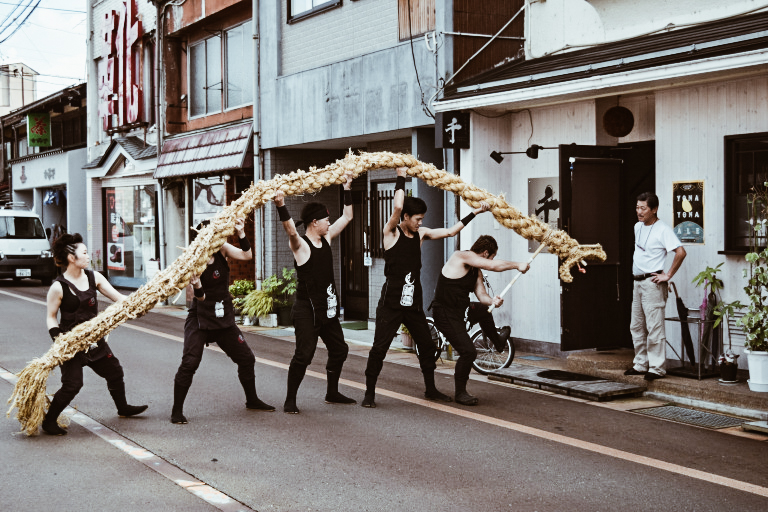
photo credits: myjapantravels.wordpress.com
After that the main event begins. We could say that it is a marriage, but not a common one, but a solemn procession in which the foxes' wedding is celebrated, the Kitsune no Yomeiri.

photo credits: myjapantravels.wordpress.com
The future spouses, a couple bound in real life, are chosen by a pool of candidates at the national level in the town where the wedding ceremony will be held. The long march will lead the bride to the groom as night falls when the Kistunebi begins (a torchlight procession). Those who attend the whole procession will be blessed and can make a wish like a good harvest, or happiness for their family or prosperity in business.

photo credits: tokyopic.com
A romantic curiosity
From 1392, throughout the Muromachi period until the end of the nineteenth century, when Western wedding ceremonies replaced traditional Japanese ceremonies, weddings were held at night and the bride was escorted to her new home by a parade of lights.
The Kishiwada Danjiri Matsuri and the rampant euphoria
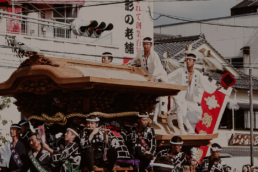
Every year, generally during a weekend in mid-September, the streets of Kishiwada, a small town near Osaka, are invaded by the fervor and euphoria for the Kishiwada Danjiri Matsuri (岸和田だんじ祭).
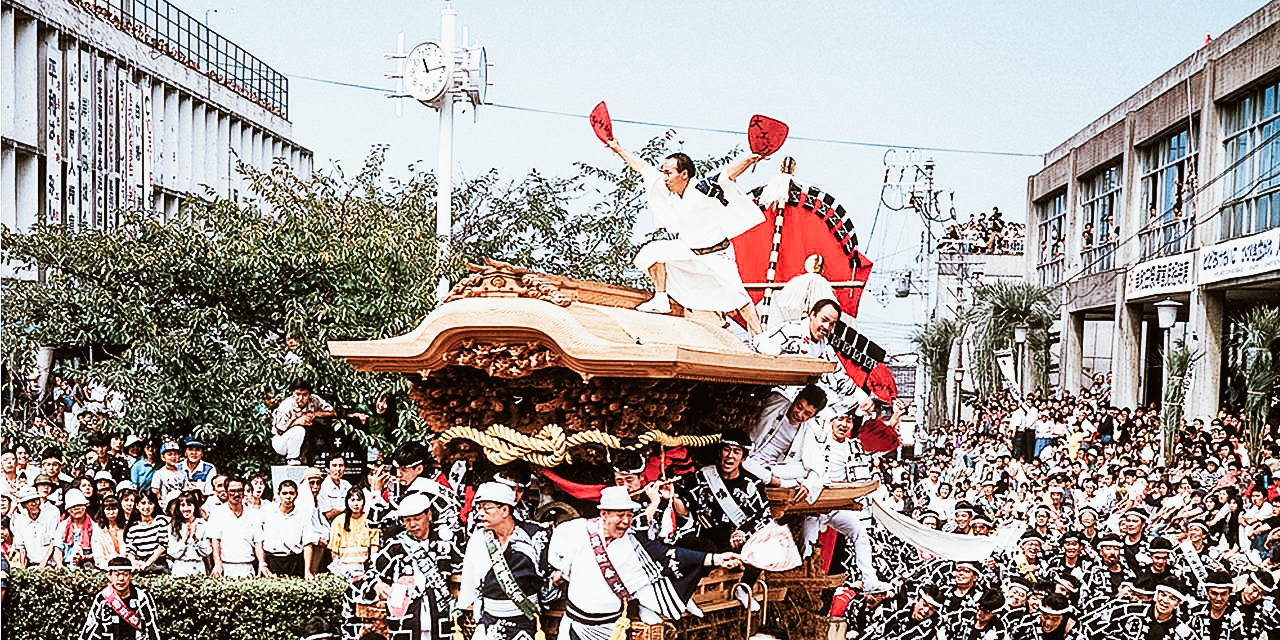
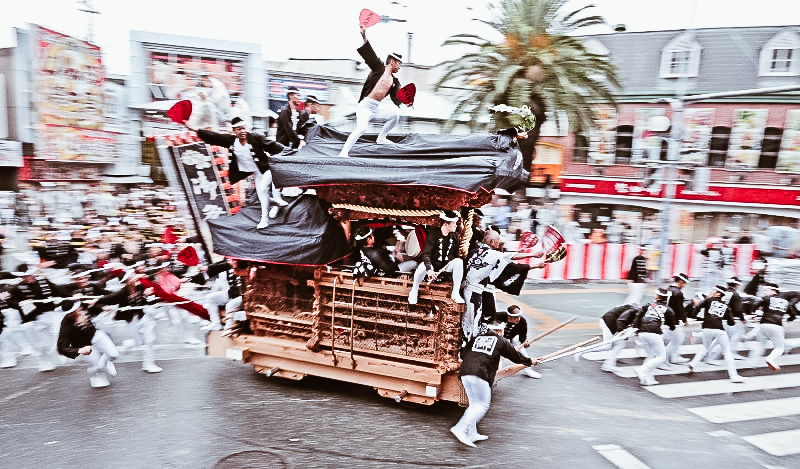
photo credits: airfrance.co.za, mainichi.jp
The celebrations originated in 1703, by the daimyō Okabe Nagayasu (部長泰). He prayed to the Shintoist gods for a bountiful harvest and this is still the meaning of the festival. However, what makes this celebration special is that it is a speed race pulling the danjiri.
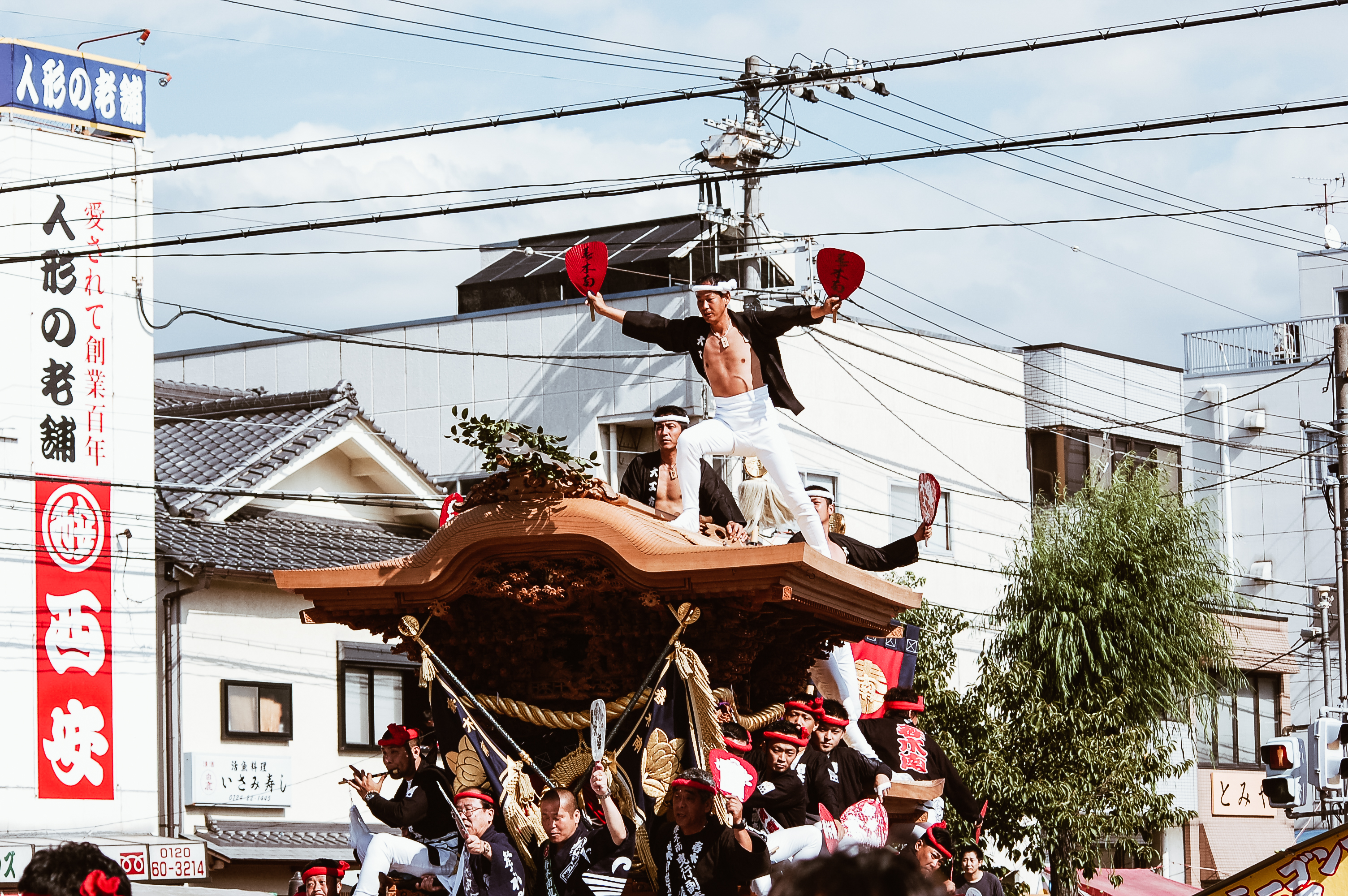

photo credits: Justin Yoshida
Danjiri are traditional wooden structures, carved and finely decorated by skilled carpenters and local sculptors. These wagons have the form of small shrines containing the deities and, during the days of the festival, they are precisely dragged through the streets of the neighborhood. Given their weight (they can exceed 3 quintals), the festival is also considered a moment to demonstrate one's courage. In fact, these structures must be towed with only the help of ropes and at full speed!
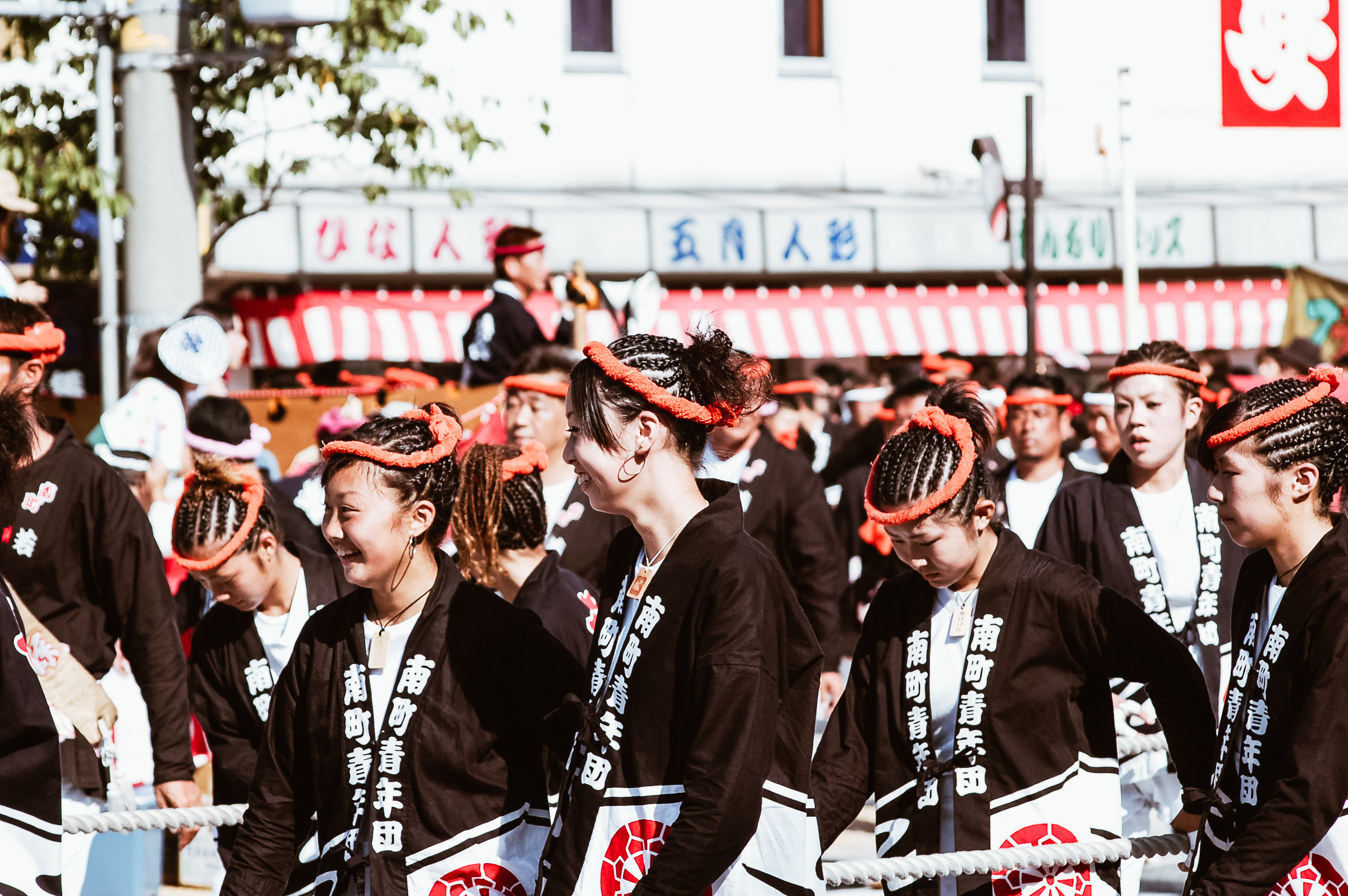
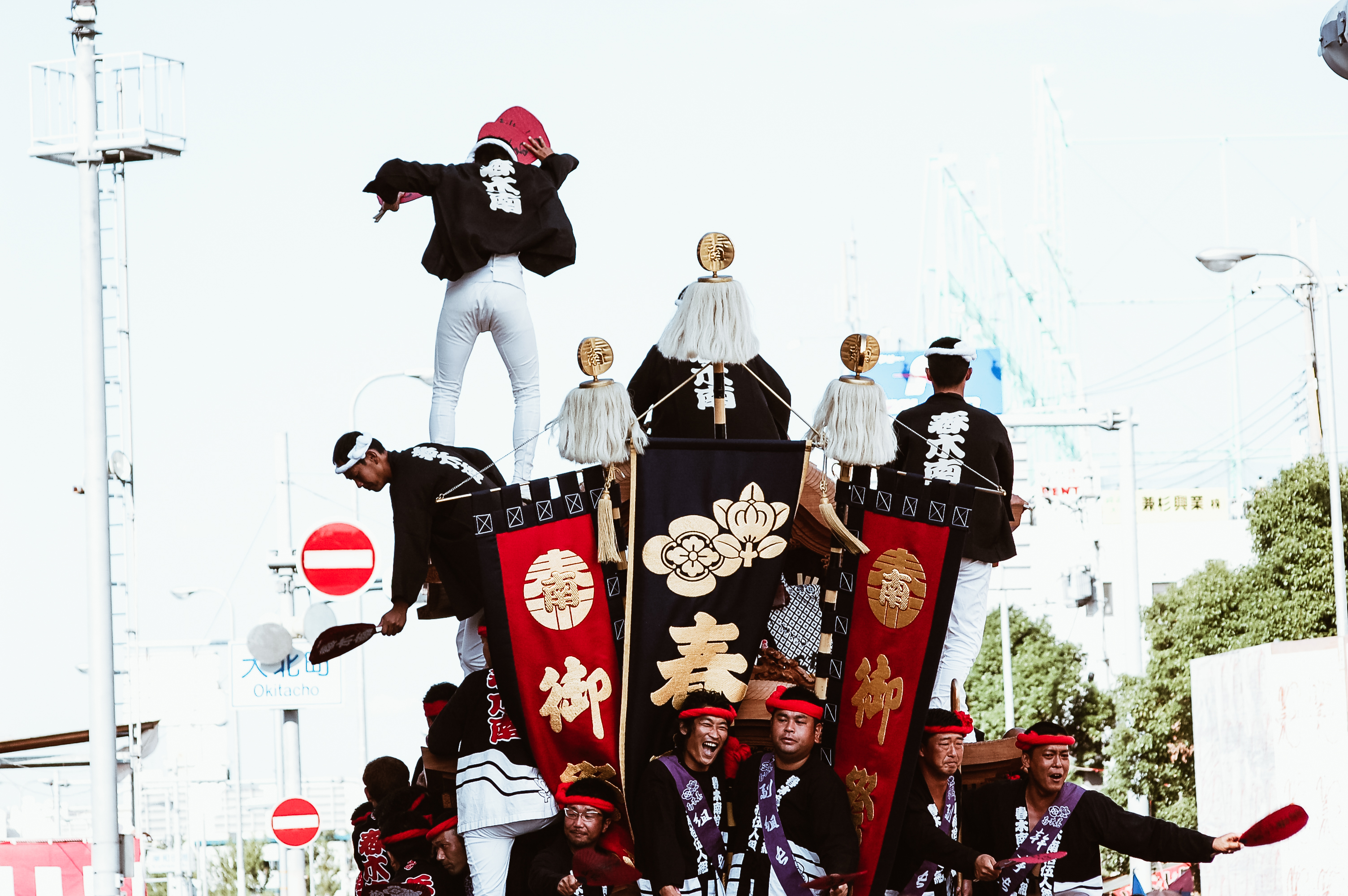
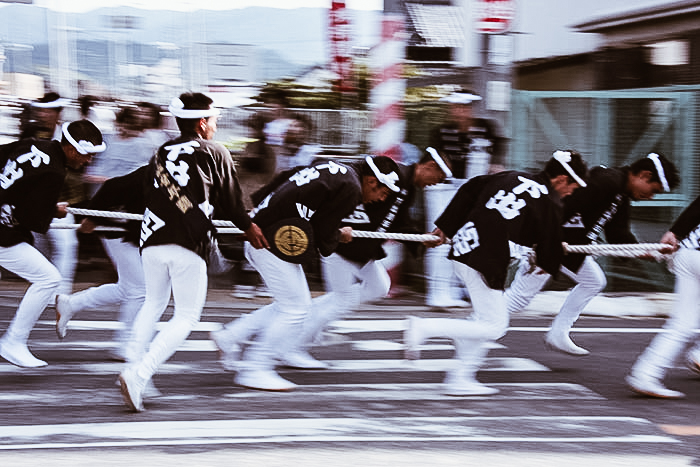

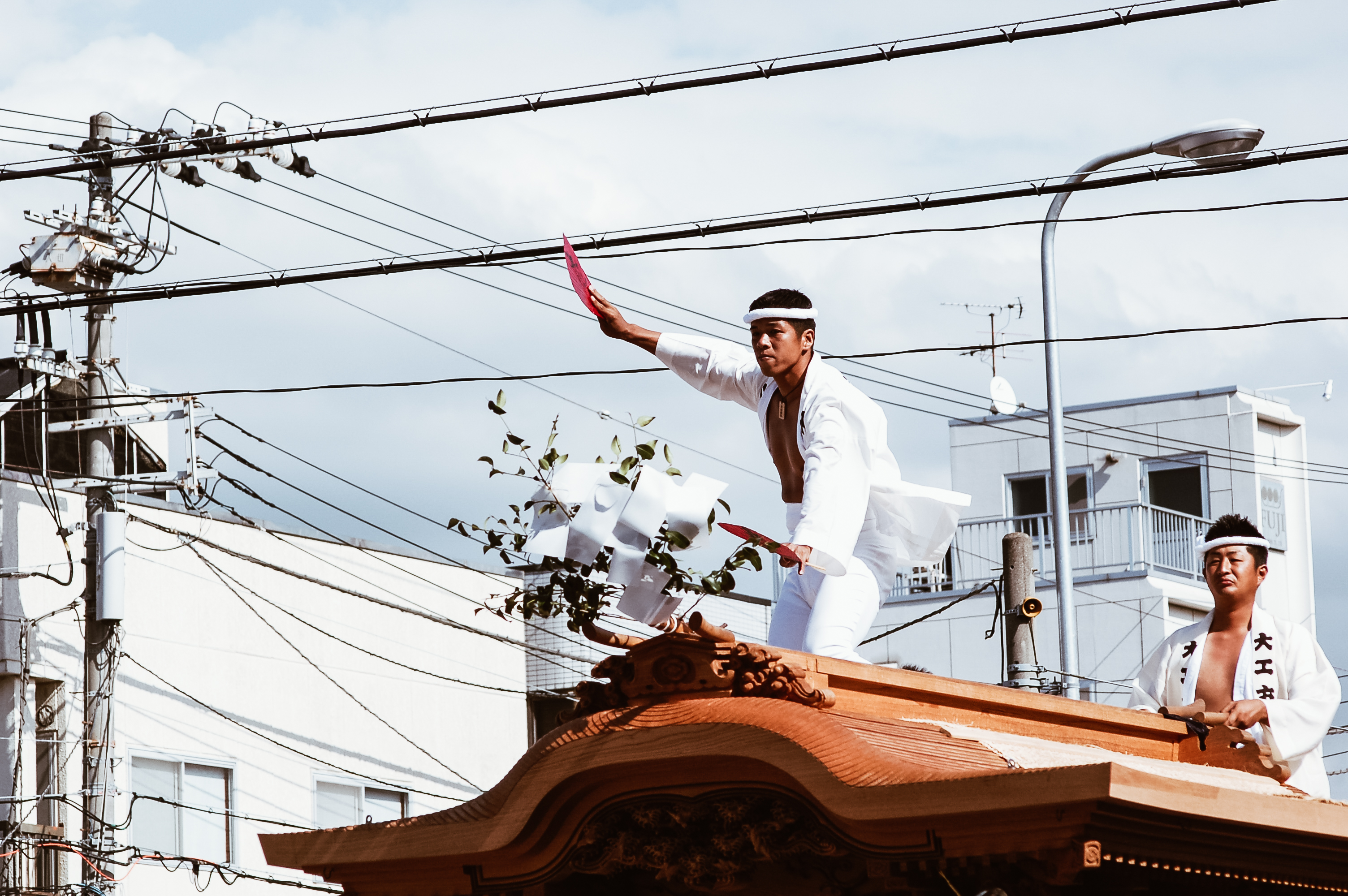
photo credits: Justin Yoshida, Justin Yoshida, japan-magazine.jnto.go.jp, MJY-shogun, Justin Yoshida
Kishiwada Danjiri Matsuri celebrations
During the festival celebrations, there are 35 danjiri involved, each of them being pulled by a team, representing the respective district of the city. At the control of the structure, on its top, there is the daiku-gata (大工方, master craftsman) whose wild dance serves as encouragement for his team and the crowd. Given the stunts in which he engages, the master craftsman risks his life constantly, but not only this! As we can easily imagine, this festival is also dangerous for all other participants due to the danjiri's dizzying speed. The wood splinters left behind and the fact that you have to elbow your way in to follow them is a danger to the crowd. Four hours of breathless running that ends with a big drinking moment around this wagon, to which dozens of paper lanterns are hung.
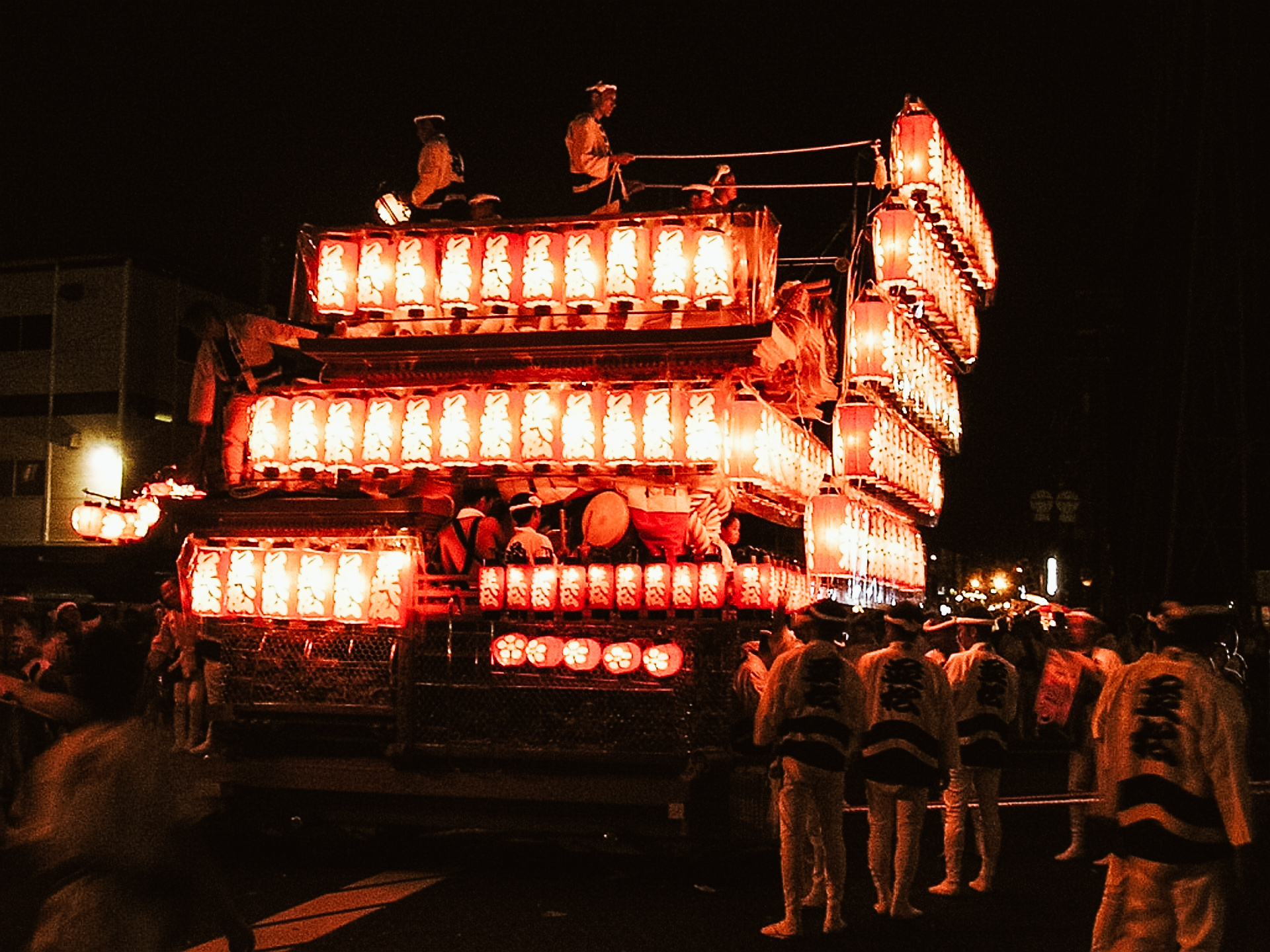
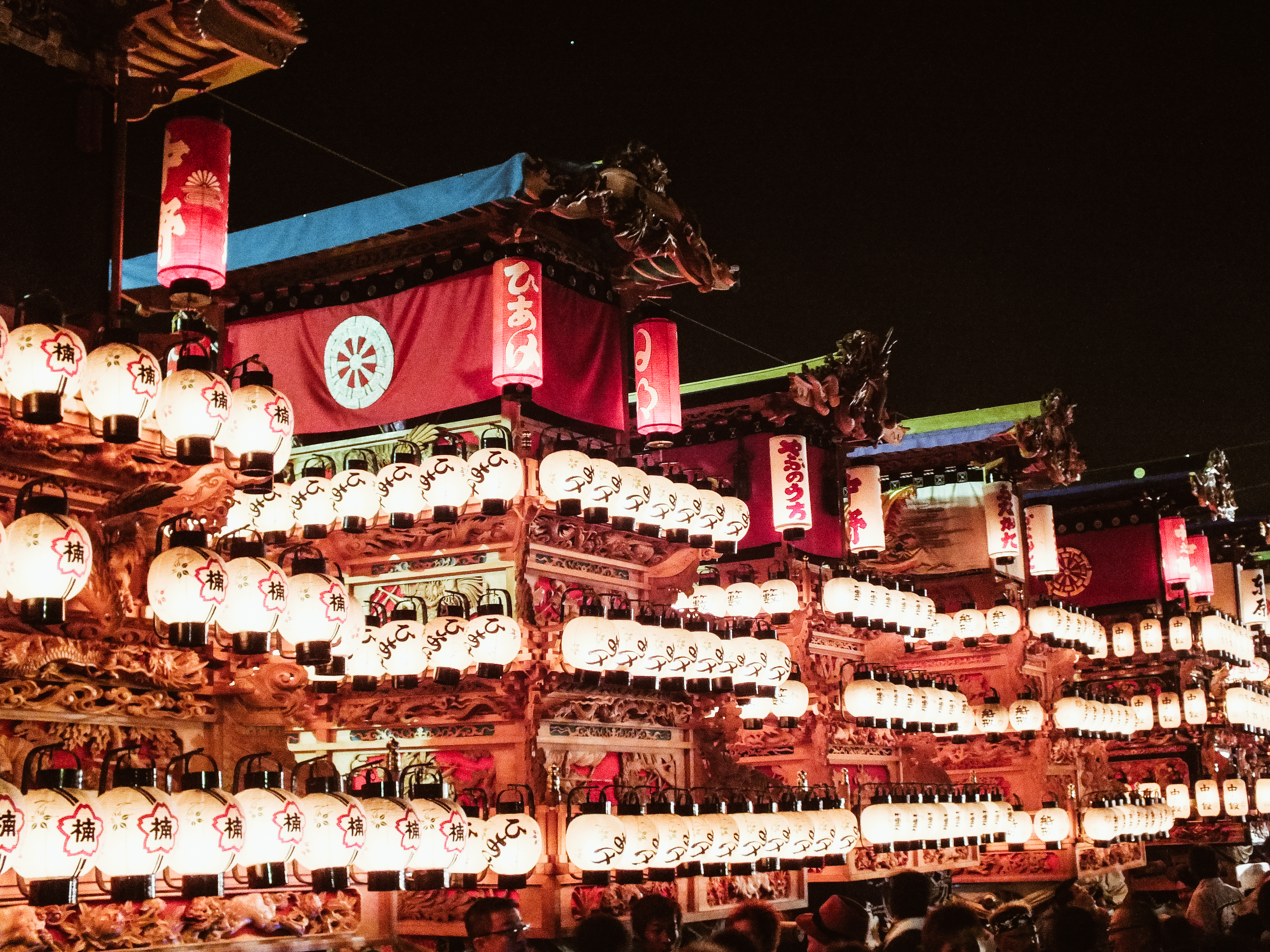
photo credits: rove.me, Gavin Kealy
More than 500,000 visitors come to Kishiwada to experience the thrill of this celebration, what do you think? Do you find this parade electrifying?[:ja]Let's return to talk about Japanese festivals and today we talk about the Kishiwada Danjiri Matsuri.

Tokyo Disneyland Resort - 3 unforgettable days
Today we talk about the Tokyo Disneyland Resort. Walt Disney said that Disneyland would continue to grow until the imagination remained in the world. The visions of a great man have accompanied our childhood and still today give magic to millions of people. Theme parks have always been an extraordinary attraction that knows no age limits. Tokyo Disney Resort is a great alternative to Disneyland Paris, Disneyland California and Magic Kingdom in Florida.
If you are in this enchanting metropolis and have 3 days free from commitments and don't know how to spend your time, this guide will do for you!

photo credits: .tokyodisneyresort.jp
The park, located in Chiba, is divided into two parts: Tokyo Disney Sea Park and Tokyo Disneyland Park. Our journey to discover this world of fantasy starts right from the first one to which we have decided to dedicate two days!
2 days at Tokyo Disney Sea Park
Divided into 7 thematic "ports", Tokyo DisneySea offers visitors numerous attractions, parades, shows, shops and restaurants.

photo credits: thegaijinghost.com
Our visit starts with Mediterranean Harbor: a beautiful and faithful reconstruction of the Mediterranean Sea. Here you will have the opportunity to make an adventurous ride on the steamer or visit the romantic canals of Venice aboard the characteristic gondolas. If you are a fan of astronomy and boating, you should not miss Fortress Explorations. In fact, through the visit of the fortress, you will see exhibitions on the study of the planets, the Earth's rotation and the functioning of the instruments used onboard a galleon.
A journey from America to Australia

photo credits: tombricker
Moving on, we are transported to a New York of the twenties animated by new immigrants and by the New England fishing community of Cape Cod. We are at the American Waterfront equipped with an elevated railway, a traditional American Theater and a harbor among which the massive British Columbia stands out! Here we find the Tower of Terror, where guests will witness the fearful story of the tragic death of Harrison Hightower III after the theft of "Shiriki Utundu", a cursed African idol. If the thrill is not for you, you can enter the S.S. Columbia. Here you will have the chance to interact with Crush, the turtle of the Disney Pixar movie "Finding Nemo". However, the highlight is definitely Toy Story Mania. Recently built, it consists of a tour of Disney California Adventure Park and of Disney Studios in Hollywood, obviously based on Toy Story.

photo credits: RetroFuturism
A 4D cinema, moored submarines, and sci-fi adventures meet in Port Discovery, inspired by the visions of Jules Verne. A space-style port where two fictitious companies arise: the "Center for Weather Control" and the "Marine Life Institute" inspired by the Disney animated film Pixar "Finding Dory".
From Agrabah to Atlantide

photo credits: tokyodisneyresort.jp
Are you Indiana Jones’ fans? Have you loved his adventures and somehow imagined living them? Now it is possible to do so in the Lost River Delta whose landmark is an ancient Aztec pyramid. Thanks to a careful reproduction of an archaeological site in a tropical rainforest of Central America in the 1930s you will experience thousands of adventures with traps and cursed temples!

photo credits: tdrfan.com
Don't you hear the music of snake charmers? It is the Arabian Coast, which unites the universe of the Disney movie "Aladdin" with the world of Agrabah and the thousand and one nights. Its atmosphere and Middle Eastern architecture are worth a stop: ready to fly on the magic carpet?

photo credits: findingsummersend.com
Imagine walking around the park and suddenly having the feeling of being underwater and then finding yourself in front of King Tritone’s Palace. It's all true, it's the Mermaid Lagoon inspired by the world of The Little Mermaid! Most rides in this area are aimed at younger children.

photo credits: tdrexplorer.com
Explosion? Lava? Yes, it is not a hallucination but the Mount Prometheus, an "active" volcano that is the location of Mysterious Island! We are back in the world of Jules Verne, and precisely in the lair of Captain Nemo of 20,000 leagues under the sea to face the journey to the center of the earth!
It was two days of adventure, wasn't it? Now it is the dawn of the 3rd day and our destination is Tokyo Disneyland!
1 day in Tokyo Disneyland
Just like the Disney Sea, Tokyo Disneyland is divided into as many theme areas, let the journey begin!

photo credits: tokyodisneyresort.jp
The World Bazaar is a strictly commercial indoor area that takes us back in time. We are in a small America, a city of the 20th century where the shops and restaurants that line the streets are in Victorian style.
 photo credits: tdrfan.com
We are at Disneyland so you cannot miss an area totally dedicated to the world of the most beloved fairy tales like Cinderella, Snow White, Dumbo. But also Winnie The Pooh, The adventures of Mickey Mouse, Alice in Wonderland and Pinocchio, we are in Fantasyland!
Welcome to Toontown
 photo credits: cafetricot
Remember "Who Framed Roger Rabbit?" In 1988? In the movie, "Toontown" was the city where all the cartoon characters lived. It was in this area that it was recreated in detail, in fact, you can meet them and visit their homes!

photo credits: disneyparks.disney.go.com
If we pause to think of the name Tomorrowland, the image that comes to mind is that of a futuristic world. However, in this case, Tokyo Disneyland gives up a vision based on realism and instead presents science fiction themes. The rides include Space Mountain, Star Tours - The Adventures Continue and Buzz Lightyear Astro Blasters.
The adventure continues

photo credits: youinjapan.net
A park without adventure is not a park, right? So here we are in Adventureland! Here we find two distinct but complementary areas, one with a New Orleans theme and the other with a "jungle" theme. It's a kind of combination of the areas of New Orleans Square and Adventureland that are located at Disneyland Park in the USA.

photo credits: disneyparks.disney.go.com
The Old West is always a timeless attraction and you can relive those Westernland atmospheres. Here the landscape is dominated by the Rivers of America, an artificial waterway that hosts the Mark Twain Riverboat, Tom Sawyer Island, numerous animals both true and animatronic.

photo credits: wikipedia.org
The last area of the park is a small strip of land whose main attraction is Splash Mountain. Based on the characters, stories, and songs of the 1946 Disney movie "Song of the South", we find the classic ride-on logs. Initially peaceful, the excitement gradually increases, ending with a steep descent of about 15 meters. Because of its popularity, Critter Country is extremely crowded during the day.
Our 3 days at Tokyo Disney Resort have ended. What do you think of this little trip? I love theme parks, I consider them a way to cut the world out for a while and experience adventures that normally wouldn't be possible. That right wonder, that bit of adrenaline and all the romance that only the world of fairy tales can give us!

Hiroshima and Nagasaki, not to forget
Hiroshima and Nagasaki, two symbolic cities of Japan that remind us of the greatest mistake humanity has ever made.
The sad legacy of Hiroshima and Nagasaki
Located west of Honshū and facing the sea, Hiroshima (広島市) is the largest port city in Chugoku.

photo credits: viaggi-lowcost.info
Hiroshima
Founded by the daimyo Mōri Terumoto in 1589, Hiroshima passed into the hands of various administrations. In 1938 it became a military centre of strategic and military importance throughout the Second World War. No bombing struck the city until that tragic August 6, 1945, at 08:16:08. "Little Boy", the first atomic bomb ever used in a conflict, was launched by the United States over the city causing thousands of victims instantly. However, these increased in the months following the causes of radioactive fallout. Despite the radioactivity, the city was rebuilt in 1949 regaining its industrial importance.
The damage caused by the atomic bomb persisted in the following years and in 1955 the Hijiyama medical centre was established, where to welcome, study and treat the sick. In the early 70's the "Atomic Bomb Casualty Commission" was born to control the land and the air.


photo credits: focus.it
Although the city was razed to the ground on that tragic day, only one building resisted bringing with it the sad signs of what happened. We are talking about the Genbaku Dome (原爆ドーム, the dome of the atomic bomb). However, before the war, the palace was the seat of the ancient chamber of commerce, today it is classified world heritage by UNESCO as a testimony to the devastation of nuclear weapons.

photo credits: agrpress.it
Visit Hiroshima
What history has left us must be a warning to the future and both Hiroshima and Nagasaki are a living example. In this regard, if you plan to visit Hiroshima, one of the milestones is the Peace Park. It includes the Peace Museum and the Cenotaph of the memorial for the victims of the atomic bomb. The latter, built by the architect Kenzo Tange, lists the victims of the bomb whose epitaph reads: "May souls rest here in peace so that hell is not repeated". We cannot then forget the dome of the bomb.
For any information regarding the Hiroshima Peace Memorial Museum you can visit the official website in English.

photo credits: visithiroshima.net
In the city, we can find other interesting museums, such as the Hiroshima Museum of Art. Here the museum displays a vast collection of modern European art, from romanticism to impressionism. Moreover, the Hiroshima MOCA (museum of contemporary art) exhibits the works of Japanese and foreign artists after the Second World War.

photo credits: maitreyoda
The Shukkei-en garden and Hiroshima Castle
The Shukkei-en garden was built in 1620 during Shigeyasu Ueda on the orders of Asano Nagaakira, daimyo of Hiroshima han (fief). Used as a residence of the Asano family in 1940, and then given to the prefecture of Hiroshima. Located very close to the zero point of the nuclear attack, the Shukkei-en suffered extensive damage and later became a refuge for war victims. After renovations, it reopened to the public in 1951.


photo credits: thetruejapan.com
A Castle is closely connected to this wonderful garden, it's the (広島城) Hiroshima-jō also called (鯉城) Rijō literally Carp-Castle. In fact, the exterior, completely painted in black, would refer to the image of a black carp. Built in 1590, it became the residence of the lord of the feud, Mori Terumoto. Destroyed by atomic bombing, it was faithfully rebuilt in 1958.
It is currently the home of the Hiroshima history and culture museum surrounded by a public park. From the top of the castle, you can enjoy a splendid view of the port of Hiroshima and the island of Miyajima.

photo credits: fr.japantravel.com
To discover all the attractions and wonderful temples that rise in Hiroshima, you can visit the official site of the city (in English).
Nagasaki
Like Hiroshima, Nagasaki (長崎市) is today an important international trading and port centre.

photo credits: getyourguide.it
This modern town with a thriving maritime economy developed in the 11th century, expanding rapidly. In 1568 the daimyo Ōmura Sumitada converted to Christianity and made Nagasaki an international port, thus opening it to the influence of Europe. However, when the army chief Toyotomi Hideyoshi came to power, the city turned into a nightmare for Christians. In fact, on February 5, 1597, 26 people who professed the Christian religion were crucified. Christianity was banned and the kakure kirishitan (隠れキリシタン), Christians who professed their faith in great secrecy and clandestinity, spread. It was only with the Meiji Restoration in the mid-800s that religious freedom made Nagasaki the centre of Japanese Catholicism. The city became even stronger from the industrial point of view.
However, this also marked the condemnation of Nagasaki. On 9 August 1945, three days after the bombing of Hiroshima, the now-famous "Operation Manhattan" by the USA was implemented. "Fat Man", the second atomic bomb, fell on the city.
Being purely an industrial zone and being the bomb less powerful than that of Hiroshima, the victims of the attack were significantly lower. In 1949 Nagasaki was quickly rebuilt and all its economic prestige recovered.


photo credits: bbc.com
Nagasaki's wounds
The symbol of the history of Christianity in Japan is the Twenty Six Martyrs Museum which commemorates the 26 martyrs killed in 1597.


photo credits: tropki.com, tripadvisor.it
Of course, as in Hiroshima, the Nagasaki Atomic Bomb Museum is also a milestone in this journey. A memorial showing the city before and after the bombardment with the aim of pushing people to reflect on what truly means peace and denuclearization. Moreover, exactly in the place where the bomb broke out, stands the Peace Park.


photo credits: welcomekyushu.com, wantabi.info
At 20 km from the port, there is Gunkanjima (Hashima Island, the armoured island), the smallest most populated island in the world, or so it was until the 70s. In order to accommodate as many people as possible, the island took on the appearance of a massive battleship. Later, it was completely abandoned, becoming an example of industrial archaeology that attracts ruins enthusiasts!

photo credits: japan-guide.com
Visit Nagasaki
If you are a fan of breathtaking city views, a must is the summit of Mount Inasa (稲佐山, Inasayama) which, with its 333 meters, is located near the centre of Nagasaki. Besides the car and the bus, you can use the cable car to fully appreciate the beauty of the surrounding nature!

photo credits: travel.gaijinpot.com
Naturally, Japan has accustomed us to splendid corners of paradise-like gardens. In fact, in Nagasaki we find the Glover Garden. Located on the hill where Western merchants settled since 1850, it is a real museum where you can visit the buildings of the time.

photo credits: japanmeetings.org
Among the many temples, there is something that is not easy to find in Japan. We are talking about the Basilica of the Twenty-Six Holy Martyrs of Japan (日本二十六聖殉教者堂) or Ōura Church (大浦天主堂 Ōura Tenshudō). It is a Catholic church dating back to the Edo period. For many years it was the only Western-style building inscribed in Japan's National Treasury and is considered the oldest church in Japan.

photo credits: yitubao.com
Behind the sad story that unites these two cities, there is the great strength of a Nation that has always known how to rise back up. Hiroshima and Nagasaki are historical testimonies that we wanted to remind you of and that too often are considered as distant realities, but which instead must make us reflect deeply, not to forget what happened.

Luxury Ryokans in Tokyo, Kyoto & Osaka
Finding the ideal hotel is not at all difficult in Japan, especially if you want to stay in a Ryokan! Modernity will always give you unforgettable experiences, but you can also immerse yourself in the rhythm of the countryside.
Tokyo is an amazing city, always on the move and full of wonders to explore. However, if you want to regenerate your soul for a few days around the big metropolis, then the ryokan are what you are looking for!

photo credits: gorahanaougi.com
When time stops
The ryokan (旅館) is nothing more than a hotel with very few rooms whose style has remained unchanged since the Edo era. From the well-kept aesthetics, in these traditional hotels there is always a garden visible from any point of the washitsu (和室). In this typical essential Japanese room we find the tokonoma (床の間). It’s a small closed and raised window in which we find Japanese parchments, called emakimono, ikebana and bonsai. Here, the floor is strictly composed of tatami (畳), above which lies the futon (布団, literally "rolled mattress"). The only traces of modernity are given by the presence of air conditioning, television and telephone.
Guests of the ryokans are entrusted to the care of an old maid. The latter welcomes visitors by serving them welcome tea, collects orders and accompanies them to the Osen (thermal bath) or Ofuro (bathing in hinoki wooden tubs).

photo credits: gorakadan.com
The Ryokans are scattered a little throughout Japan, especially in the inland areas. However, today we will limit ourselves to those that can be reached more easily, located between Tokyo, Kyoto and Osaka!
Ryokan of the Hakone region
The Hakone region is located along Tokaido, the historic streets of the Edo period and is perfect if you want to move comfortably between Tokyo, Kyoto and Osaka. Moreover, if like me you are madly in love with Mount Fuji, the ryokans that I am about to present offer a breathtaking view!

photo credits: yado-resort.com
The first ryokan is the GORA HANAOUGI in the most famous area of Hakone and surrounded by a beautiful natural landscape.
Address: 1300-681 Gora, Hakone-machi, Ashigara-shimogun, Kanagawa 〒250-0408
Phone: + 81-460-87-7715
Website: https://gorahanaougi.com/

photo credits: kiwicollection.com
The second ryokan is the GORA KADAN which stands on the grounds of Villa Kan’in-no-miya, the former summer villa of a member of the imperial family in the city of Gora in Hakone.
Address: 1300 Gora, Hakone-machi, Ashigarashimo-gun, Kanagawa, 〒250-0408
Phone: +81-460-82-3331
Website: https://www.gorakadan.com/

photo credits: ryokancollection.com
Finally the splendid YAMA-NO-CHAYA that rises in a bamboo grove through a suspension bridge.
Address: Tounosawa, Hakonemachi, Ashigarashimo-gun, Kanagawa, 〒250-0315
Phone: +81-460-85-5493
Website: https://luxury-ryokan.com/
The Ryokan of the Izu Peninsula
The Izu Peninsula is located south of the Hakone region and Mount Fuji. Being less known than the Hakone region, it is a slightly less touristy destination, but one that will not disappoint you!

photo credits: ryokancollection.com
For this area I selected the YAGYU NO SHO, a ryokan where traditional cuisine, baths, hospitality and Japanese architecture blend together.
Address:1116-6 Shuzenji, Izu, Shizuoka 410-2416
Phone: +81-558-72-4126
Website: https://www.yagyu-no-sho.com
Ryokan between the Sea of Japan and the Alps
In the Chubu region, between the Sea of Japan and the Japanese Alps there are two areas of extraordinary beauty. We are talking about Hokuriku and Hida, about 3/4 hours away from Tokyo with the Shinkansen. Are you ready to immerse yourself in the generosity of nature?

photo credits: japanish.tours
BENIYA MUKAYU is a place where everything that you have always considered useless, will acquire great value. A place where your mind will finally be stripped and you will find the peace you have been looking for so long.
Address: 55-1-3 Yamashiro Onsen, Kaga, Ishikawa, 922-0242
Phone:+81-(0)761-77-1340
Website: http://mukayu.com

photo credits: jetsetter.com
WANOSATO absolutely deserves our attention. Located in the heart of Gifu prefecture, near Hida-Takayama, it offers the opportunity to live a unique experience, immersed in nature, in tradition and tranquility.
Address: 1682 Ichinomiyamachi, Takayama, Gifu 509-3505,
Phone: +81 577-53-2321
Website: http://www.wanosato.com
Don’t you feel that strong desire to run away from everyday life and take refuge in one of these magnificent traditional hotels? I do. I would leave in this very moment and let myself be pampered by the scents and sounds of my beloved Japan.

photo credits: Masa Angenieux

Yuki-Onna: the mysterious incarnation of the Japanese winter
In the endless world of yokai (supernatural creatures of the Japanese tradition), the figure of Yuki-Onna (雪女) stands out. Legendary snow woman, with her icy and lethal charm, embodies the terrible beauty of winter in the mountains of Japan.
Despite being known by different names and stories in the various prefectures, this character is renowned above all in the coldest and most inaccessible areas of the archipelago.
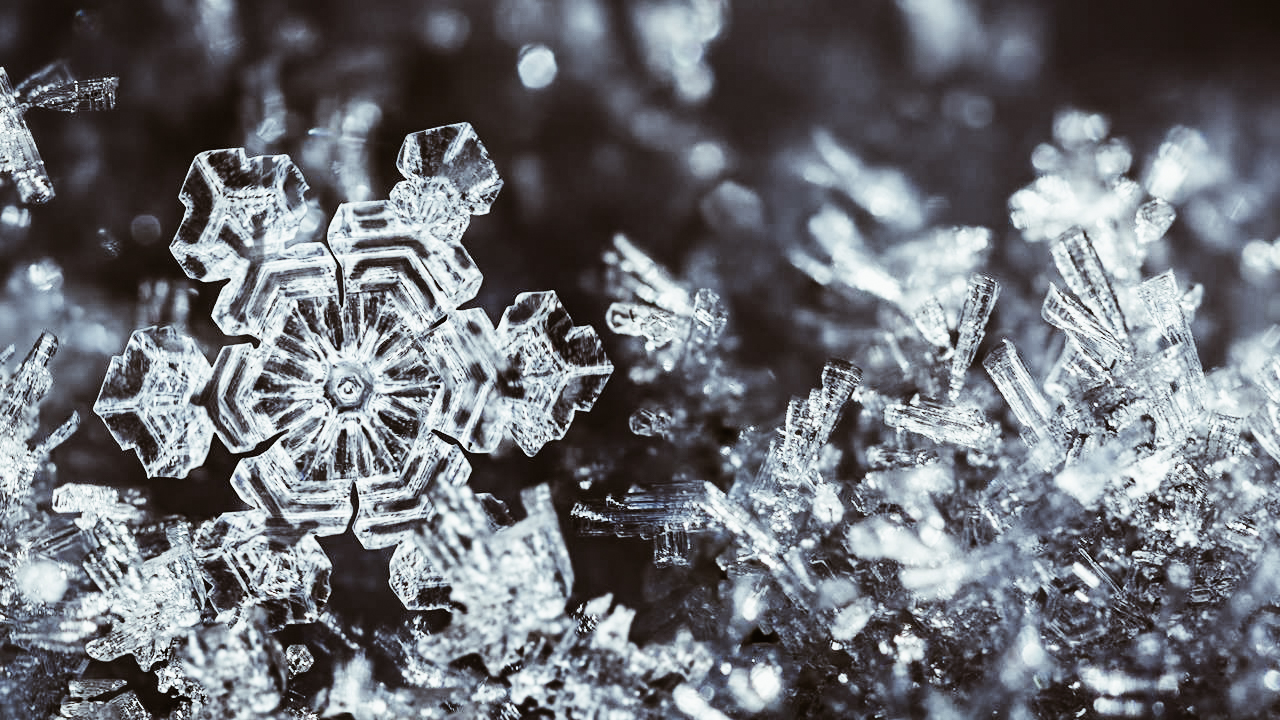
The Yuki-Onna is described as a beautiful woman with white skin, which appears on mountain trails and in snowstorms. She is dressed in a light white kimono or naked and covered only by very long hair, black or white depending on the legends. Ethereal and floating apparition in the snowy landscape on which it leaves no footprints, it can suddenly disappear turning into a cloud of fog or very fine snow.
Yuki-Onna: the Origins
The origin of this figure, like other yokai, is lost in the most ancient times. The first written trace of its history is found in the Sōgi Shokoku Monogatari, dating back to the Muromachi period (1333-1573). Here the monk Sogi describes the encounter with a woman of extraordinary beauty during his stay in the province of Echigo (current prefecture of Niigata). This mysterious woman was dressed in white, tall and with a very pale complexion and long white hair. From a young appearance, she mysteriously appeared one morning in the frozen garden of the monk. However, it disappeared just as mysteriously under the incredulous gaze of man.
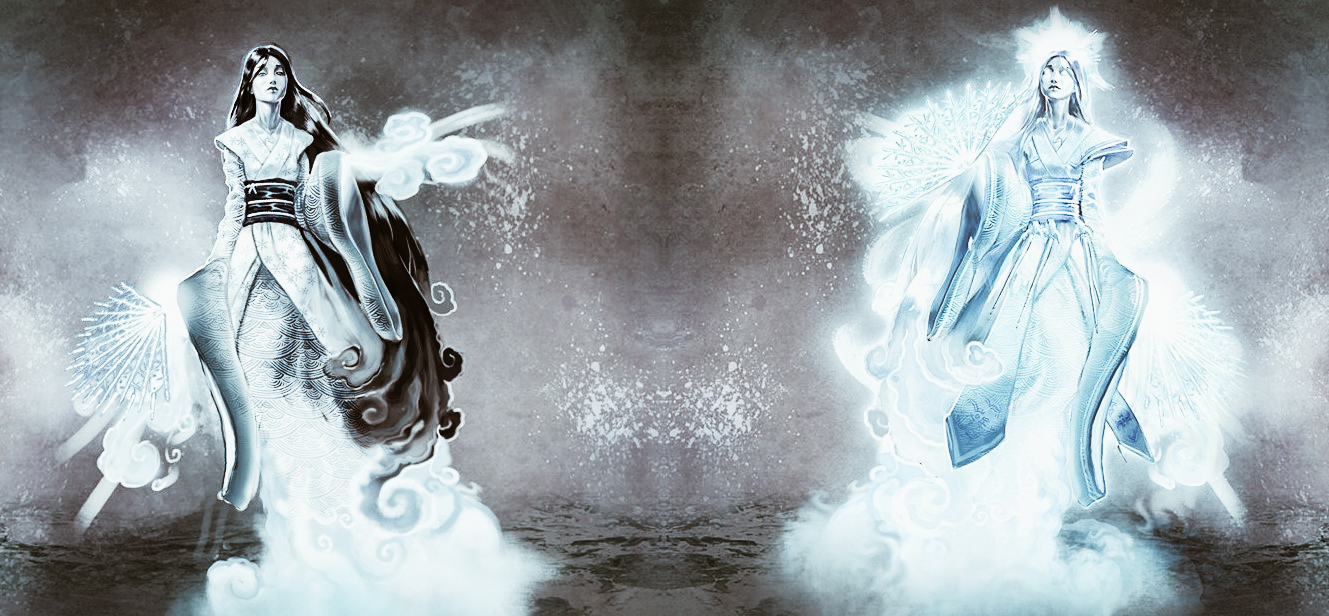
photo credits: smitefire.com
The two faces of winter
Like the winter that can manifest itself with a dazzling and serene splendor or with a cruel and lethal force, so is the Yuki-Onna. Sometimes it appears as a ruthless predator that attracts lost travelers into the storm to feed on them with their life energy. At other times it appears as a benevolent presence or even in its turn seduced by human charm.
In the most ancient stories, the monstrous and destructive aspect prevails. In fact, in these stories, parents who have lost their children in the mountains are approached by a woman. She asks them to pick up a child she can't bring herself. The unwary who accept this invitation are destined to freeze to death, overwhelmed by the fatigue of carrying a heavier burden at every step.
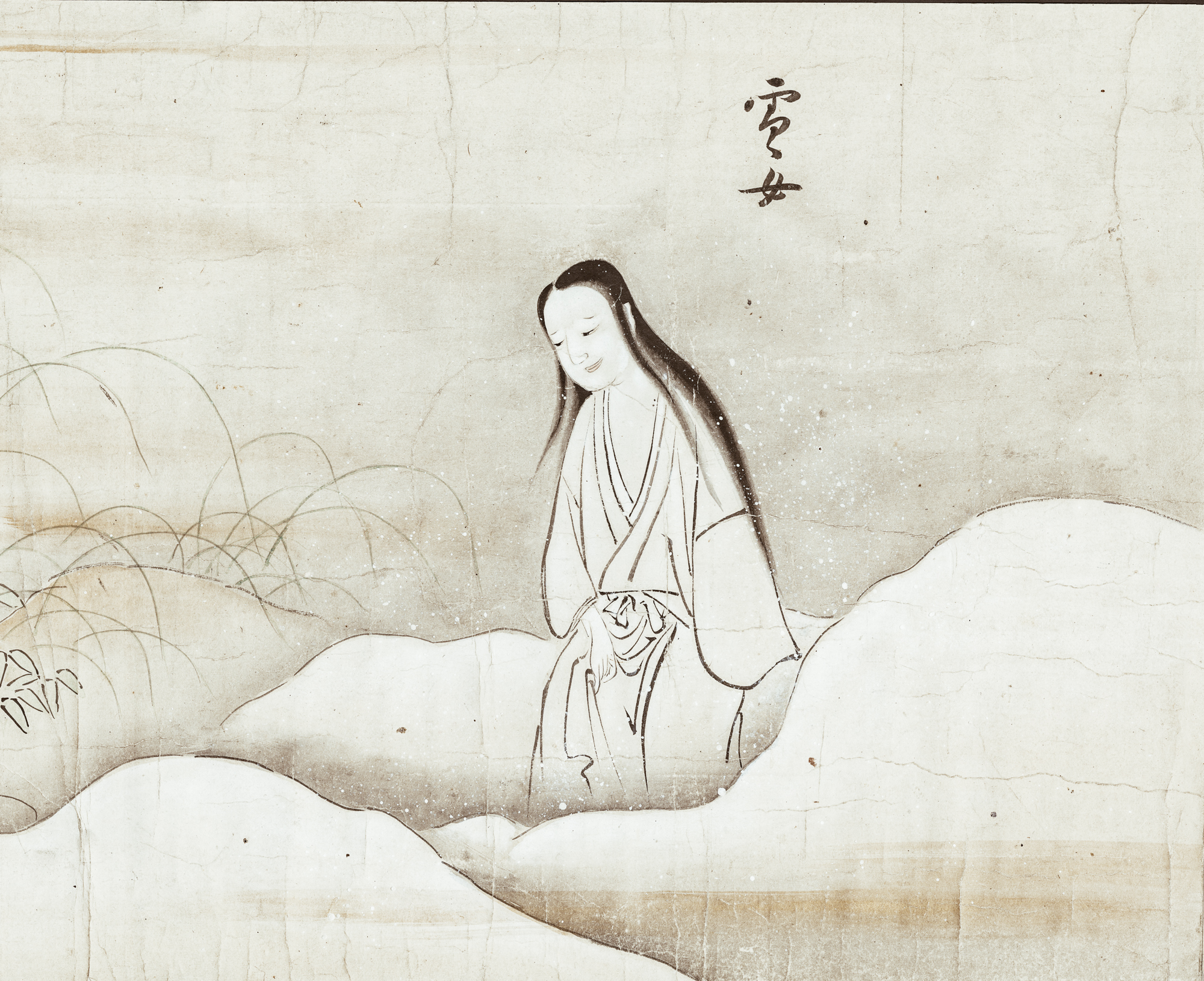
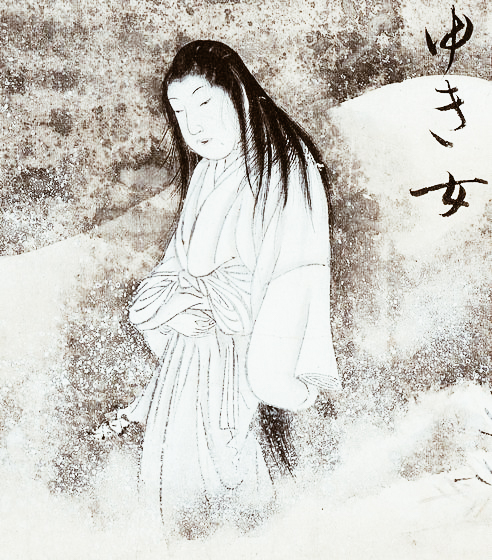
photo credits: wikipedia.org
Or in the stories, the Yuki-Onna seduces men subjugated by its otherworldly charm. They end up succumbing to his mortal kiss, able to drain their life force and freeze their hearts. Or again in dramatic stories, in which Yuki-Onna does not simply wait for the passage of bewildered travelers. Here, in fact, it enters the houses forcefully, opening doors and windows in the form of violent snowstorms, killing the unfortunate inhabitants.
In the West, we know a more romantic aspect of this reading. This is mostly thanks to the work of Patrick Lafcadio Hearn, a Ireland-born journalist and writer from Japan, also known as Koizumi Yakumo (小泉八雲).
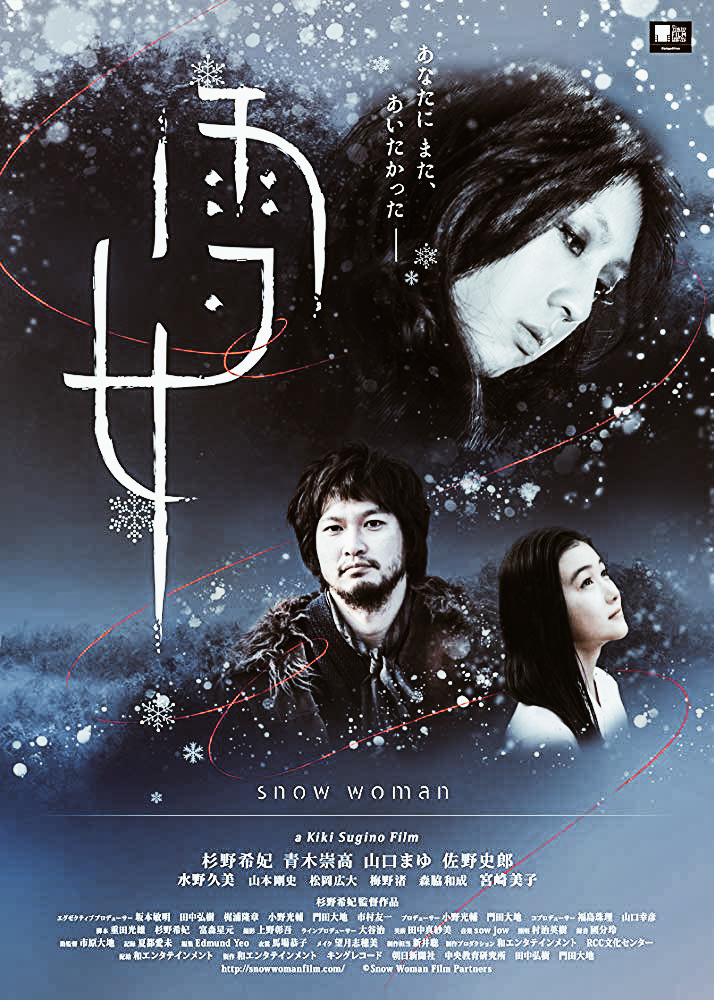
photo credits: letterboxd.com
The Lafcadio version
"Kwaidan: Stories and Studies of Strange Things" is a 1904 work containing a collection of popular beliefs and also an interpretation of the culture and customs of Japan. Here the legend narrated by Hearn speaks of two woodcutters, Elder Mosaku and his young apprentice Minokichi, who return home after a day's work on a cold evening. The two characters surprised by a violent snowstorm find shelter in a hut near a river. Afterward, the two men lay on the floor of the hut and, overcome by fatigue, they fall asleep. During the night Minokichi is awakened by an icy wind, which seems to have opened the door and windows of the hut. Still confused by sleep and believing he is dreaming, he sees a woman dressed in white and with long hair, bending over Mosaku, intent on breathing a cold mist like breath over him.
When the woman turns to Minokichi, the young man remains enchanted by her incredible beauty. However, he cannot sustain that look that inspires an unspeakable terror. Softened by the youth and the attractiveness of the boy, the woman decides to spare his life on condition that he never reveals to anyone the existence of such a creature. If he ever spoke to any of those events, his death would be certain.
The following morning a boatman, owner of the hut, finds in his interior the now frozen body of the elderly Mosaku, but manages to rescue Minokichi, now semi-frozen to safety.
A year later...
Having overcome the terror and exhaustion of that terrible night, the young man marries a beautiful young woman named O-Yuki. Suddenly appearing in his village she was immediately well-liked by everyone for her charm and her gentle manner. For many years the two live a happy marriage, blessed by the girl's inexplicable eternal youth, whose beauty seems to endure unchanged over time despite the birth of ten children.
Until one-day Minokichi, forgetting the promise he made, recklessly tells his wife of a supernatural creature he met many years before and that somehow seems to remind him of his charming bride. To his immense surprise, O-Yuki, suddenly transfigured by anger, reveals herself to be the woman he met that night. After having reproached her husband for not having been able to keep the promise of secrecy made so many years before, she decides to spare his life for the sake of their children. So, after warning him to take good care of them, she disappears forever.
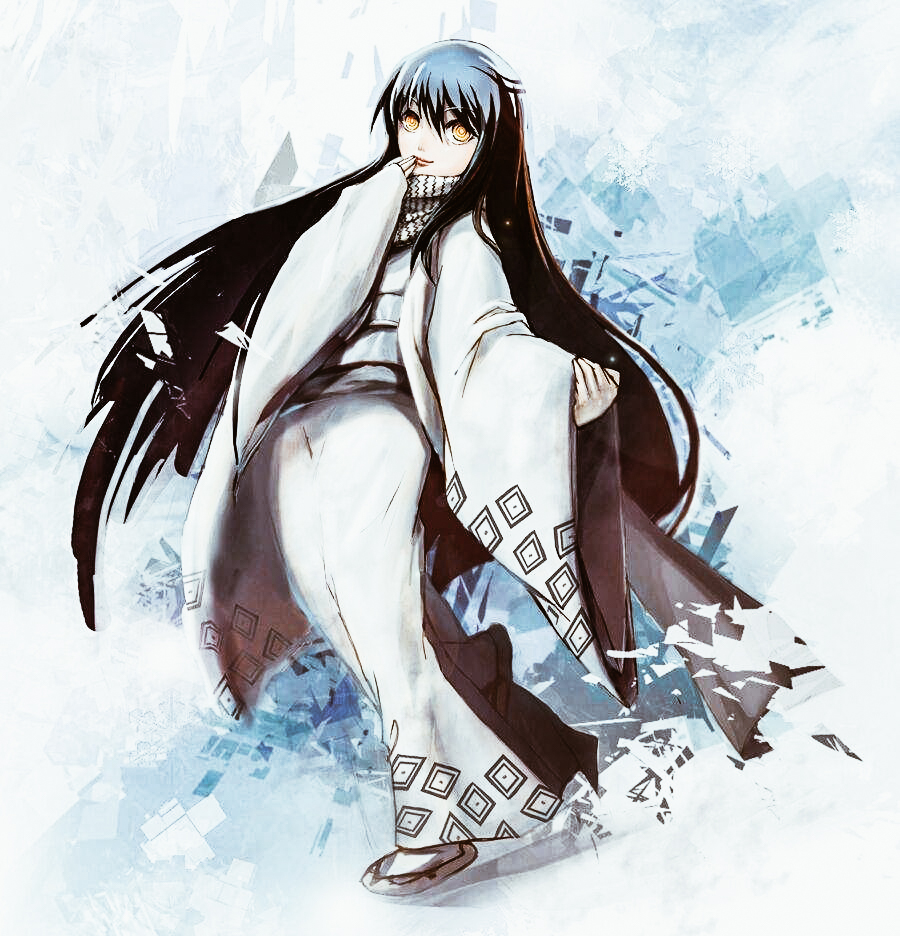
photo credits: aminoapps.com
Yuki-Onna in the contemporary age
Like the bride of Minokichi, the legend of Yuki-Onna, cruel and romantic at the same time, seems to preserve its charm over the centuries.
In fact, in contemporary times it has inspired numerous films. We remember in fact Kwaidan (怪怪) of 1965, directed by Masaki Kobayashi, winner of the special prize of the jury at the Cannes Festival. Kwaidan was also in the running for the Academy Awards with a nomination for Best Foreign Language Film.
The success of this film was followed, in 1968, by Kaidan Yukijoro by Tokuzô Tanaka, until 2016 with Yuki-Onna, directed and performed by Kiki Sugino.
The beautiful and lethal snow woman, in her innumerable variations, then appears as a protagonist or leading figure in a vast range of video games, anime and manga. Nurarihyon no Mago or Ranma ½, just to name a few. However, its timeless charm will continue to enchant us for a long time, with its eternal, candid winter.

Tanabata, the legend and modern times
Tanabata: on the seventh day of the seventh lunar month we celebrate one of the five gosekku (五節), the most important festivals of the year. This is also one of my favorite parties because it is extremely romantic.

The Seventh Night
The legend tells of Princess Orihime (the star Vega), devoted daughter of Tentei (the King of the sky) who spent her day weaving on the shores of the celestial river Amanogawa (the Milky Way). However, her heart was sad because she had not yet known love. Then Tentei introduced her to Hikoboshi (the Altair star), a young herder of the heavenly planes who lived across the river. The love between the two exploded immediately, but the passion distracted them from their duties by unleashing the wrath of Tentei.
He divided them by returning his daughter to the opposite bank of the river. Orihime, destroyed by pain, wept a thousand tears. Tentei, struck by his daughter's great love, allowed the two lovers to meet on the seventh night of the seventh month only if they worked diligently throughout the year. The sky, in this special night, must be clear, otherwise crossing the silvery river would be impossible. In fact, if it rained it would swell and the vigor of its waters would prevent the flock of magpies from creating a bridge with their wings to allow the two lovers to hug again.


From Shichiseki to Tanabata and the customs of the festival
Tanabata was not the original name of this holiday. In ancient times it was known as Shichiseki, deriving from the reading of the Chinese kanji, from which it originates. In fact, the festival was imported from China by Empress Koken in the Kyoko Imperial Palace in the Heian period. It then spread throughout Japan in the Edo Period and has since become one of the most popular festivals.


The decorations of the Tanabata
Between July 6 and August 8, according to the region, the streets are filled with zen-washi (paper lanterns) and people wear yukata (浴衣). The latter is a very informal kimono with wide sleeves and flat seams, made of cotton, without lining and therefore suitable for the summer. But the tanzaku (短冊) are the real protagonists of this enchanted night. Strips of colored paper that symbolize the silk threads woven by Orihime and on which prayers or wishes are written. Later these are tied to bamboo branches, considered the main symbol of the Tanabata. In this way, the wind, blowing through the leaves, brings with it the desires and realizes them!


photo credits: savvytokyo.com, Hiroshi
As many auspicious decorations appear in the parades during the matsuri. There are Kamigorono (special paper kimonos) that protect against illness and accidents. We can also find toami, fishing nets whose exposure would bring good luck in fishing and in crops. Not to mention the fukinagashi, colored stripes like the fabric that Orihime wove. We then continue with the beautiful orizuru (origami) especially in the shape of a crane, bringing health, protection and long life to families. The kinchaku, small bags that bring good business and wealth. We also have the famous kusudama, oval-shaped ornaments composed of a series of origami sewn and glued together. Then we come to the kuzukagos, garbage bags that symbolize "cleanliness" (understood as purity) and prosperity.


photo credits: savvytokyo.com, Naomi Nakagawa
To each region its date
As we said, the date of the Tanabata varies according to the region. In the Kanto region, The Tanabata of Hiratsuka, in Kanagawa prefecture, takes place between 4 and 6 July. In the region of Chūbu in Ichinomiya, in the Aichi prefecture, it is celebrated between 24 and 27 July. finally, in the region of Tōhoku, in Sendai, in the prefecture of Miyagi, it takes place between 6 and 8 August.


photo credits: japancheapo.com, EriTes Photo
Even if love is a feeling that always deserves to prevail, during this time of the year the idea of raising one's eyes to the sky and desiring with all one's heart something with the hope that it will come true, is always exciting. Each Tanzaku is special and it is wonderful to read people's dreams and wish them to be heard. This, in fact, is one of the many moments of altruism that can only be shared in Japan.
And you? What dream do you keep in your heart? Whatever it is, find the way to come true! And if you are around Milan, we recommend you to come and celebrate the Tanabata from TENOHA Milan. Ready to hang your tanzaku? We have already done it!

photo credits: timeout.com