







Japan Folklore: Kitsune
Kitsune (狐)

The fox that always comes back
Kitsune. Clever, sly, with a beautiful fur the color of the Autumn leaves, a thick tail and a lovely face that makes them look like they are smiling. Foxes are in many cultures associated with slyness, but in Japan they have something more. In fact they have something magical and mysterious.
In the Japanese Folklore the kistunes are spirits in possession of great powers. They have fire breathing, they can create lightnings and can also enter people’s dreams. They can have a really long life and their powers grow stronger as they grow older, and so do their tails, that go from one, to two, three, up to nine of them. Their fur changes to become white (or sometimes gold), but according to some legends it can also be black.
The Powers
The kitsunes are famous for having shape-shifting powers. There are a great number of legends where these creatures take the shape of beautiful and charming women that make the fortunate or unfortunate man fall in love with them. They are ambivalent beings, on one side they are lovable lovers, on the other side they are mischievous creatures. In fact, there are different types of kitsunes.
The Zenko Kitsune (善狐 "good foxes") are the foxes that follow Inari, the Shinto deity of agriculture, harvest, rise and fertility. They are benevolent spirits and meeting one of them can only bring good news. On the contrary, the Yako Kistune (野狐 "foxes of the fields", o nogitsune) are mischievous and even evil. In contrast with the Zenko Kitsune, the Yako bring misfortune with their powers and can even posses people. The unlucky men that fall for their tricks are called Yako-tsuki and this possession makes them look they are lunatic. In the past it was said that people were possessed by these evil entities in order to find a justification for many mental illnesses. Sometimes the encounter with one of these spirits could bring to death.
They are not only intelligent but also wise. This wisdom increases with time, like their powers do, until they become omniscient. They know everything about this world, they know the past and what will happen in the future.

As the tale goes
The world Kitsune does not literally mean ‘Fox’. Kitsu was the word used to indicate the sound emitted by these animals. In ancient Japanese, Kitsu-ne meant “that comes back and sleeps”, or it could also be read as ki-tsune, “that always comes back” The explanation for these interpretations can be give by one of the many legends about these spirits.
The most ancient one goes like this:
«Ono, an inhabitant of Mino (says an ancient Japanese legend of A.D. 545), spent the seasons longing for his ideal of female beauty. He met her one evening on a vast moor and married her. Simultaneously with the birth of their son, Ono's dog was delivered of a pup which as it grew up became more and more hostile to the lady of the moors. She begged her husband to kill it, but he refused. At last one day the dog attacked her so furiously that she lost courage, resumed vulpine shape, leaped over a fence and fled.
"You may be a fox", Ono called after her, "but you are the mother of my son and I love you. Come back when you please; you will always be welcome".
So every evening she stole back and slept in his arms.»
(From the tale It comes back and sleeps written by monk Kyoukai in late VIII s. Or in the beginning of IX s.)

A dualist being
As mentioned, they are shapeshifting spirits and they have the ability to turn without age or sex problems. Their most famous and undoubtedly fascinating figure is that of a beautiful young woman. In fact Kitsune-gao (狐 顔 "fox face") is a term used to describe feminine features. High cheekbones and fine and narrow eyes, considered to be very sensual. According to tradition it is believed that seeing a beautiful woman wandering aimlessly during sunset hours it could actually be a fox.

In order to discover their true nature we must find the tail as the Kitsune can not disguise it. Alternatively, you should be loyal people but also their dislike for dogs can be a signal. Loyal animals can perceive their true being. Sometimes in their malignant form, the Kitsune draw strength and power from her lover. They absorb their energies through sexual intercourse and dry up the human forces and gruesomely causing death.
There are several shrines dedicated to Inari, their protector. It's usual to find depictions of these animals around the temples. The most well known is the Fushimi Inari Taisha shrine dedicated to the gods located in Kyoto. Also present in Buddhism, we find Dakini, Inari's female alter ego, as she rides a white fox, brandishing a sword. In these temples, the faithful are used to leave offerings of food for them, udon, soba, sushi and preferably the Aburaage fried tofu which is said to be Kitzune's favourites.

From the tradition to the animation
They are undoubtedly loved creatures in Japan. They are on traditional masks used in theatrical plays, in many variants: Gin-tenko / Silver fox, Kinko/ Golden fox, Hakuko/ the White fox, and many more.
The netsuke are the small statues made in wood or ivory. They are used as coin-purses to decorate kimonos, and are normally seen in popular mangas or anime. The most famous anime of the past few years is Naruto. Here the young ninja Naruto has the spirit of a fox sealed inside his body. This animal can be recognised in his personality, in his physical aspect, and in his powers too. We can find a fox in Inuyasa too. Here Shippo is a small demon fox that always creates funny gags changing his appearance.

Also, in the character of Kurama, from Yū Yū Hakusho, we find a fox spirit that was reborn in the human form of Shuichi Minamino. In this last character it extremely visible the dualistic nature of these spirits. On one side, the good-natured human being, devoted to his mother and loyal to his friends, on the other side, the cruel and unaffected fox spirit.
But these are just a few examples of how kitsunes have influenced the world of the animation. In Shiroichi, in the Tohoku region (north Japan), we can find the Miyagi Zao Fox Village. This is a faunistic park where it is possible to meet these lovely animals in their natural environment. Here you can see how friendly they can be and it's really easy to take pictures or even interact with them.
Festivals, Parades
Obviously, in a country so in love with traditions like Japan, there are numerous festivals dedicated to foxes too. The Kitsunebi matsuri, ‘The Festival of the Fire Fox’, is celebrated on the forth Saturday of September in the vicinity of the Okura Inari sanctuary of Hida. On this occasion, people create a masked parade, a sort of rappresentation of the so called ‘Marriage of the fox’, to invite good luck. During the New Year celebrations, in Kita (special ward of Tokyo) takes place the parade of the foxes of Ōji. During this event, everyone disguise as foxes and go to the Ōji Inari. This parade is inspired by the legend that tells how foxes all around Japan gather around a tree disguised as humans to celebrate the New Year and then reach the nearby sanctuary.

Marriage
We also have the saying Kitsune no Yomeiri (狐の嫁入り "the marriage of the foxes"). During the night foxes gather together, and in a line one behind the other, travel for rivers and mountains with lanterns made of paper to celebrate their marriages. An exception to this legend is Tokushima where it is believed that this is a funeral procession. According to Japanese people, if outside is raining but there is the sun too, then it means that foxes are celebrating a marriage.
This way of thinking changes from area to area. For example, in Ehime it happens when it is snowing, while in Kumamoto when there is the rainbow.
Nonetheless, with this atmospheric phenomenons it's not so uncommon to see small glittering lights. Those lights are the lanterns of the foxes. When you see something like this, pay attention, you might be able to see the marriage of the foxes!
Photo credits: tokyobling; mangadreams; pinterest; deviantart.


Japan Travel: Tokyo Tower & Skytree
Tokyo Tower

Inspired by the Eiffel Tower, the Tokyo Tower is situated in the Shiba-kōen zone in Minato, Tokyo. Built in 1958 as a symbol of economic rebirth, with its 333 meters it has a double function. It is in fact a tower for telecommunication and scenic landmark!
Completely built in steel there are two observatory that will let you have one of the best views in the world. At the first floor, situated at 150 meters from the ground, there's the main observatory offering you a scenic view on the city. At 250 meters there's another special observatory that will allow you to see the Tokyo Sky Tree and up till mount Fuji.

Obviously the Tokyo Tower is not just this. Inside there is a souvenir store, a very elegant bar and a stage where every week you can enjoy musical events. Even the younger ones can enjoy shows during holidays also thanks to "Noppon", the Tokyo Tower mascottes.
At its feet there's the Highball Garden Rooftop Genghis Khan: a terrace bar opened between March and September that serves specialties and exclusive cocktails.
From June 1st and August 31st there's a very peculiar and fascinating event called “Milky Way Illumination”. The stairs that go from the ground up to the observatory are enlightened with blu lights. On the roof a lot of starts will appear and it will make you feel as if you are in space. Furthermore, during the full moon nights, the Tokyo Tower lights up in a pink shade!

Even today, the Tokyo Tower serves the purpose it was built for. Thanks to the antenna on top, it takes care of the transmission of the signal for the main Japanese TV networks.
Tokyo Skytree

More recent than the Tokyo Tower is the Tokyo Sky Tree. Symbol of Tokyo architecture with it's shapes that reminds us of the ancient temples of the Heian era, it fills the sky with its 634 meters of height. A number that is not casual: the signs mu (6), sa (3), shi (4) they form the word "Musashi", ancient name of the region where the Tokyo Sky Tree is.
This is the highest telecommunication in the world, with one of the most beautiful sceneries thanks to the Solakara Point. Here the floor and the glass walls gift the feeling of belonging to the sky.

The Tokyo Sky Tree mixes modern and ancient times. From the fourth floor of the tower you can see the SUPER CRAFT TREE where the designer Yukio Hashimoto showcased his creations. The artist mixes the modern techniques with the Edo period craftsmanship. A proof of this is the TEMBO SHUTTLE, the lift with crafted panels that represent the miyakadori (the bird symbol of Tokyo), Sakura trees and the Sumidagawa river.

As custom in Tokyo, also the Sky Tree has its own mascotte, the Sorakara-chan (daughter of the Sky). Naturally, the main function of the tower is the distribution of the radio and tv signal at a regional leve.
Photo Credit: gaijinpot.com; tokyo-skytree.jp; tokyotower.co.jp; google image;
Japan Culture: Harajuku Girls
Harajuku Girls
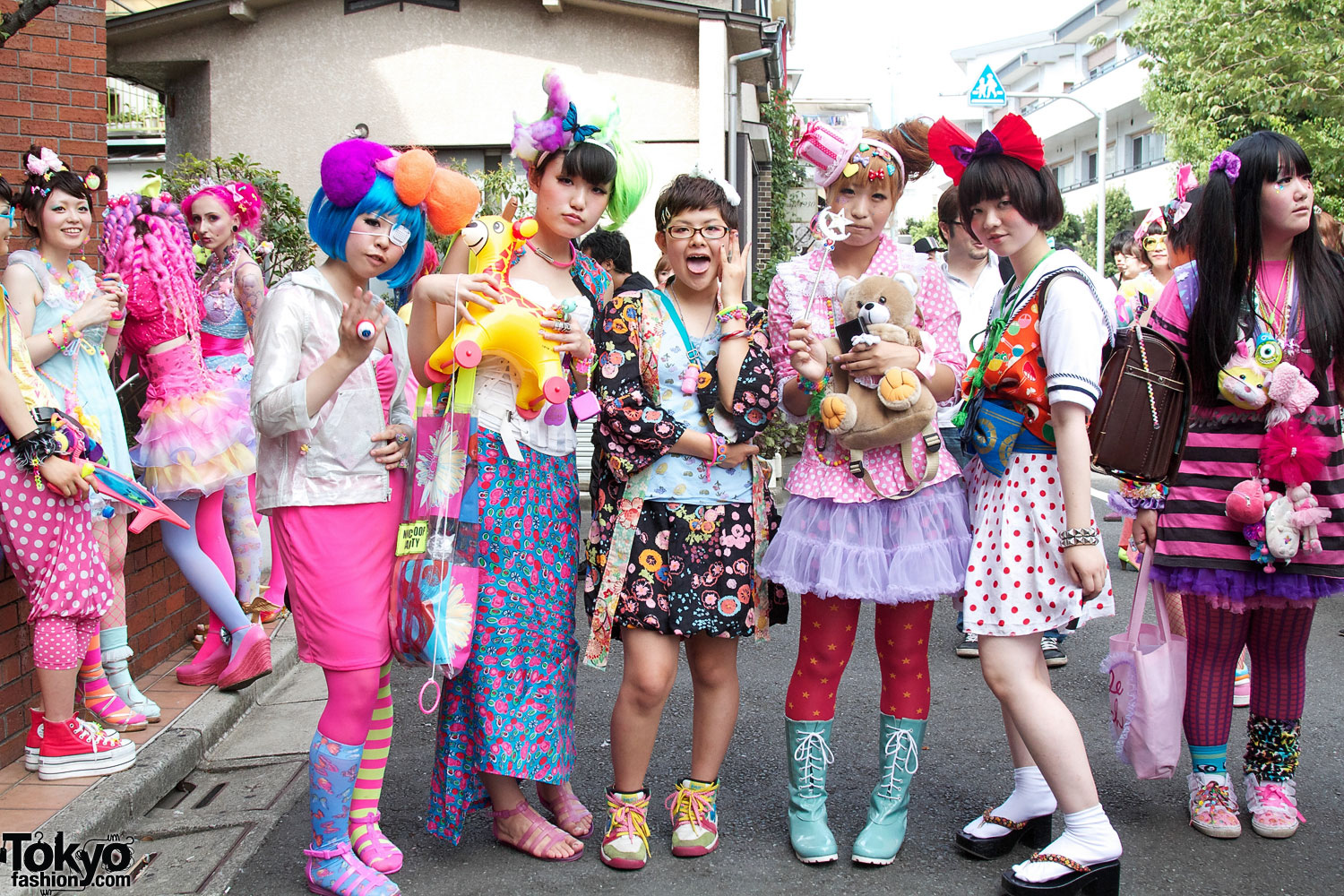
Harajuku girls - We've heart about the Harajuku girls (原宿ガール Harajuku gāru) at least once, if not for Gwen Stefani's melodies. The singer in 2004 managed to climb the international charts with this hit making this clothing style famous all over the world. Although it was very strange to a westerner's eye, the group became a huge success creating a vast empire. As a result, real brands such as Harajuku Lovers were born and are now famous throughout America and the world. Let us not forget the recent KuKu Harajuku, cartoon inspired by the band and the fashion. Despite Gwen Stefani has managed to establish herself in the western market with this brand, she isn't the creator. This particular look sees its birth some years before on the streets of the never boring Tokyo.
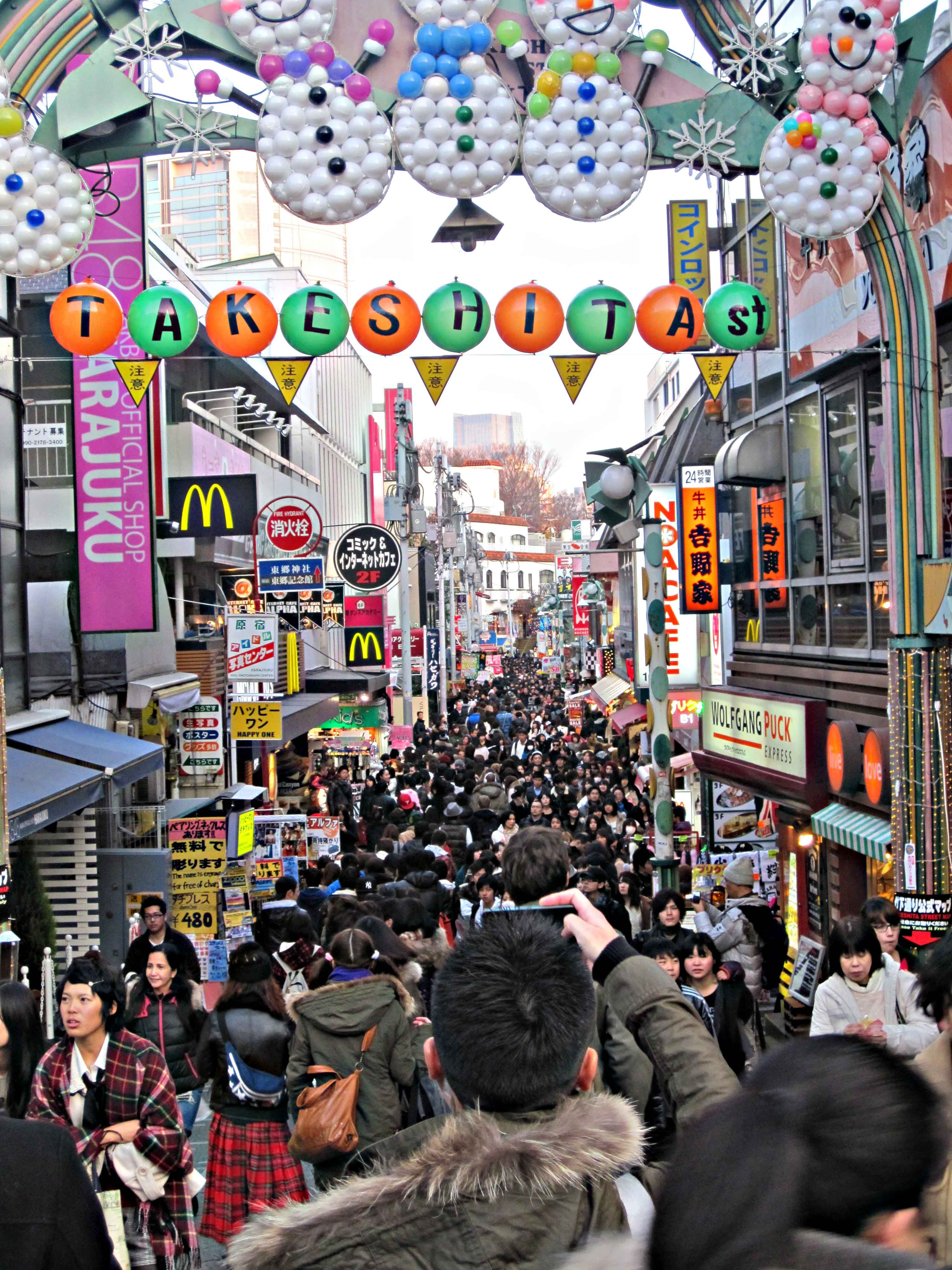
Originated in the second half of the nineties, the term Harajuku (Harajuku 原宿, "accommodation in the meadow") sees its birth in the homonymous area.
Shibuya, the special district of Tokyo where the Harajuku Station is situated, is a place known for the creation of new trends, never dull and extremely popular among the Japanese youth. This is also the district with the most famous shopping streets. The well know Omotesando and Takeshita, the first dedicated to the most famous brands (Chanel, Dior, Louis Vuitton, etc.) and the second to the youthful and alternative style. The latter tends to mingle with different brands and styles, creating something more innovative.

The Harajuku look is part of the street fashion. You can find different sub styles: gothic lolita, sweet lolita and decora to name a few. Although they are associated mainly with the girls in adolescence, within this culture the boys are not exempt. It is not rare to find among them those who follow a look more tied to the Japanese punk style.
Bright colours, layering, traditional Kimonos mingle with western clothes and accessories outside the lines. All of this makes brilliant ways to establish itself in these streets. Those who decide to follow the Harajuku style, must prepare for the race at the last constant trend, because in Japan everything is outclassed in a short amount of time.
It is admitted and granted everything in a look as long as it is always an expression of your own personal individuality. There is not a precise model to follow, it should not be a copy of someone else. The important thing is to express your way of being. For this reason, more than just a fashion this becomes a real lifestyle.
Photo credit: Tokyo Fashion; Amy in Wonderland
Japanese Traditions: Ōmisoka - New year's traditions
Japanese Traditions: Ōmisoka - New year
Shogatsu (or Oshogatsu) is the new year for the land of the Rising Sun.
In the Meiji period, this date was coinciding with the Chinese lunar calendar, but during the restoration of the same period, Japan changed to the Gregorian calendar too, fixing January 1st as the festive day we all know.
For the westerners it’s almost impossible to think to gather 365 days in just one moment. However, opening your eyes in front of the sight of the Hatsuhinode (the dawn of the first sun of the year) it is considered good luck and as the representation of the year that’s about to begin. However, every year, celebrations start on December 28th when all the preparations for new year begin. During the days of the Shougatsu Sanganichi, only the primary services are available, while Japanese people dedicate themselves to the Susuharai, cleaning of the whole house to get rid of all the negative traces of the past year. Kadomatsu (pine braches) and Shimenawa (straw rope with stripes of colored paper) are hanged on the doorsteps to keep the bad spirits away.
Japanese postal office are actively sending out and delivering cards for the best wishes that need to reach friends and families before new year’s day, the nengajou (年賀状).
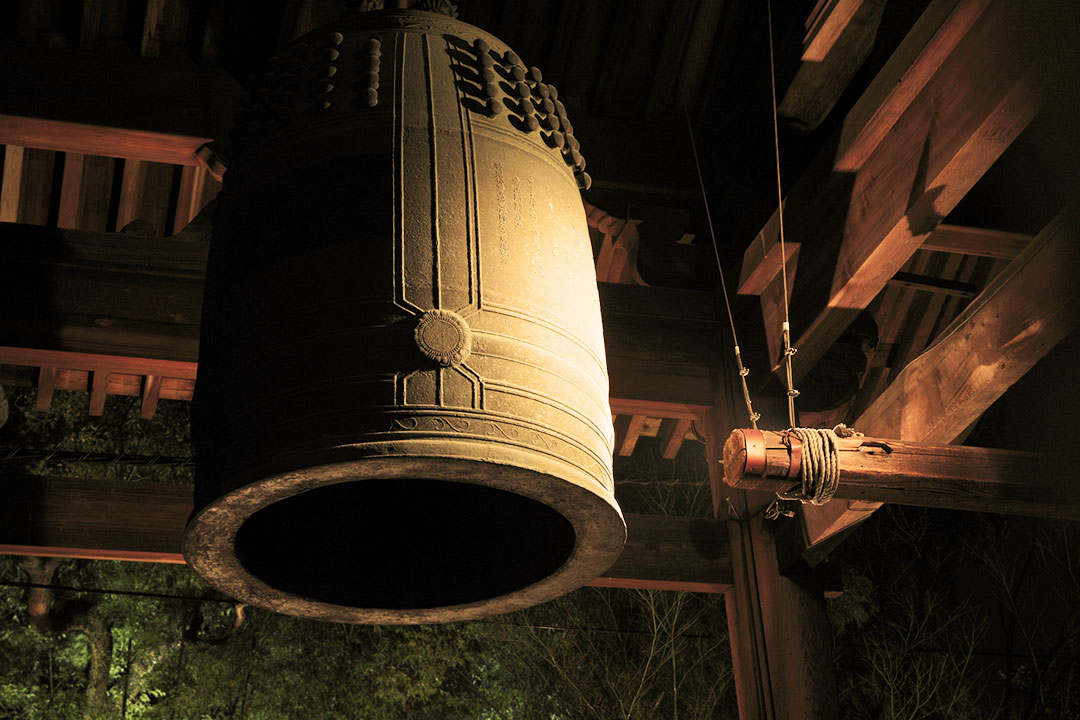
Everything is ready to spend the time with the family and on December 31st, that's when the Ōmisoka begins (literally New year’s eve, the last day of the year).
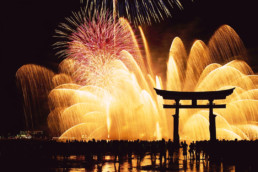
Around 10:30pm the Joya no Kane, the tolls from the Tsurigane (bell of the temple), begins. They are very slow, because the first toll has to stop ringing before a second one is taken. They go on until midnight for a total of 108 tolls. They are said to be purifying for all those who listen so that it’s possible to face a new chapter of our lives.
Traditional foods
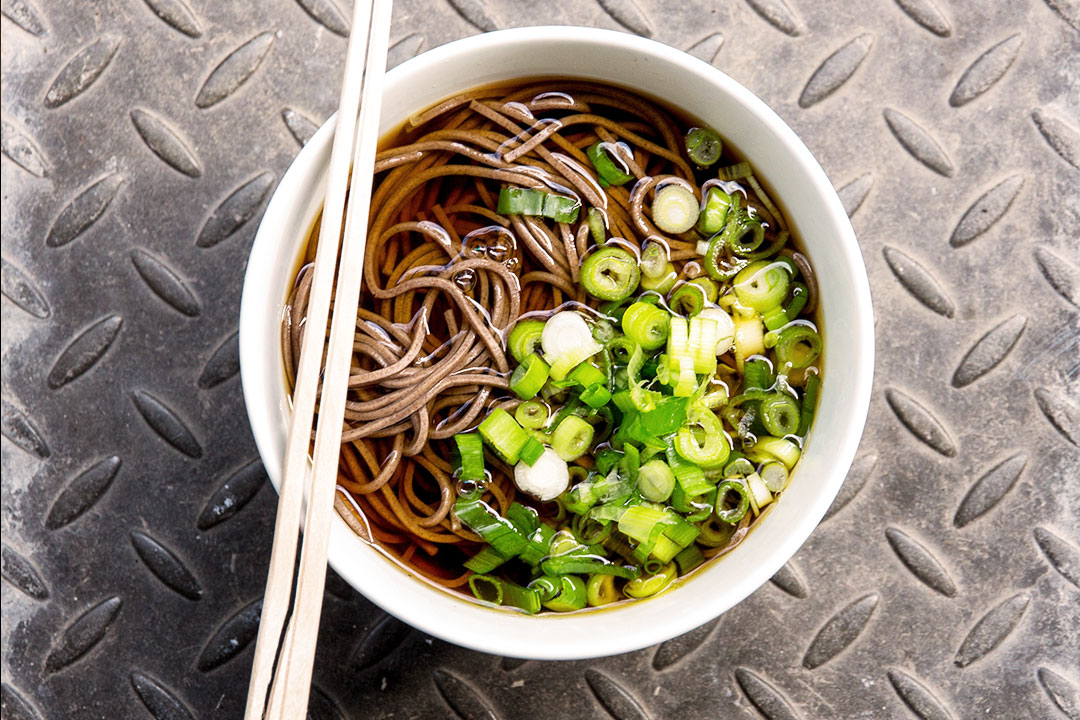
In this night it’s tradition to eat toshikoshi soba (年越しそば), noodles made with buckwheat, eggs and hot broth. The length of the noodles are auspice of a long life, their digestibility indicates the interior cleanliness and the ease in cutting them are a symbol of the removal of all bad things of the past.
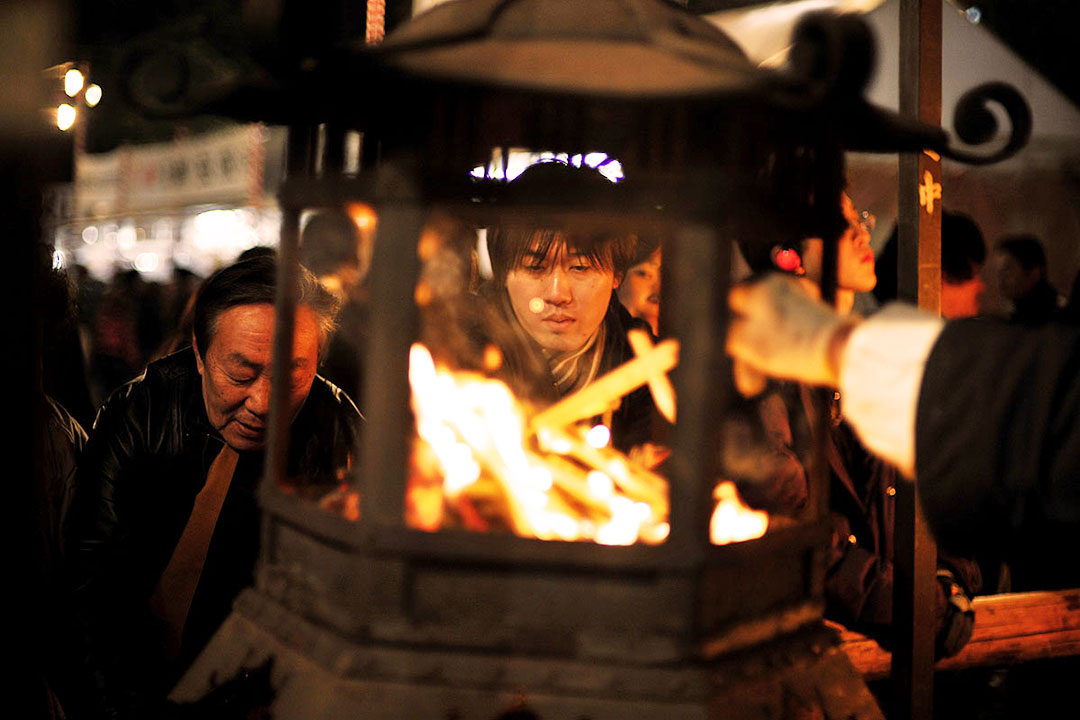
The day after, the first visit to the temple takes place, the HATSUMOUDE (初詣). To pray for health for every family member and their happiness is the right spirit to face a new beginning. Furthermore, Japanese kids usually receive a small engraved envelope, bukuro (袋), containing some money (otoshidama, お年玉).
Family and festivities are connected together also thanks to the food. On the tables you can find theosechi-ryouri (お節料理), specialties coming from the tradition like the kombu (昆布) weed. The kamaboko (蒲鉾, fish cake), kurikinton (栗きんとん, mash potatoes with chestunts), kinpiragobo (金平牛蒡, burdock boiled roots). The most loved and well known Kuro-mame (黒豆, sweet black soy beans) and of course sushi and sashimi. Due to all these specialties, on the 7th day of January there’s the jinjitsu (人日), the day for “stomach rest”, when you only eat the the nanakusa-gayu (七草粥, the soup of the seven herbs made with rice).
If you ever had the chance to be in Japan during the Ōmisoka, tell us in the comments or on our facebook page! We'd love to hear your thoughts and experiences.
Image source: Google