






Japan Modern Culture: 令和 ReiWa, the new Era
令和: ReiWa, the new Era
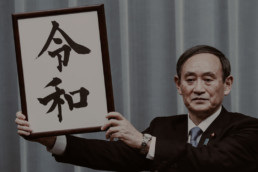
Exactly one month ahead of Prince Naruhito's accession to the throne, Chief Cabinet Secretary Yoshihide Suga announced the beginning of the new Era for Japan.
Reiwa, formed by the kanji 令 (rei) "auspicious", "ordered" and 和 wa "harmony", "peace", reflects the spiritual unity of the Japanese people, because "culture is born and nourished when people take care of each other lovingly" explained Prime Minister Shinzo Abe immediately after the announcement.
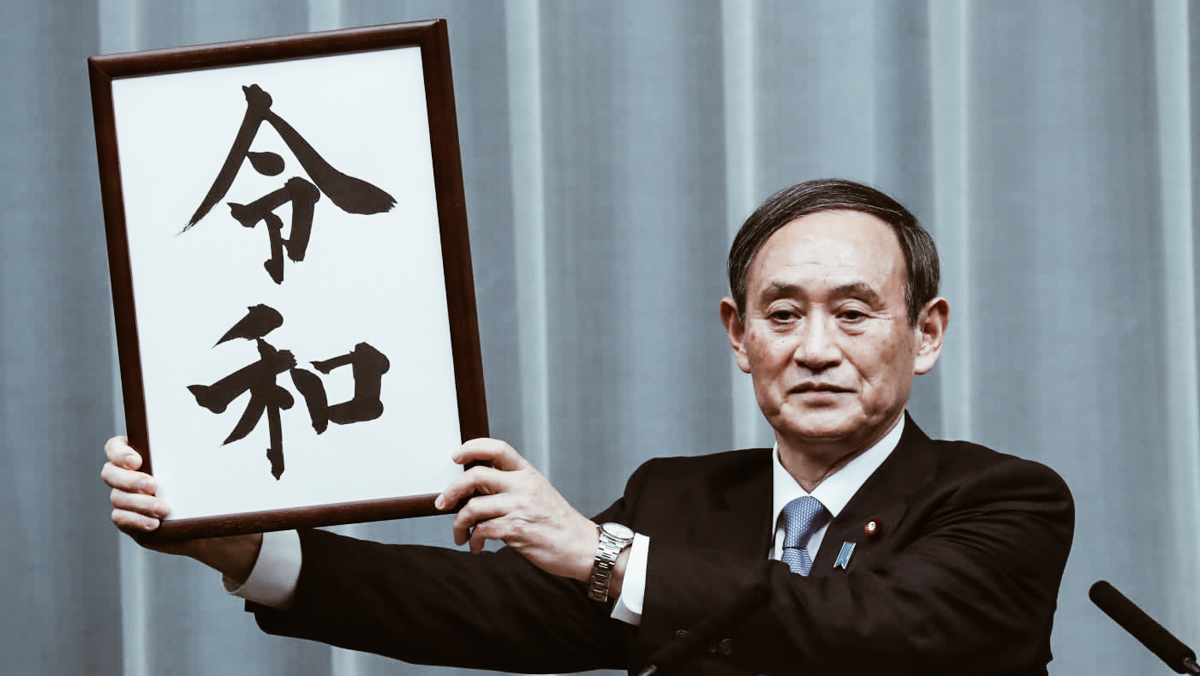
photo credits: asia.nikkei.com
Time passes following the Era of the Emperor
In the Japanese culture, the periods of time throughout history are subdivided according to the system of "eras", gengō (元号): it involves the use of two kanji that represent the hopes, ideals and good intentions for the period to come, followed by the number from the year of the emperor's mandate. According to this system, from 1989 the current era is Heisei 31 (平成31), or the 31st year of the Heisei Era (31 years of "achieving peace" under the guidance of Emperor Akihito). From May 1st, 2019 we will be officially in the Reiwa Era (令和1 - Reiwa 1).

photo credits: tg24.sky.it
The roots of Reiwa
Unlike all previous eras whose names were inspired by Chinese literature, Reiwa has its roots in Man'yōshū, 万集 "The Collection of Ten Thousand Leaves", the oldest collection of Japanese poetry that has survived till today. The authors belong to all walks of life: members of the imperial family, peasants, soldiers, artisans and monks. This choice breaks an over 1300 years old tradition and has a highly symbolic value for Modern Japan. We are wishing for an era of hope and unity and, above all, an era aimed at the preservation of nature. Reiwa will face a path aimed at harmony and to give strength to a nation that in the course of history has always raised up with pride in every adversity and that has never been pulled back.
But how was this name decided?
The choice was made between a list of 30 proposals prepared by Japanese and Chinese literature and history experts appointed by the government for this important task. The traditional procedure requires the Government to make the final choice in a cabinet session, after which the chosen name is revealed to the Emperor in office and he prepares the decree for the proclamation of the new Era.
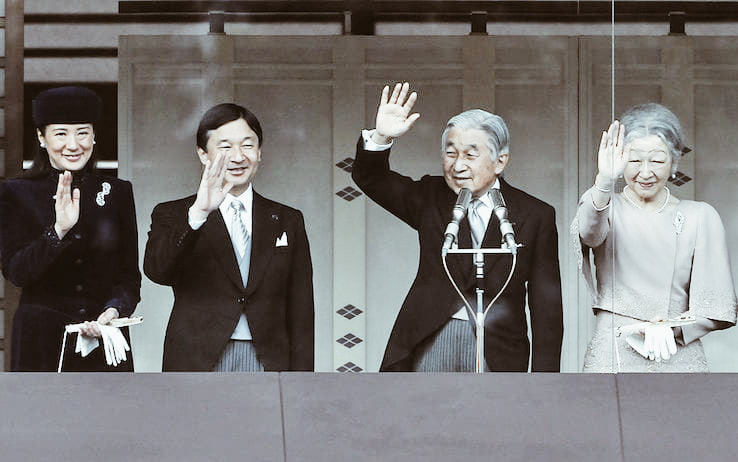
photo credits: kelo.com
Naruhito, Emperor of the Throne of Chrysanthemum
First born of the current Emperor of Japan Akihito and Empress Michiko, Naruhito (皇太子徳仁親王) became the crown prince to the throne following the death of his grandfather, Emperor Hirohito in 1989. Known for his countless charitable works and a series of absolved imperial functions, he will become the 126th Emperor of the Throne of Chrysanthemum (the oldest ever interrupted monarchy in the world) on May 1st, 2019 following the abdication of his father on April 30th, 2019.
The blank pages of a new beginning
The word Reiwa is so full of serenity, even in its pronunciation! The harmony, the peace, the balance that characterize a the people of a nation like that of the Rising Sun thus finds its fulfillment. Just a few days ago, I had a fixed idea in my mind: "a new beginning", I even wrote a thought entitled "Start of a new chapter", and having woken up with the announcement of this new Era, shook me positively. Furthermore, after hearing Prime Minister Abe's speech, my heart was filled with hope. I like the proposal for greater openness to work for those coming from abroad and I believe that this can bring a prosperous future for Japan worldwide.
The spirit of cohesion, solidarity and peace may seem an utopia, but it must start from the small things, from us and then spread like the waves produced by a pebble falling into the water.


Japan Travel: Ginza
Ginza: expensive, elegant and luxurious
Located in Chuō, Ginza (銀座) is Tokyo's most famous shopping area. This luxurious district was once part of the ancient Kyobashi district, which, together with Nihonbashi and Kanda, formed the core of Shitamachi, the original center of Edo-Tokyo. Built on an ancient reclaimed swamp during the 16th century, Ginza owes its name (Silver Mint) to the establishment of a silver coin mint (Silver Coin Mint) on this land in 1612.

photo credit: wikimedia.org
A devastating fire destroyed much of the area in 1872. Following this incident, the government decided that reconstruction was to use fireproof bricks to erect new buildings, and the roads should be improved and enlarged. At the same time, they should be able to connect Shimbashi station to Tsukiji. This new version of Ginza was designated as a "model of modernization" and the Irish architect Thomas Waters was given the responsibility of designing the area. In the following year, a long western-style shopping street rose with two- and three-storey Georgian brick buildings reaching from the Shinbashi bridge to the Kyōbashi bridge.


However, the high cost for both the purchase and the lease of these new buildings prevented their long-term occupations and at the same time, an issue regarding the climate arose; such buildings were not suitable for the weather conditions unique to Tokyo. To add to the issues, the design of this area contrasted with the traditional Japanese style, and as such it was not quite appreciated by visitors who were much more interested in an Edo-style town and rather than something "similar to Broadway", as described in the words of the English tour guide writer, Philip Terry.

Despite stylistic problems, Ginza managed to flourish as a symbol of "civilization and enlightenment", becoming famous for its rich shop windows. In the period between the two world wars, the habit of spending time and walking through Ginza, even with no purpose, grew very popular. As time passed, most of the European-style buildings have disappeared. Among those remaining is the Wakō building, originally built by Kintarō Hattori, with its iconic Hattori Clock Tower and its luxurious gold objects inside.

photo credits: japantimes.co.jp
Not only shopping
A key stop for shoppers in Ginza is definitely Ginza Six. Opened in the spring of 2017, it is the largest shopping complex in the district. In addition to numerous cosmetic and fashion floors, there are floors dedicated to food and interior design, a large Tsutaya bookstore specializing in art publications, a pleasant rooftop garden and a Noh theater in the basement.
No less famous is the store of the chain Mitsukoshi. While this store opened in 1930, its history dates back to 1673, when it was first established. It offers products and services on twelve floors. Fans of the brand Uniqlo will find satisfaction in this 12-storey building which offers the widest range of products in the world of this brand.

Ginza, however, is not just limited shopping. For Kabuki representations, the best place is found in this part of town. It is the Kabukiza Theater. Do not miss a trip to the Yurakucho Gado-shita Dining as well. It is one of Tokyo's most interesting dining options, located under the sky train tracks, north and south of the Yurakucho station (In Japanese: Gado-shita, "under beam"). Dozens of restaurants are integrated into the brick arches below the Yamanote line which extend for over 700m. Here you can taste world-famous Japanese cuisine, or sip special wines in the luxurious French wine shops.

photo credits: harv.world

Japan Folklore: Nippombashi Street Festa
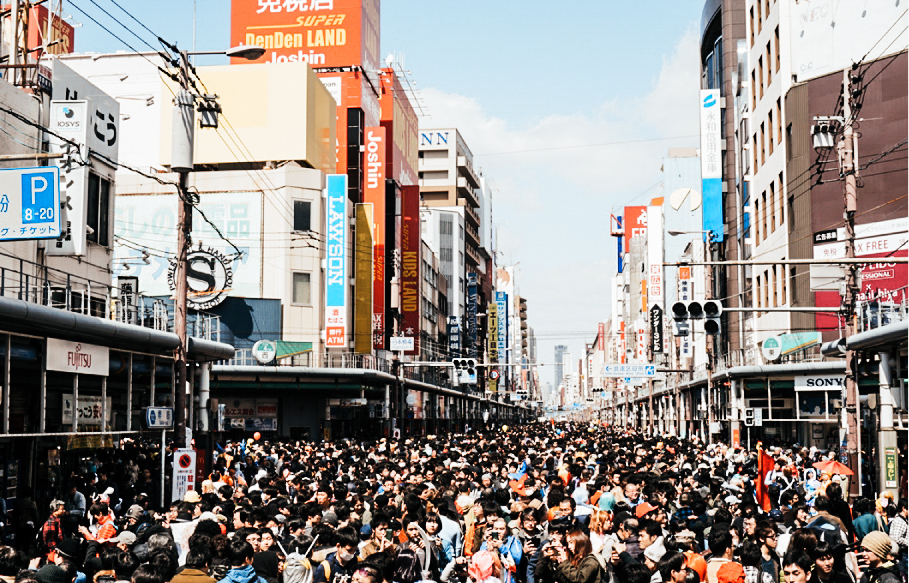
photo credits: jnto.go.jp
In Osaka, anime and manga come to life
Every year since 2005, between early days and mid-March, the streets of Den Den Town located between Ebisucho Station and Nihonbashi are closed to car traffic for the biggest cosplay event in all of Japan: the Nippombashi Street Festa (日本橋ストリートフェスタ).
Den Den Town is the electronic district of Osaka that, thanks to its toy stores, video games stores and computer stores, has begun to attract a large number of manga and anime fans, soon turning into one of the "sacred" destinations for Otaku. Each year the festival is enhanced by attracting not only the local but also a more international audience!

photo credits: reddit.com
The Festival begins!
Preparations for the event start around 11:00 am with the roads closing to traffic. Here, above the street the main stage on which guests, cosplayers and sponsors alternate throughout the day is built.
The opening ceremony begins at 12.00 pm when a road is created for the parade of the 1,000 best cosplayers from around the world. After the show, cosplayers perform and pose for all those wishing to approach their favorite character. Many of them take advantage of the event to promote their socials accounts, writing their address on whiteboards or signs placed next to them while they are immortalized in the poses studied in advance.
Obviously the event is not open only to professionals, but hundreds and hundreds of people wear their own costume. It doesn’t matter if this belongs to pop culture, anime, manga, video games or even cartoons and characters from American comics (especially Marvel, Adventure Time and Star Wars), almost 10,000 people a year turn into their own hero! Of course, the festival is free, but if you want to participate in the parade, an entry fee of around 1,500 yen is needed.
The event is also the perfect opportunity to find unique designs by Nippombashi Street Festa and exclusive goods.

photo credits: nippombashi.jp
The cultural exchange project between Japan and France and an exceptional ambassador
From 2018, year of the 160th anniversary of friendship between France and Japan, the 「Japan-France pop culture Exchange project」was promoted in order to deepen the cultural exchange between manga, animation, music and other aspects of Japanese pop culture with the France in collaboration with the「Japan Expo」.
To disseminate the event and make it even more alive, KAMIJO, the talented Japanese artist who became particularly famous in France, was chosen as the project's ambassador.
This year the Nippombashi Street Festival will be held on March 9th and will be the perfect opportunity to immerse yourself not only in the magical world of fantasy, but also in the musical world!
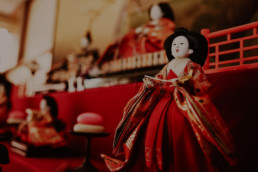
Japan Tradition: Hinamatsuri

photo credits: mcasiwakuni.marines.mil
Doll’s Day
There is a special celebration held annually on the third day of the third month in Japan known as Hina-matsuri (雛 祭 り), also known as Doll’s Day or Girl’s Day. During this celebration, the misfortunes of girls are transferred to the dolls and the family members pray to the gods for their daughters’ good health and beauty.
This festival dates back to the Heian period (1650) and in Japanese culture, dolls have always been believed to have the capacity to contain evil spirits. During the Hina-Nagashi (雛 流 し, The floating doll) ceremonies, straw dolls will be placed along the course of a river to take the evil spirits away with them. This ritual is still carried out in some parts of Japan.

photo credit: monchhichi.net
The Dolls of Hina-dan (雛 壇)
The hina-dan is a platform of 7 steps covered by a red carpet with a rainbow stripe at the bottom, called hi-mōsen. The hina ningyo, ornamental dolls passed from generation to generation, are placed on this hina-dan.
On the first step, the highest step, are the dolls representing the imperial court of the Heian period, the position of emperor and the empress, behind them a small golden screen and two lanterns of paper or silk on the sides.
On the second step there are three court ladies serving sake and separated by two small round tables (takatsuki), on which seasonal sweets are displayed.
On the third step there are five male musicians who are arranged from right to left and based on the instrument they hold in this order: a musician seated with a small drum, a standing musician with a large drum, a standing musician with percussion, a sitting player with the flute and, finally, a singer seated with a fan in his hands.
On the fourth step there are two ministers: the younger is placed on the right, the elder on the left. Both of them are equipped with bows and arrows while separated by takatsuki.
Three samurai, protectors of the emperor and the empress, are placed on the fifth step. They each hold a rake, a shovel, and a broom with respective expressions of weeping, of laughter, and of rage.
On the sixth step there are the objects that the court uses inside the building.
On the seventh and final step, the lowest tier, are the objects the court uses when they are far from the building.

photo credit: trend-blog-site.com
Between kimoni, hishi-mochi and amazake
During the festival, girls wear their most beautiful kimonos or dress up like dolls. There are numerous themed parties where shirozake, a special sweet and non-alcoholic sake based on amazake (甘 酒, a sweetener obtained from the fermentation of rice), arare (あ ら れ, crackers composed by glutinous rice and flavored with soy sauce) and the traditional sweet of Hina-matsuri, hishi-mochi (菱 餅 ひ し も ち) are served.
Hishi-mochi is a cube-shaped glutinous rice mixture made up of three colored layers. Each layer holds special meanings. Green represents the grass and symbolizes health; white represents snow, a symbol of purity; and finally, rose represents the plum blossoms fighting malignancy. Together these three colors indicate the arrival of spring, when the snow melts, the grass grows and the plum blossoms start to bloom.
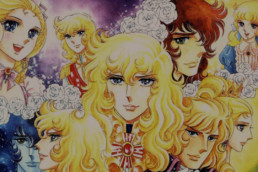
Japan Folklore: Versailles no bara, the best-selling manga

photo credit: nefariousreviews.com
In 1972, Riyoko Ikeda created what became the manga and, later, the most famous anime of all time: "Versailles no Bara" (ベルサイユのばら, The Roses of Versailles, known in Italy as Lady Oscar). The talented mangaka, whose meticulous and elegant style has come to stand out and be considered the Shōjo Teacher, had to face her own publisher before seeing her published idea. The publisher was in fact convinced that a biographical manga starring Marie Antoinette could bore readers. Riyoko Ikeda undertook to prove otherwise and in May 1972 the first instalment of "Versailles no Bara" appeared on Shukan Margaret issue number 21, published by Shūeisha, on a weekly basis for a total of 82 episodes ended in 1973.
Between 1972 and 1974, 15 million copies were sold, thus electing Riyoko Ikeda as the queen of the historical manga.

photo credit: supereva.it
The history of the roses of Versailles and the wind that swept over them
In the last years of the Ancien Régime, the young Marie Antoinette of Austria was promised to marry the French dolphin, Luigi Augusto, nephew of Louis XV but his cousin, the Duke of Orleans plotted to kill him and usurp the throne. At the head of the Royal Guard was Oscar François de Jarjayes, a young noblewoman raised by her father, General De Jarjayes, as if she were a boy because he wanted a male heir. Alongside Oscar was a young attendant, André Grandier, nephew of the housekeeper of the Jarjayes family, to whom the General had entrusted the task of serving and protecting her. Covering her role, Oscar foiled many plots that aimed to kill the two princes, thus leading to being esteemed and considered a friend by Marie Antoinette. The capricious future queen, escorted by Oscar at a ball court, met the Swedish count Hans Axel von Fersen, of whom both women fall in love.
At the death of the King, Marie Antoinette and Louis XVI became sovereigns of France and, since the slander on a presumed relationship between Fersen and the Queen did not take long to spread, the count abandoned the country to avoid scandal and enlisted in support of the revolutionaries of America. Marie Antoinette, more and more unhappy and lonely, allowed herself to be influenced by the Countess of Polignac, an ambitious woman who became her favourite and urged the queen to squander money in frivolity. After a few years, the Count of Fersen returned to France and inevitably went back to Marie Antoinette, who, unable to control her feelings, was on the verge of a scandal. Once again the count left the country and the queen, following the birth of the heirs to the throne, decided to move away from the life of the court and retire with her children in the Petit Trianon, arousing the hatred of the high nobility. In the meantime, the famous "Deal of the Necklace" broke out, which threw the first shadows on the public reputation of the queen. Shortly after, Fersen returned from America and during a court ball, Oscar showed up in disguise dressed for the first and only time as a woman but, dancing with Fersen, realized that she could never replace the queen in the heart of the Swedish count and she decided it was probably better to live forever like a man. Following the case of the Black Knight and the further attempt to discredit the royal family in the eyes of the nobility, Oscar abandoned the command of the Royal Guard obtaining from the queen the post of commander of the French Guards regiment of Paris. André, despite being rejected by Oscar after declaring her love, he remained by her side anyway.
General Jarjayes realized that he had made a mistake in allocating his daughter to a military career and began to wish that she would marry, so the second of Oscar in the Royal Guard, Girondel, made her a marriage proposal, but Oscar did not accept, preferring her new soldiers and attempts to earn their respect. The French revolution was at the door: Oscar, who understood to love Andrè, sided with him on the side of the people and together died during the riots of the storming of the Bastille July 14, 1789. The years of the revolution lasted until Marie Antoinette’s execution on the guillotine on October 16, 1793.
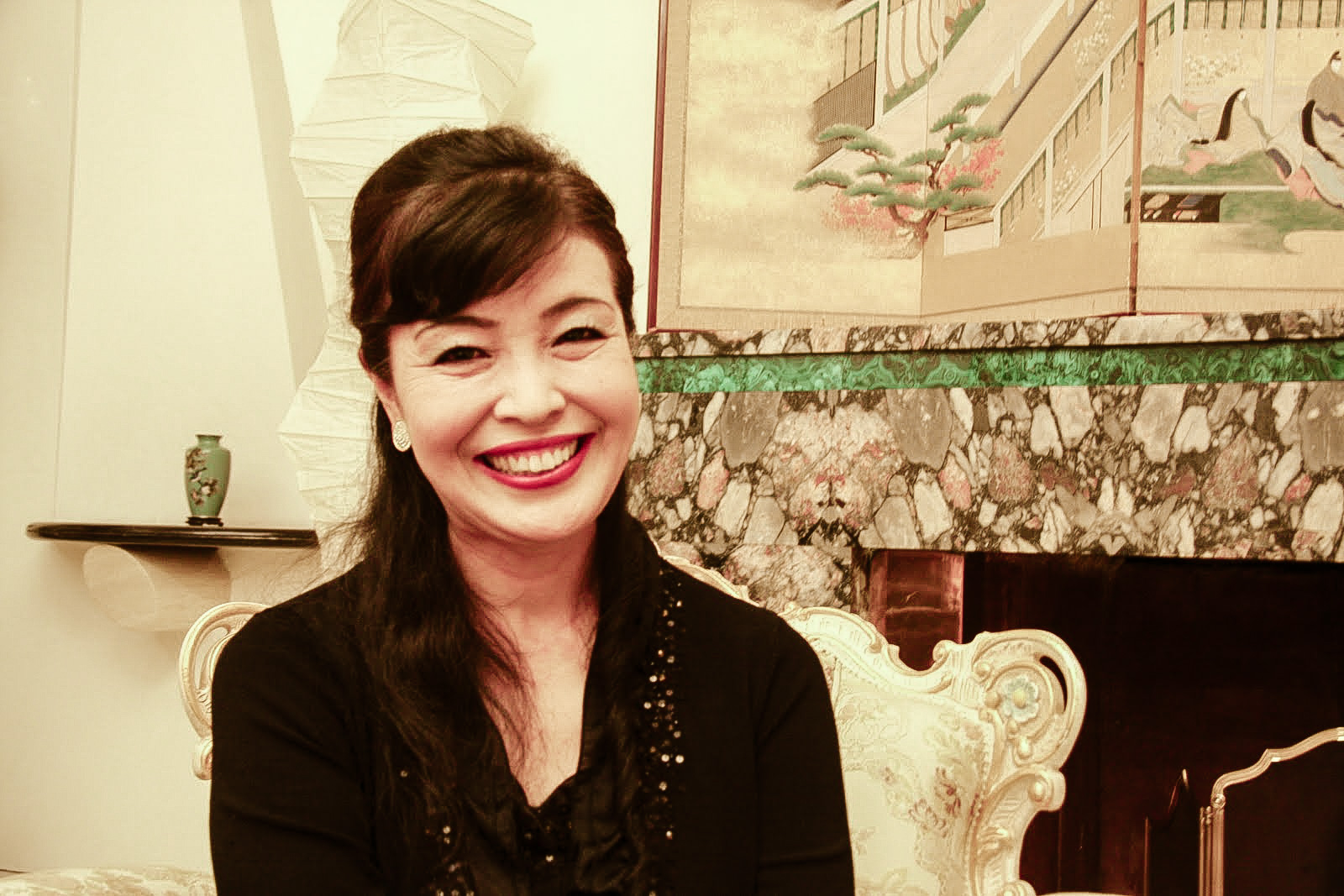
photo credit: romaspettacolo.net
One series is not enough!
Twelve years after the mother series, Riyoko Ikeda decided to publish a 4-episode miniseries entitled Versailles no bara gaiden (The Roses of Versailles - Gothic Stories) whose protagonists are Oscar, Andrè and the little Loulou de La Lorencie, Oscar's niece. The episodes narrated are placed between volumes 7 and 8 of the original manga. In 1987 Eikō no Napoleon-Eroika (栄光のナポレオン-エロイカ, The glorious Napoleon - Heroic) also appeared as the official sequel, whose title "Eroika" refers to the third symphony of Ludwig van Beethoven, dedicated to Napoleon. These 12 volumes narrate the events of Napoleon immediately after the French Revolution: his empire, the Italian campaign, the campaign of Egypt, the battle of the Nile, the coup d'etat of the 18th Brumaire and the French invasion of Russia. in the course of the narration, some of the already known characters will reappear, but only through flashbacks.
In 2006, Riyoko Ikeda decided to take the pencil again to create "Berubara Kids": an amusing reinterpretation in coloured stripes in which the characters of Versailles no Bara reappear in "chibi" version in key scenes. The small parody was published weekly on "Be", a supplement of the newspaper "Asahi Shimbun".

photo credit: pinterest.it
Roses die in beauty
The fascination of Versailles no Bara pushed many musicians to reinterpret the famous "Bara wa utsukushiku chiru" original song of the anime, but Riyoko Ikeda recognized the LAREINE version with license. The first CD came out on October 1, 1998 and in limited number of copies: only 500 with serial number of which the first 4 were owned by the members of the group. Fortunately, in 1998 it was re-edited and Bara wa utsukushiku chiru officially became the fourth single of the band. On February 9th 2000 the most valuable CD edition was released, containing only two audio tracks in which Riyoko Ikeda herself participated as a soprano singer and took care of the graphic design, also designing the costumes of the band for the music video.
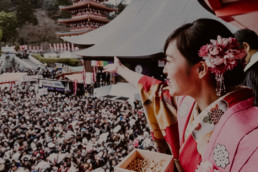
Japan Folklore: Setsubun, how to drive away the demons of winter to welcome spring

photo credits: pinterest.it
Traditional Japanese culture has always been characterized by a constant and loving observation of the natural world, its manifestations and its seasonal cycles. Therefore, the attention given to spring, the special moment when nature awakens in all its creatures the necessity of renewal, must not marvel.
This season is celebrated in Japan with the haru matsuri (春祭, spring festival), a set of events whose beginning is marked by the occurrence of Setsubun (節 分). In the traditional Japanese lunisolar calendar, in fact, every change of season is introduced by a day called, indeed, setsubun (literally "division of the seasons"). Spring setsubun, which falls on 3 February, represents the last day of winter and the day before the start of the new season. It marks the transition from "Taikan" (大寒, big cold) to "Risshun" (立春, first day of spring) and is therefore the most favorable moment for a special "cleaning" from winter burdens, which will drive away evil spirits and favor the entrance of the new life-giving energy. This is the meaning of the traditional "demon expulsion" that takes place on this day through different rituals and customs.
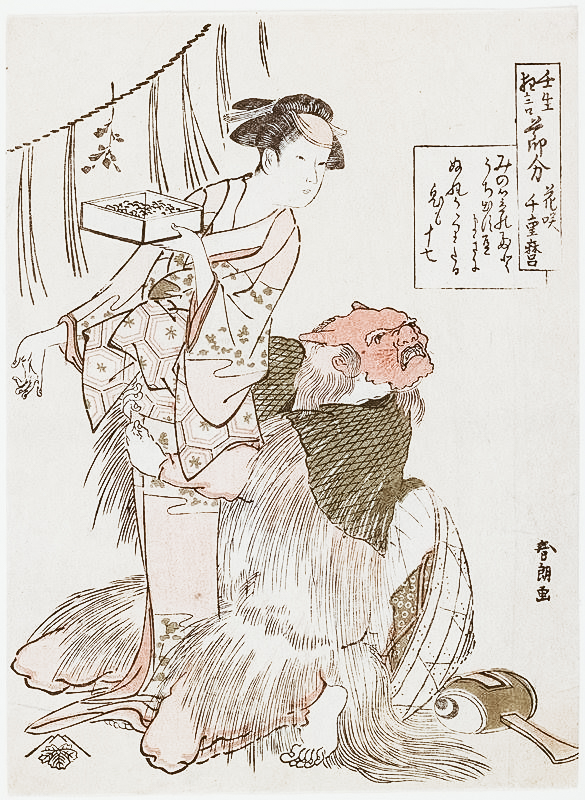
photo credits: pinimg.com
Ancient rituals and family fun
The most famous ritual is undoubtedly the mamemaki (豆 撒 き), which is the launch of soy beans. In the domestic sphere it is entrusted to Toshi Otoko (年 男, man of the year), that is the man of the family of the zodiacal sign of the lunar year entering or in his absence the oldest of the house. He has the task of driving out the harmful spirits and negativities from the house and the new year that is about to start by throwing around irimame (炒 り 豆, toasted soy beans) to the cry of "Oni wa soto! Fuku wa uchi! (鬼は外! 福は内, "Outside the demons! Inside fortune!"). In alternative, he can hurl the beans at another member of the family who plays the part of the demon wearing a mask of oni (Japanese folklore ogres). Subsequently, each member of the family must collect and eat a number of beans corresponding to their age plus one to ensure a year of success and good health (in the popular tradition, in fact, the demons are considered carriers of natural disasters and diseases).
When the oni is expelled, it is necessary to keep the evil spirits away from the house. For this reason it is possible to see in this period of the year some very special amulets, the Hiiragi Iwashi (柊 鰯), exposed at the entrance of the houses. These are holly branches that have the head of a dried sardine skewered on the end, sometimes complemented by pieces of garlic or onion, which have the purpose of keeping demons away, scared by the thorns and the pungent odor emanating from these talismans.
In both cases it is a tradition that has its roots in antiquity. Nowadays it is possible to buy "Setsubun sets" - made of oni masks and roasted beans - in any combini, but in reality the mamemaki custom would have originated in the Muromachi period (1392-1573) and seems to be inspired to an ancient legend, whose plot is still represented in the form of pantomime in the temple of Mibu-dera in Kyoto. Here the kyogen (ancient Japanese theatrical form) titled "Setsubun" is repeated several times during the day and it is said that it is sufficient to watch it to be purified by any negative or evil spirit. Its plot follows the folk tale that tells of an ogre who, in human form, goes one day to visit a widow. Thanks to its magic hammer, the ogre makes a beautiful kimono, which attracts the widow's attention. Eager to take possession not only of the kimono but also of the magic hammer, she decides to get him drunk to be able to steal them both. The ogre, however, aware of the theft, reveals his demonic nature and attacks the woman, who defends herself with the first thing that is within reach: a handful of soy beans. The oni, wounded but again in possession of his goods, flees leaving the widow safe and sound and perhaps a little wiser.

photo credits: toyokeizai.net
Knowing how to look in the right direction
A tradition of more recent origins, born in Osaka but later spread to the rest of the country, is instead linked to the ehōmaki (恵 方 巻, scroll of lucky direction). In this case, to ensure that the good luck is on our side in the year that is about to begin, it is necessary to eat a special sushi roll in a single solution, without interruptions and in silence, facing the lucky direction of the year. The act is less simple than it may seem, considering that the ehōmaki is much more often than a common sushi roll (having to contain seven ingredients to propitiate the seven gods of luck) and is 20 centimeters long. It is not worth eating it cut into pieces, because doing so would also cut luck. To perform the ritual correctly, it is therefore necessary to arm yourself with concentration, determination and a precise compass. For those interested in experimenting with this custom, the most common ingredients to obtain for the filling are cucumber, surimi, salmon, tuna, anago (sea eel), tamagoyaki (Japanese omelette), dried kanpyo strips and seasoned (Japanese pumpkin) and shiitake mushrooms, as well as rice and nori seaweed, while the lucky direction for 2019 is East-North East.
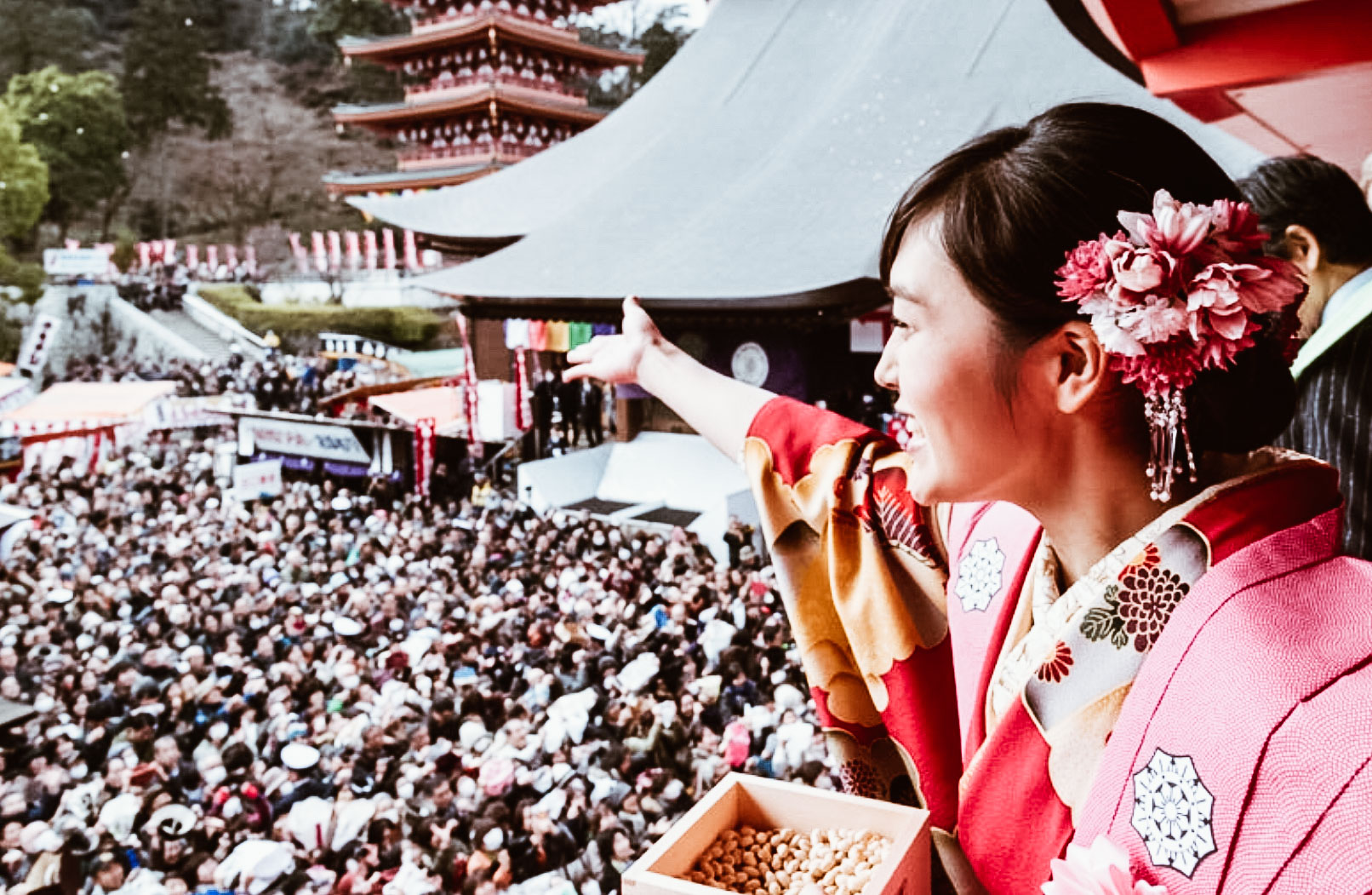
photo credits: shinsenhino.com
Festive temples
The Setsubun can be celebrated in a domestic environment or at least in a private dimension, with relatives and friends, but it is also and above all a recurrence to be lived in community. For example, schools often organize moments of recreation for children, who wear oni masks or have fun chasing adults dressed as demons while hurling beans against them. But it is especially in the temples that it is possible to experience the collective dimension of the party, participating in the events specially created for this day. First of all, of course, the mamemaki, carried out by the monks who throw soy beans from the top of the stages on the crowd gathered for the event. In some temples more shifts are organized for this ritual, reserving some special ones for children, who in addition to the beans receive sweets or small gifts. In addition to the monks, celebrities are often present, such as sports champions, personalities of the entertainment world, actors of the kabuki theater, geisha and maiko, television celebrities, who add a note of attractive glamor to traditional festivities. Among the latter we must remember the theatrical performances, the various purification ceremonies or even the striking archery performances, in which the archers throw their arrows at targets that have demon-like features.
In short, Setsubun is the ideal day for those who wish to live in company a start of the year that helps to renew their energies and for families who have the opportunity to spend a moment of joy together, something that always remains the best talisman against all evil at every latitude.
Japan History: Italy & Japan 150 Years of Friendship
Italy & Japan 150 Years of Friendship

Photo Credits: Ambasciata del Giappone
150 years of friendship between Italy and Japan was celebrated in 2016.
This relationship between these two countries dates back to 1866, on the 4th of July, when an Italian military ship sent by King Vittorio Emanuele II arrived in Yokohama port to offering a treaty of friendship and commerce.
Back then, both countries had a common goal. They were eager to close the economic distance that separating them from the other more influential and powerful countries in those days.

Photo Credits: L'inviato Speciale
An alliance for better or for worse
After the end of First World War, Italy and Japan experienced same outcome. They both won the conflict, however both felt "betrayed" following the Versailles Treaty. Italy suffered from the indignation of not getting all the territories that it expected while Japan suffered from diplomatic defeats in the rejection of Japan's bid for a racial equality. Moreover, the two countries were experiencing critical post-conflict economic situations that would have led towards a totalitarian regime of the Second World War.
In 1937, Italy went against the Russian’s communist politics, like how Japan did when they signed the Anti-Komintern Pact with Hitler's Germany. In the following year, the fascist national party landed in Japan, and Mussolini's works were translated into Japanese. The Germany-Japan-Italy Tripartite Agreement was signed, creating the Rome-Berlin-Tokyo alliance. In that period Mussolini made several visits to Japan.
All those who refused to join the fascist party in Japan were interned in the camps at Nagoya.
The atomic bombs dropped to Nagasaki and Hiroshima hit Japan hard and both Italy and Japan had to recover from the tragedies caused by the war. At the end of the Second World War, both countries underwent radical transformations.

Photo Credits: Il turista curioso.it
An eternal bridge
The bridges built between the two countries continued to multiply over the years. In 1970, the first intercontinental television link between NHK and RAI broadcasters led to new cultural exchanges, allowing the products and lifestyles, from food to martial arts and increasingly intense linguistic exchanges, to grow ever closer.
In recent times, the mutual influence between the two nations also translated into architectural works.
Architect Kenzo Tange, who gave Tokyo its present-day landscape, designed numerous buildings in Italy, like the towers of the Bologna exhibition center and the business center of Naples, while Renzo Piano designed the Osaka airport and Ushibuka Bridge.
These days, Japan and Italy continue to enjoy cordial and friendly exchanges, growing and strengthening their relationship with each other as they always have through the past 150 years.

Metropolitan Governement Building Shinjuku Park Tower
Photo Credits: Japan italy Bridge

Ushibuka bridge, Photo Credits: Wikipedia.org

Japan Travel: Hanami
Hanami
About Hanami, or the Flower viewing.
In Japan, spring is synonymous with Hanami. Written with the kanji: Hana 花 "flower" and mi 見 "viewing", the word hanami means enjoying the beauty of blooming flowers. In particular, it refers to the Sakura: cherry blossom.
To understand the profound meaning of this magical tradition, Yosa Buson's haiku is perfect:
“Cherry petals
in the rice-seedling water,
moon and stars.”
In these words we read the aesthetic symbolism behind the relationship between nature and human beings in which everything becomes harmonious. Spring is, in fact, a "rebirth", therefore a renovation of the soul and of the spirit. The falling flowers indicate the transience of things. As flowers reach the peak when they bloom and then fall to be carried away by water, beauty is therefore wonderful and ephemeral at the same time. In Japanese, we can summarize this concept in the small sentence 物の哀れ, "mono no aware". This aesthetic concept expresses a strong emotional participation toward the beauty of nature and human life, with a consequent nostalgic feeling linked to its incessant change.
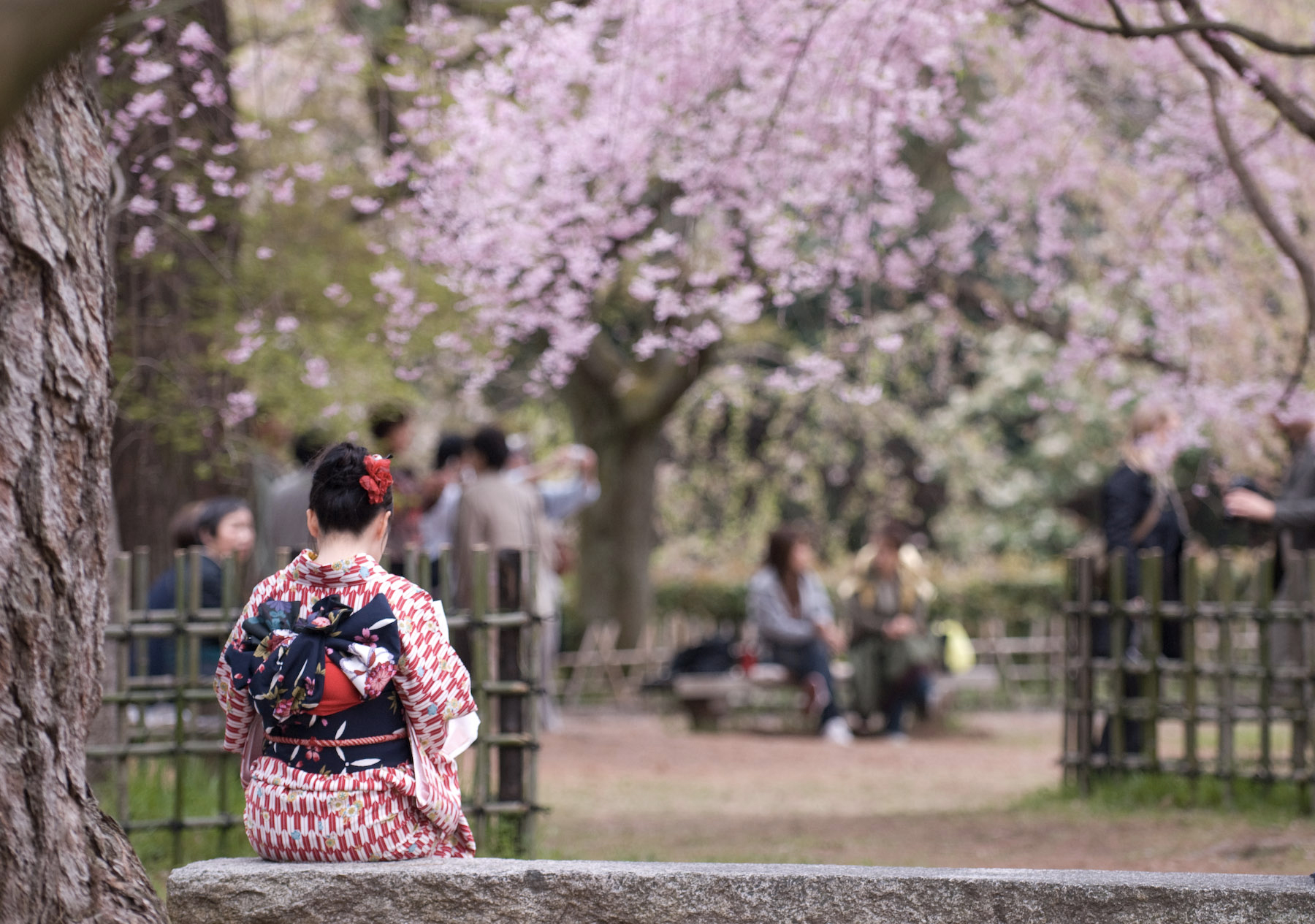
Photo Credits: regex.info
The Roots
Yoshino hills is where cherry trees originated in Japan. The legend says that in the VII century the priest En-no-Ozuno planted some sakura trees casting a curse on them. The curse would hit anyone who dared to cut the trees down. However, there are those who say that the hanami came from China, at the time of the Tang dynasty, which influenced Japan in the Nara period. Originally, there where the “ume” (prunus trees) to offer viewers the spectacle of their flowering. During the Heian period (794-1185) however, the Japanese imperial court moved to Kyoto where the unparalleled beauty of the cherry trees outshone that of the prunus.
Murasaki Shikibu, the court-lady that wrote the "Genji Monogatari”, the first novel ever written, used the word “hanami” related to the cherry blossom viewing for the first time. In the beginning, it was a rite restricted to an elite of nobles, dignitaries, samurai and poets, that drank sake and recited haiku on the beauty of the cherry blossom. In the following Edo period, the hanami spread to lower classes as well, eventually becoming a national holiday. This was also thanks to the shogun Tokugawa Yoshimune that planted areas of cherry blossom trees all over Japan.

Photo Credits: kabekin.com
Between Beauty and Transience, Hanami today
The hanami takes place in a period of time that extends from March to April when sakura reaches their blooming season. Traditionally, people gather together laying out their blue tarps under the trees and, armed with their bento, enjoy the spectacle of nature eating traditional dishes. Among them we can find the hanami-dango, rice dumpling of three colors: pink, white and green, accompanied by green tea and lots of sake. Another typical dish is the sakura mochi, a sweet made of red bean paste and rice, all wrapped in a pickled cherry blossom leaf. And the enjoyment goes on until the evening arrives, culminating in the Yozakura 夜桜 when the night is illuminated by chochin, traditional colored lantern made of paper.

Photo Credits: thespruce.com
Chasing after the best view
Japan is completely invaded by the simultaneous blooming of the trees awaken from the winter torpor, something that strikes the heart as well as the eye. But there are places where the charm of nature is more overwhelming than anywhere else. Among the must-see spots there is the Maruyama park in Kyoto, that is famous for the Shidarezakura, the unique weeping sakura. In Tokyo we can find the Ueno Park with its ancient temples and the Shinobazu pond. The Himeji castle, Hyōgo prefecture, is surrounded by a labyrinth-like wood of cherry trees, while the Hirosaki Castle, Aomori prefecture, is famous for its 2,600 cherry trees. Also, Mt. Yoshino, Nara prefecture, is where 100.000 cherry trees stand out on top of the mountain.