






Chadō, the Japanese Tea Ceremony
If there is anything in which the Japanese are true masters is in living in harmony with life itself, this is demonstrated by the Japanese tea ceremony, also known as Chadō. A real gift, their innate ability to flow naturally with everything that happens from the smallest everyday gestures. Rooted in the here and now, fully in tune with the present moment.
Chadō, the Japanese Tea Ceremony - 茶道
Guest Author: Flavia

photo credits: YouTube
Therefore, it's not surprising that the people of the Rising Sun have been able to translate this extraordinary talent into various forms of art. They are in fact real ways of living (the so-called Ways - 道, Dō) through which to express their ability to grasp the meaning of existence. The Chadō or Sadō ( 茶道 ), or the Way of Tea, is one of the most significant and appreciated. Otherwise called Cha no Yu (茶の湯) - literally "Hot water for tea" - it is a social ritual aimed at educating the individual. A true philosophy of life and aesthetic form that has strongly permeated Japanese culture. But how did this tradition originate?
The matcha, from southern China in the bosom of Zen
Originally from the Yunnan region, the tea plant has been known for its therapeutic properties since ancient times. Initially, it was in fact used as natural medicine, it will only become a form of "delight" later. It was consumed in a monastic environment, being used by monks to promote concentration during meditation or studies. However, it will land in Japan at the beginning of the Heian period at the hands of Japanese monks who went to China to study Zen (禅, from Chinese chan).
Tradition attributes in particular to the monk Myōan Eisai - who lived between the 12th and 13th centuries - the role of the precursor of the tea ceremony. As it happened, he introduced in Japan the form of Rinzai Zen Buddhism (Linzhi or Linji, in Chinese) and with it a specific method of preserving and preparing tea. In essence, it provides that tea is kept away from light and oxygen and prepared according to the method of suspension (instead of infusion): this allows to better preserve its properties. The tea associated with the ceremony will become known as Matcha (抹茶), that is powdered tea. Actually, from that moment the consumption of tea will begin to spread on a large scale, leaving the monastic and aristocratic circles where it had been confined until then.

photo credits: tesoridoriente.net
Therefore Tea (Cha, 茶) has its roots in the Zen doctrine, which will remain decisive also for the diffusion of Chadō, inexorably permeating it. Zen and theism, therefore, developed at the same pace (since the 12th century). A key role here will be played by the equally nascent Samurai class destined to dominate the scene shortly afterwards. The caste will welcome the Zen doctrine, which will make it totally its own, and the cult of tea as a sort of status symbol.
Rikyū, father of Cha no Yu
After Eisai, other masters will leave their mark on the Chadō still in "embryonic" form. This is Murata Jukō, father of the Wabi-cha style ( 侘茶 ) - already well distinctive of the Japanese style compared to the Chinese one - and Takeno Jō. However, at this stage it cannot yet be configured as a real ceremonial rite. It will be necessary to wait until the sixteenth century for a real codification to take place and transform it into the form that has reached our days.
Creator of this reform, none other than the historic tea master of Oda Nobunaga and Toyotomi Hideyoshi, Sen no Rikyū, whose imprint will be revolutionary. He will go further than Murata Jukō, completely undermining the aesthetic taste of the Shōgun. Before his intervention, in fact, the execution took place focusing on the objects, that is, thought of their performance. With Rikyū, the focus becomes the people and the ceremony becomes less elaborate and more essential. In addition, he sets real rules around the concept of wabi ( 侘び ) - i.e. the beauty that lies in the essentiality and simplicity - applied to the performance of the ceremony and the gestures to be performed. The important Zen vision of Wabi Sabi ( 侘寂 ) - which we will have the opportunity to deepen in a next article - is thus consecrated as a pivotal concept, soul, of Cha no Yu.
Chadō, the four founding principles
4 are the principles Rikyū summarizes for the performance of Cha no Yu. They concern both the people who take part in it and the tools used as well as the room itself. Naturally borrowed from Zen aesthetics, they are:
- Wa (和), Harmony. The absence of imbalances or extremism in the interaction between the surrounding environment, things and people. Particular attention is paid to the interaction between guests and landlord: putting guests at ease becomes a pivotal point.
- Kei (敬), Respect. Recognition for the existence of things and people. A sincere soul is necessary: only an open soul will be able to perceive things and people in their true essence (kokoro, 心) and thus enter into authentic communication.
- You are (清), Purity. The absence of attachment to earthly things. Without such purification, true communion with the All is unattainable. It is taken up symbolically from the roji stone path (路地) placed in the gardens outside the tea houses. The variety of shapes and distances between the stones is not by chance designed to educate the guest already from outside to a conscious exercise of attention.
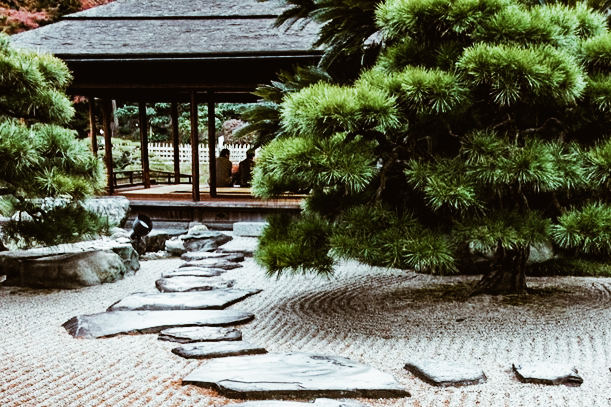
photo credits: iaininjapan.deviantart.com
In a way, the tea ceremony already begins in the garden. Because it helps those who walk this path (a Way) to harmonize with nature even before they set foot in the tea room. The principle is also "evoked" by the symbolic purification of the participants who, once invited to enter by the host, must rinse their mouths and hands.
Jaku (寂), Serenity. The state that is achieved in a natural way by the practice of these three principles already from daily life.
If the hearts of all those present will be open and receptive to the emptiness of that moment if the mind will have left that outside world beyond the garden: a harmony will be born so deep that environment, things and people... will become one. In a perfect fusion where dualism dissolves and it is no longer known where the boundaries of one or the other end or begin.
Chadō, Less is more: beauty according to the Japanese sensibility
In this perspective, negation becomes a positive value, the state of mind par excellence. This is reflected in the research of a frugal style which avoids ostentation and superfluous, already starting from the tea room, the Chashitsu ( 茶室 ).
The latter must be devoid of excessive earthly elements: in the Zen perspective of the master Rikyū it is necessary to limit sensory stimuli as much as possible. Leave space to the void, in order to empty the mind. Then the void itself will give space to the sounds that spontaneously emerge from it and that otherwise too many sensory stimuli would end up eclipsing. Sounds thus assume greater depth and the consciousness is refined. Perception is in fact amplified thanks to silence not only auditory but also visual, olfactory, tactile and gustatory. The senses are literally educated not to be dependent on stimuli, but in this way, they become more receptive. It may seem paradoxical to most people. But if you who are reading have so far understood the sensitivity that underlies this philosophy, you will certainly have understood this too.
The room must, therefore, be minimal, not so much illuminated, "intimate". It must be welcoming. Verbal interactions must be reduced to a minimum, also because non-verbal communication can be done here. Everything is designed in order to create a meditative atmosphere - typical of Zen. It is therefore recommended that we keep our eyes ajar in order to let the images that come into our field of vision flow, avoiding our sense of "feeling" them too much.
The semi-darkness of the room gives back value to the other senses other than sight, usually a little overwhelmed by it. The touch, for example, that emerges in contact with the teacup, in particular, if it is raku ( 楽 ), a symbolic cup in Chadō and Wabi Sabi because of its imperfect shapes that make it unique and unrepeatable. Or, in the case of the traditional Wagashi ( 和菓子, literally "Japanese sweet" ), where the dominant sense would be the taste, we find, on the contrary, also the sight and the other senses involved in a superfine way. But let's dwell on the concept of unrepeatability.
But let's dwell on the concept of unrepeatability.
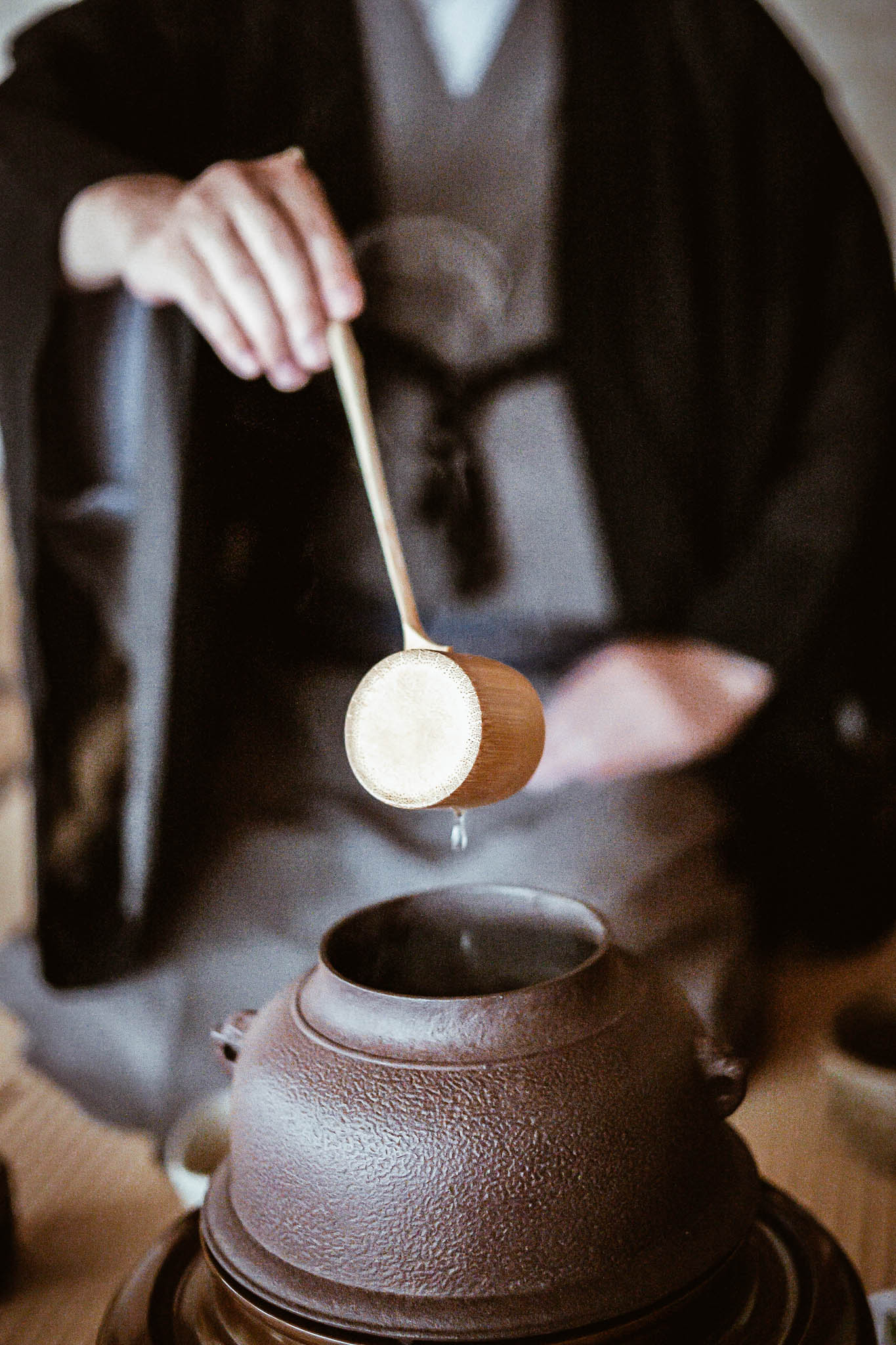
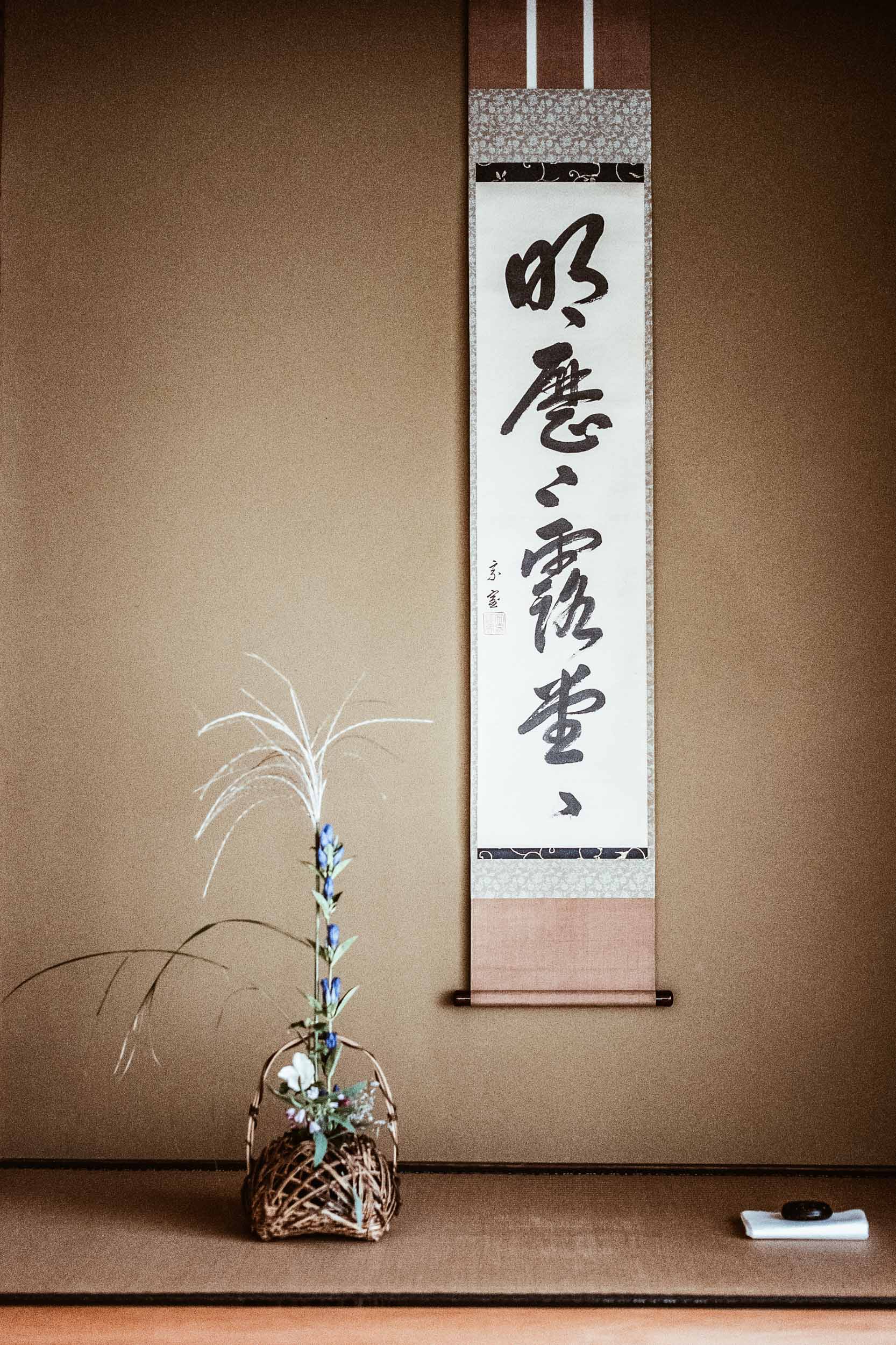
photo credits: moroalberto.com
Ichi go, Ichi e (一 期 一 会), the metaphor of life
Literally "once, an encounter", Ichi go-Ichi and is a Zen expression that refers to the idea of transience. It reminds us how every single encounter is unique and unrepeatable. Yes, in time we can repeat the ritual of Chadō as many times as we want, but each time remains unique in itself and distinct from the others. The atmosphere experienced in each encounter can never be the same the following times. Therefore, each one of them should be appreciated...as an encounter that happens only once in a lifetime.
So in Chadō, so in life: let go past and future. To take from them the knowledge we need for our learning, yes, but just enough not to get stuck with our minds. Otherwise, we run a risk: that of not appreciating in time the things that are with us here and now. Remaining, in that case, with the regret of not being able to see them in their value (remember the Kei, Respect) when they end their time in our lives.
That is when Zen wisdom comes to us, reminding us that this is the time to focus on, in the here and now, appreciating as much as possible what you have now that you have it. You have to live now and live it, in every single unrepeatable moment. But then again, what is the art of Cha no Yu if not life itself?
Kata - Katachi: When form becomes part of you
In Chadō every gesture is not random: movements and breathing must be harmonized, in order to transmit serenity in giving that cup of tea. You should know that Japanese culture attaches great importance to the concept of form (kata, 型), i.e. gestures codified by certain principles. Not schemes that are an end in themselves but a way to achieve a body-mind-spirit fusion and consequently harmony with existence itself (the concept permeates their vision of the world to such an extent that it also has its own small linguistic form).
When a practitioner arrives at embodying kata to the point that they no longer feel as something external to themselves - to be "staged" - then we speak of katachi ( 形) or "internalized forms". Through kata the practitioner learns patience, precision, resilience...and is forged from them. Final goal: the attainment of harmony with oneself and the surrounding world.
Observe-execute, to the point of internalizing: this is the basic approach of all Japanese art forms-disciplines. It is really part of their soul. They do nothing but decline this feeling in various areas of life. A way of life (the Way) that gives rise to forms of art and discipline which, in turn, guide the individual's path of life. A perfect circle that closes...
But the search for the perfect gesture carries within it another magical gift, that of dilating time. The present moment is crystallized and in that moment the depth of the senses puts us in communion with nature.
But beware: it is not an escape from reality. Sometimes for the human mind, the boundary between the two can be very subtle, but it is a mistake: to shun reality means in truth to alienate oneself from being present. No escape, therefore, as well as no attachment (two extremes of avoiding). But lucid, conscious fusion with what is happening in that place, in that moment. With reality.
The Way of tea, therefore, requires a true psycho-physical discipline about oneself and long preparation. So much so that in the process of self-improvement - as in any self-respecting spiritual discipline - the practitioner can be hindered by the human emergence of feelings such as laziness, apathy or other grey areas.

photo credits: moroalberto.com
The ceremony
The ritual is very complex, especially in its extended form. There is, in fact, a traditional version lasting four hours(!) reserved for formal events (Chaji, 茶事 ) and a reduced version for informal occasions (Chakai, 茶会 ). Likewise, Chashitsu can be distinguished in small (Koma, 小間) or large (Hiroma, 広間). The Koma is the wabi-cha room par excellence, while the Hiroma is well suited to more official circumstances.
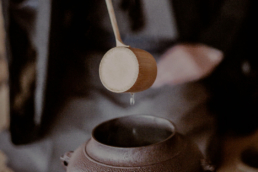
During the ceremony, the tea water is boiled in an iron or cast iron teapot. When it is ready, pour some into the ceramic cup where the matcha was previously brought. Then, the whole thing is beaten with a bamboo whisk. The appearance of foam indicates that the tea can be served.
But let's see what happens depending on whether we're in a formal or informal event.
茶事Chaji
- Before tea. Since drinking and eating never go hand in hand, the traditional Kaiseki meal is offered first ( 懐石o会席 ). After the meal, Wagashi are offered at a later stage. Different Wagashi will be paired according to whether the tea is dense or not (as we will see shortly also in the Chakai).
- Usucha. The guests individually drink a whole cup of tea, this time no denser, they dry the edges of it and give it back to the master who in turn washes it, dries it, and prepares it for the next guest.
The ceremony in this form is very elaborate, so breaks and even room changes are envisaged.
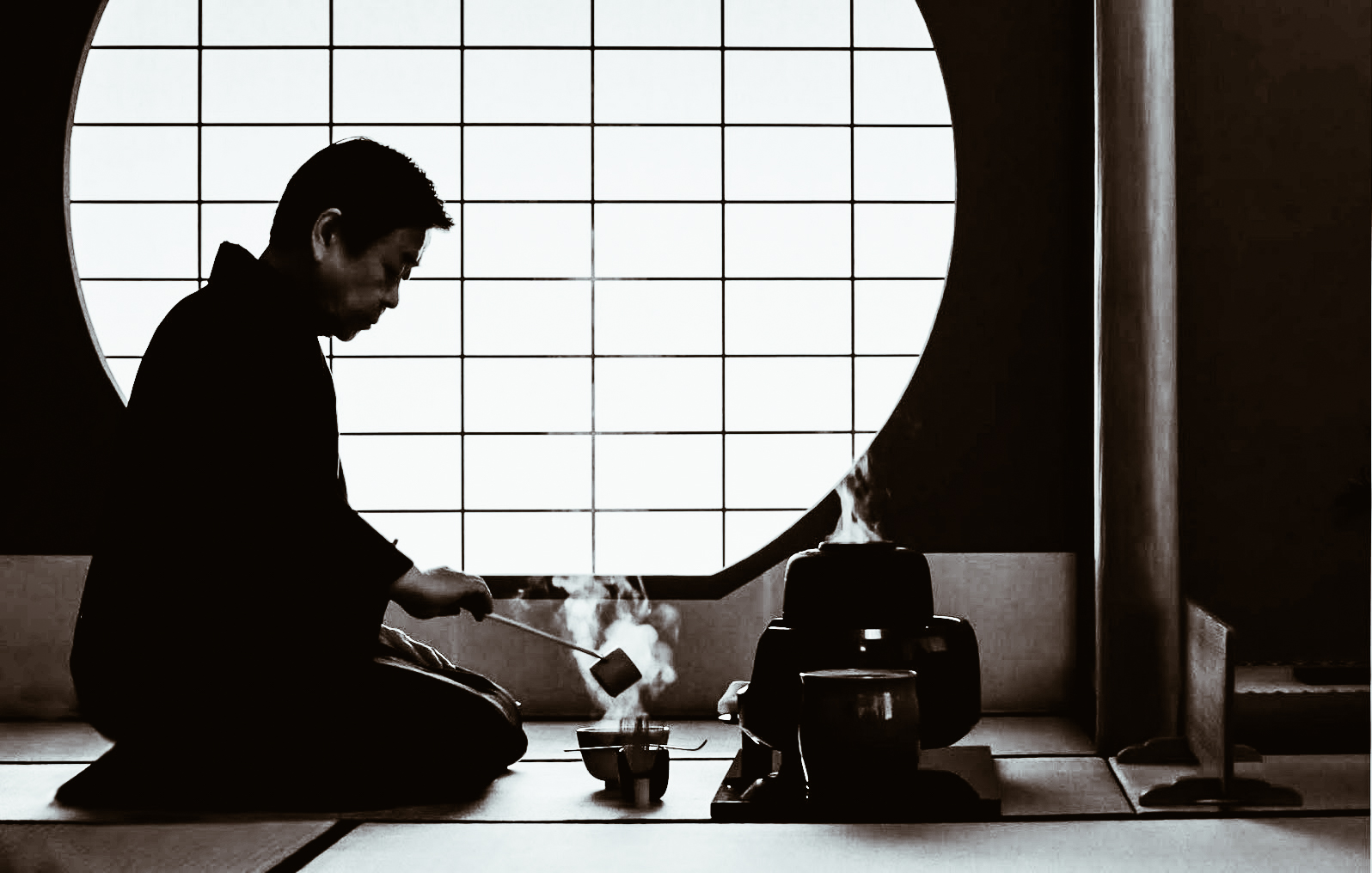
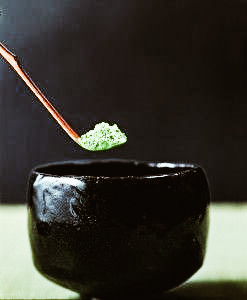
photo credits: pinterest.co.kr, pinterest.it
茶会 Chakai
- Before tea. Here the guests receive only the traditional Wagashi sweets, specifically: Higashi (dry sweets) if Usucha is served, Omogashi (soft sweets) if Koicha is served. In any case, the dessert will have to compensate for the bitter taste of the matcha.
- Koicha or Usucha. As the time available is shorter, only one of the two modes can be presented. It will then be up to the teishu (master of ceremonies) to decide which one to perform.
Everything concerning the behaviour to be held or not during the ceremony is called Otemae (お点前). It is known as "etiquette", but it is much more than that. The very way in which the ceremony is carried out right from the preparations (setting up, cleaning and so on) already constitutes the Tea Route. And therefore, the Otemae.
Ways within the Way, Art within Art
The Tea Route is emblematic. For in itself it contains other forms of art that already constitute a world of their own. Other Paths that intersect and unfold in that of Tea creating a unique association where that perfect fusion - mentioned above - is already taking shape. The artisan technique of Raku ceramics, for example, is perfect for embodying the Zen spirit of the Tea Route: in extracting the still incandescent cups from the kiln, it enhances the naturalness of the irregular shapes randomly generated.
The marvellous art of the Wagashi has evolved parallel to Chadō, finding in it its maximum expression. Influenced by the Yin and Yang philosophy and the five elements, its designs and colours inspired by nature and seasons promise an awakening of the five senses. We also include Chakaiseki (茶懐石, Kaiseki kitchen applied to Chadō), Chabana (茶花, Ikebana applied to Chadō), the architecture itself. Even poetry: among the possible verbal interactions there is the possibility for the landlord to quote a Haiku (typical poetic composition) for seasonal reference. They all remind us that things also have a spirit. And that it must be nurtured, respected, contemplated... just like ours.
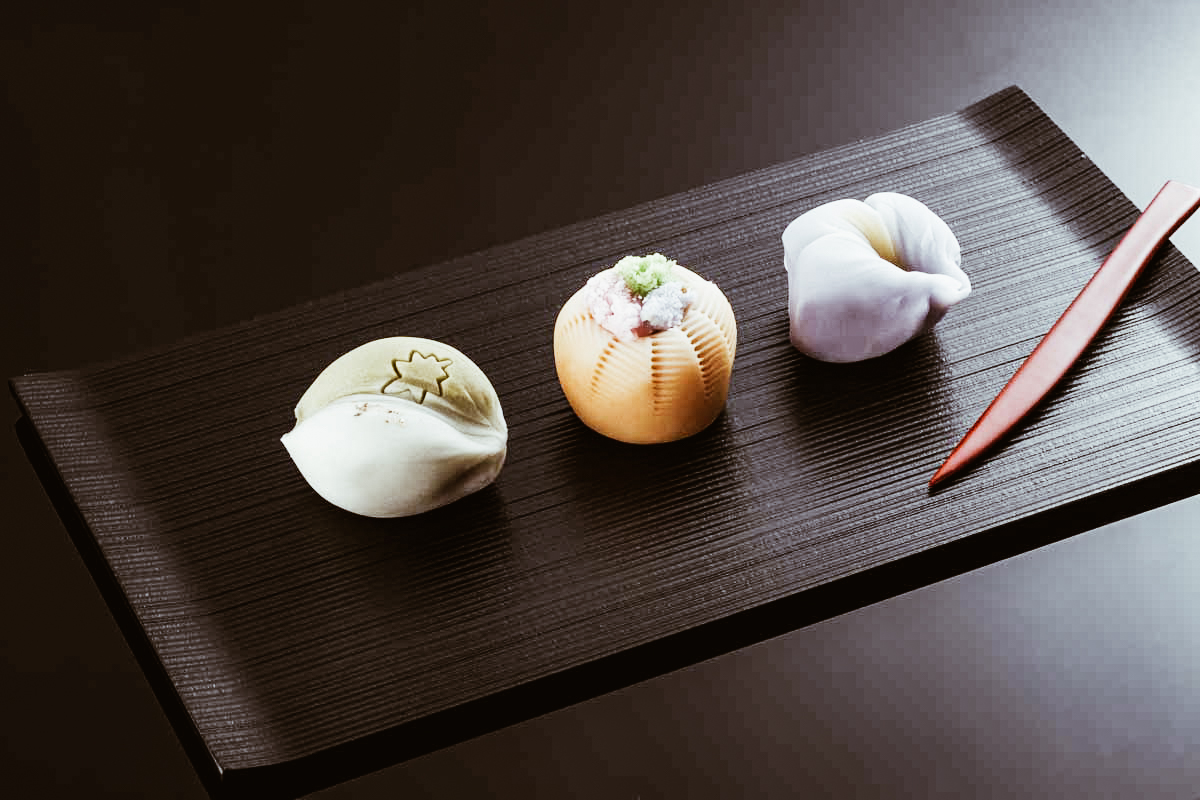
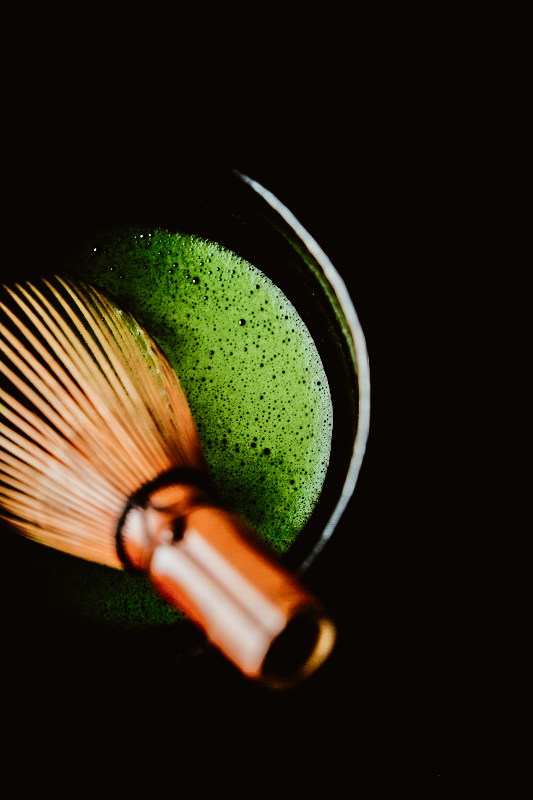
photo credits: sweetsofjapan.com, Flickr
A universe enclosed in a single cup of tea
The Tea Ceremony is, therefore, a meditative practice to all effects that with the "excuse" of a cup of tea leads us to the doorway of our Consciousness. This intent is at the basis of all Japanese art forms: to use earthly things without being harnessed by them. Knowing how to seek, feel, the spirit within the earthly experience inevitably included in it. The key is not to exclude it, but simply not to be harnessed by it.
As a little girl, I myself did not understand the necessity of having to make all those gestures. Now, after experiencing a particular state of emptiness simply thanks to a pair of chopsticks (hashi), everything became crystal clear to me. Understanding in my heart the loving act of these people, in trying to express this truth. That is why only by experiencing it in person can you truly understand.
As of today, in fact, the main Chadō schools come from the descendants of Sen no Rikyū and are the Omotesenke, the Urasenke and the Mushanokojisenke. They present technical and stylistic differences that however do not affect what is the spirit at the base of Cha no Yu. There are also other minor schools. Among these: the Oribe-ryū descending from Furuta Oribe (successor pupil of Rikyū) and the Yabunouchi-ryū founded instead by such Yabunouchi Kenchū Jōchi who was a disciple of Takeno Jōōō as Sen no Rikyū.
Finally, it is worth mentioning the lesser-known Senchadō (煎茶道), the variant "for infusion" of Cha no Yu, which uses the precious green tea leaves. More recent than Chadō, it is born with a more convivial tone and less "spiritually committed", although it is inspired in several aspects. However, it differs in that it is less rigid and more focused on aesthetic pleasure and fine utensils.

The Animal Crossing Phenomenon
As we already know, Japan is a land of trends that come and go, but the recent Animal Crossing phenomenon has involved the whole world, and we're not just talking about the gaming one.
Animal Crossing, Nintendo's worldwide phenomenon
written by: Sara
When it comes to writing about video games in our blog, I'm always strongly questioning whether or not to do so because there are myriad titles from the Rising Sun worthy of note! This time, however, we couldn't help but wonder: the video game in question has really won everyone over, especially during the quarantine period with its simplicity, its "chill" mood and its bright colors. Yes, I'm talking about Animal Crossing!
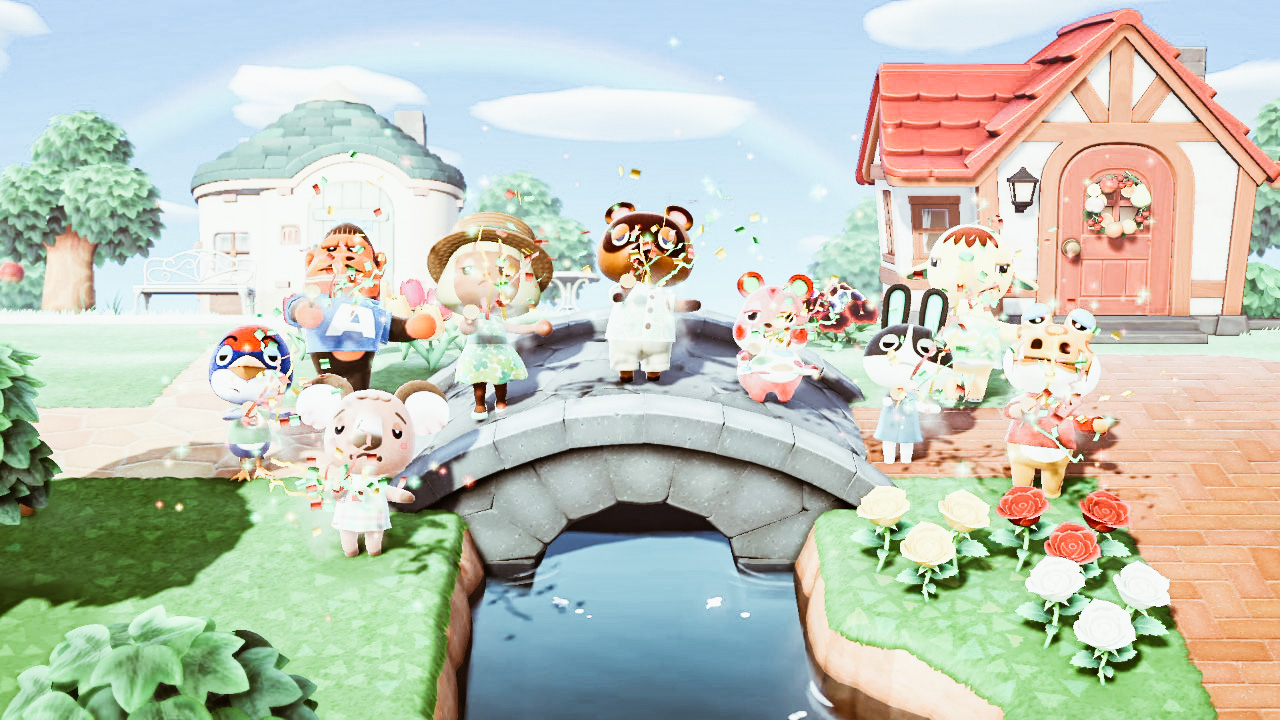
photo credits: gamereactor.it
The various versions
The Japanese title どうぶつの森 (Doubutsu no Mori) literally means "Animal Forest" and was developed for Nintendo by game designer Hisashi Nogami back in 2001 and quickly became one of the most popular video games ever. At its first release, in fact, there were several editions such as Animal Crossing: Wild World, Animal Crossing: Let's Go to the City, Animal Crossing: New Leaf and the very recent Animal Crossing: New Horizons; in addition to cute spin-offs such as Animal Crossing: Happy Home Designer and Animal Crossing Pocket Camp, the latter available for Android and iOS.

photo credits: pinimg.com
Simulator of life, this game catapults us into a world inhabited by curious anthropomorphic animals with which you can interact. There is no real goal, the strength of the series is to customize your village, collect objects, explore and... relax. In addition, the time flows exactly like that of our reality. The day and night, the seasons, the festivities, alternate following the rhythms of our daily life.
The latest edition of the game, New Horizons, is set in a deserted island, totally customizable thanks to the Terra Forming feature that allows you to let your imagination run wild and recreate environments of the most varied inspiration.

photo credits: twitter.com/ryuryu_12mj
Once you have created your own style, furnished the furniture, invited friends to visit the island etc etc etc what is left to do? Some might say that playability runs out, but it doesn't. In fact, events and updates make New Horizons an endless and fascinating video game where you can celebrate weddings, birthdays and ceremonies of various kinds. Create a party with friends, celebrate holidays such as Christmas, Easter, Tanabata, participate in festivals of various kinds, competitions and surprise events! Once again, Japan has given us something unique. A game to play when the world around us is stifling and hectic or simply when we want to escape, but we can't do it physically.
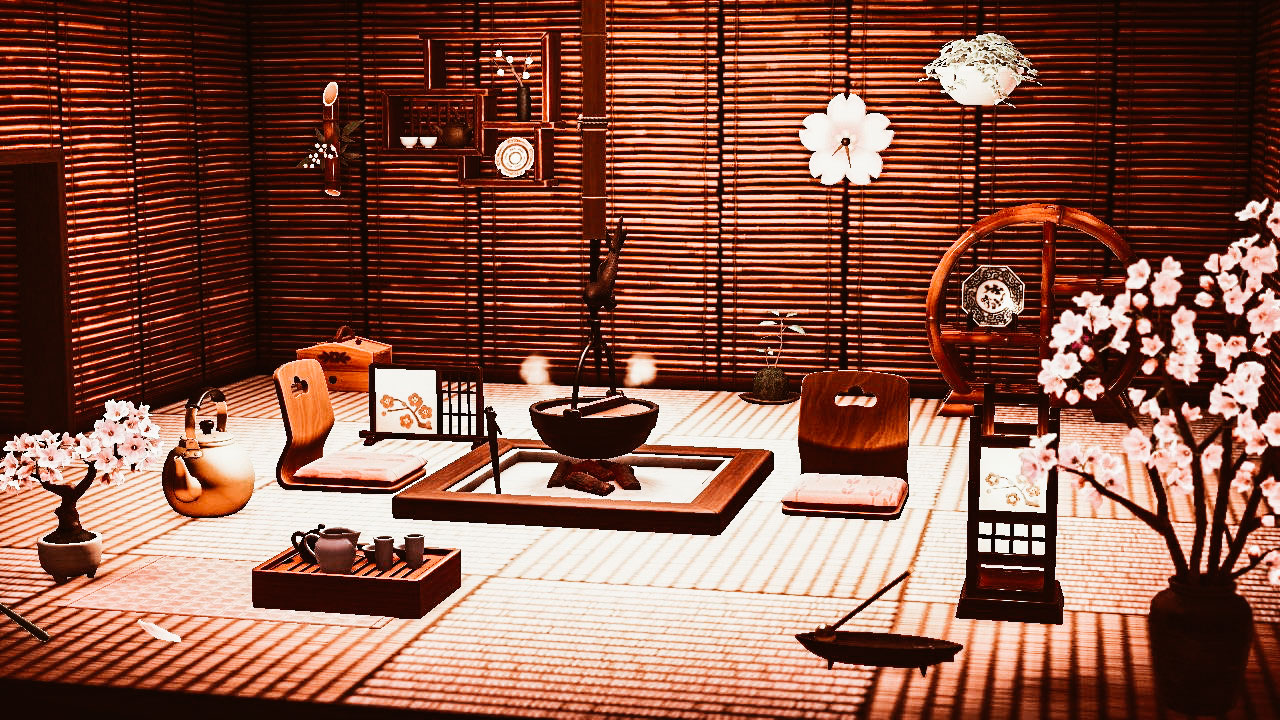
photo credits: twitter.com/opeope1006
All titles in the series are available on the official NINTENDO website.
Lucky charm, directly from Japan
Japan has rich and varied traditions, one of the most famous of which is the one linked to lucky charms or amulets. In fact, o-mamori (お守り) are easy to find and just go to any temple to buy them. But what exactly are they and how are they made?
O-mamori (お守り), amulets brings luck and lucky charm
author: Sara | source: Tokyo Weekender
Lucky charm par excellence, these amulets instil protection precisely because 守り (mamori) means protection/guide. In fact, an auspicious prayer written on paper or wood is then wrapped in a fine silk cloth. Made of different colours depending on the type for which they are intended, these lucky charms represent love, health, luck, money, learning, etc.
Their effectiveness is destined to wear off after a year or to achieve their purpose. In fact, in the end, you should take them where they were purchased so that they are burned in a sacred fire.
The story of the O-mamori
Their history has Shintoist and Buddhist religious roots. In fact, priests thought they could protect people by driving away evil spirits through small pocket blessings. In fact, the strength and protection of the gods were encapsulated here.
Over time the omamori have multiplied, there are many different features and they can be purchased in the sanctuaries and in the times scattered throughout the Japanese territory.
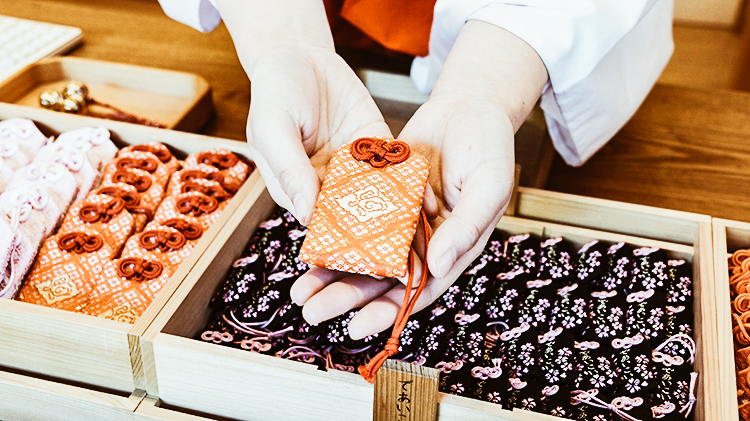
photo credits: web-japan.org
Traditional Omamori: protection for every need
KATSUMORI 勝守, the success
The prayer of this omamori will ensure that the one goal you have set yourselves and to which you are dedicating your energies will be realized.
YAKUYOKE 厄除け, ward off evil
Often achieving a goal can be difficult or even hindered, so this amulet will help prevent potential demons that could inhibit success.
SHOUBAI-HANJOU 商売繁盛, money
Usually of bright yellow colour and shaped like a "bag", this omamori can be more generic and therefore guarantee monetary fortune or more specifically how-to protect investments, savings or good business.
GAKUGYOU-JOUJU 学業成就, education and learning
Encouraging and motivational in studies this omamori is very popular among students and can be seen hanging from their backpacks as a good luck charm for school careers.
KOUTSU-ANZEN 交通安全, a safe journey
Travelling safely is one of everyone's desires and this amulet has become the most loved and popular among those who drive public transport (buses, taxis and aeroplanes). Its function is to make the roads safer and protect drivers and passengers from road and aerospace inattentiveness. In fact, there is its own version dedicated to aeroplanes that takes the name of KOKU-ANZEN.
EN-MUSUBI 縁結び, love
There is little to explain, whether you are single, engaged, married or about to have a baby, these omamori have only one function. In fact, their purpose is to guarantee and strengthen love, give happiness, simplify things, protect the heart.
KAIUN 開運, Fortuna
A general omamori, that of fortune, this one does not dictate guidelines or constraints. It is simply a fortune enhancer, a lucky charm for any choice or occasion.
SHIAWASE 幸せ, happiness
In the wake of KAIUN, SHIAWASE is also a "guarantor of happiness". In fact, this becomes a motivator to improve one's life by remembering the small nuances that can change all points of view.
KENKO 健康, health
This talisman, as it is easy to guess, aims to protect against disease, keep the body healthy and help those who have it to live a long life.
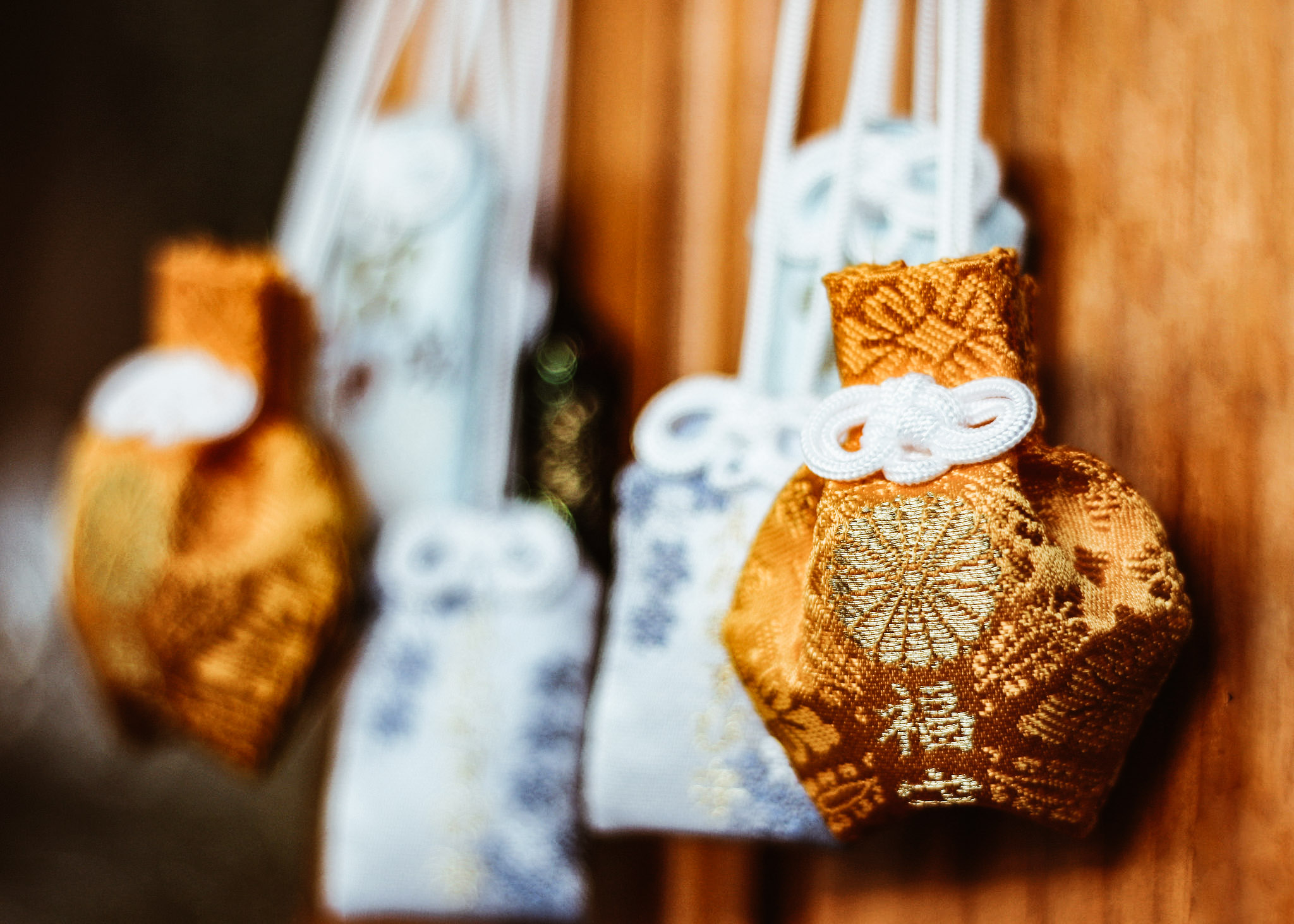
photo credits: Fiona Dawkins
Omamori details: sometimes you have to hit the mark
FROM A LIE TO THE TRUTH
This omamori is very different from what we're used to. In fact, it is made entirely of carved wood and is shaped like a little bird. It can only be found once a year, on January 25th at the Shrine of Yushima and its purpose is to transform all the lies into a song of truth.
THE "ETERNAL" BEAUTY
There is the generic omamori aimed at overall beauty. However, there are also specific omamori to have beautiful legs, or anti-ageing or to have a slimmer waist, beautiful eyes, better skin and much more.
PETS
It's not that hard to find protective amulets for animals! They deserve a special blessing too, don't they?
TECHNOLOGY
It might make us smile at the thought of an amulet that can protect against the pitfalls of the internet or the difficulties of using electronic devices, yet it exists!
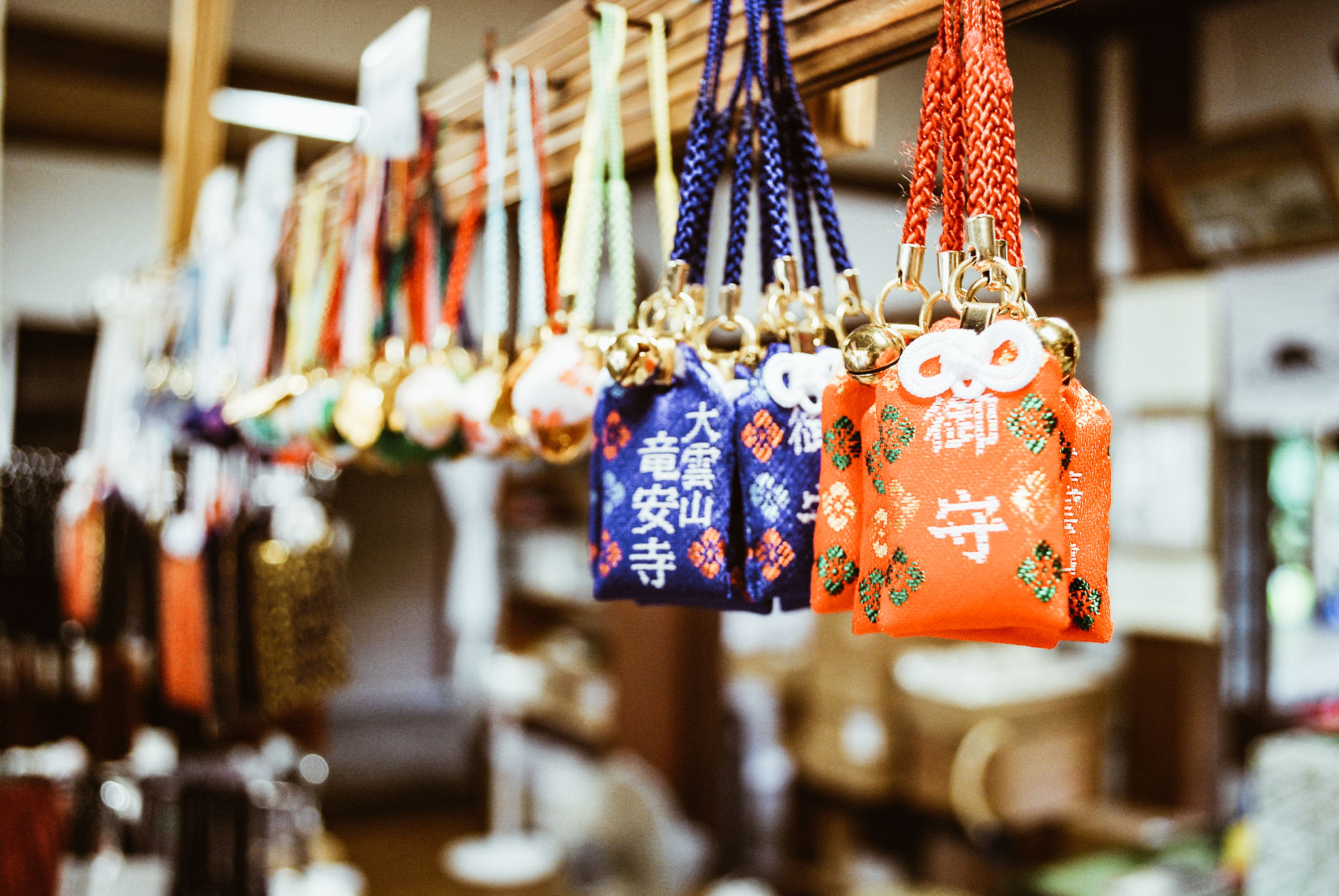
photo credits: Ryuko Studio Mexico
We could say that there is a lucky charm for each of us, unique combinations that probably won't change our existence. However, they are a nice way to wish the good of those we love or simply adorn our objects and means with something that reminds us of our goals.
Things to do during Quarantine: Visit the museums of Japan virtually
Visit every museum in Japan, it's possible but only virtually
written by: Sara | source: Tokyo Weekender
Phase two here in Italy has started but traveling is still impossible, so let's continue our section on things to do in quarantine, and today we talk about how to visit the museums of Japan, virtually.
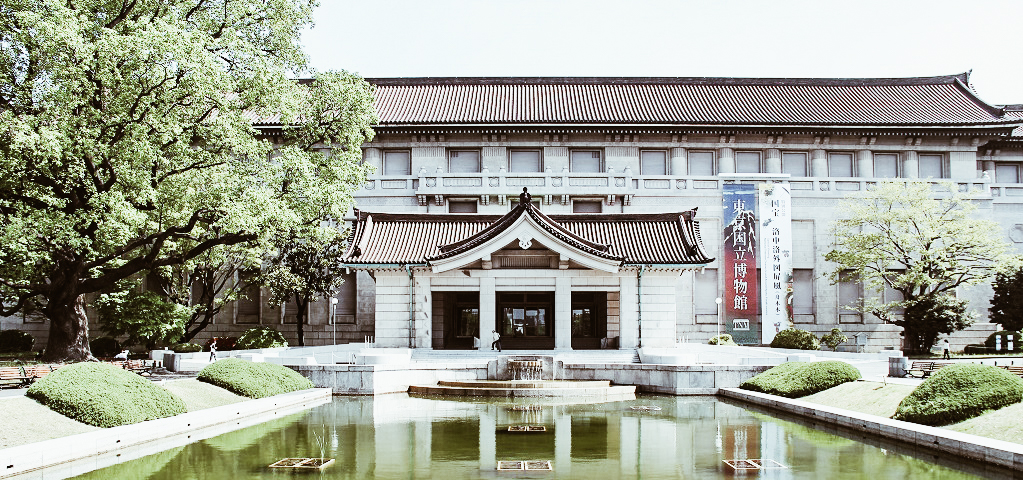
photo credits: https://enjoy.vivi.city/
In an instant, we were overwhelmed by an invisible enemy that has inevitably turned everyone's lives around the world. The spread of the new coronavirus and the pandemic that followed unfortunately led to the closure of many economic sectors, but also places of cultural interest.
The situations are the most varied and we at Japan Italy Bridge want to try not to share sadness, but to give small brackets of leisure to all our readers. In fact, although COVID-19 has deeply affected us all, our mission remains to take you on a journey with us among the wonders of the Rising Sun.
Embracing the slogan #stayathome, the hashtag that has spread in recent months, and thanks to Google Art And Culture and other individual initiatives, Japan has also opened the virtual doors of its wonderful museums and exhibitions, allowing us to visit them comfortably from the living room of our house! The list is very long, but we have selected our favorites. So how about distracting us a bit and starting this virtual itinerary? Between art, fashion, ceramics, and history: let the journey begin!
Chihiro Art Museum
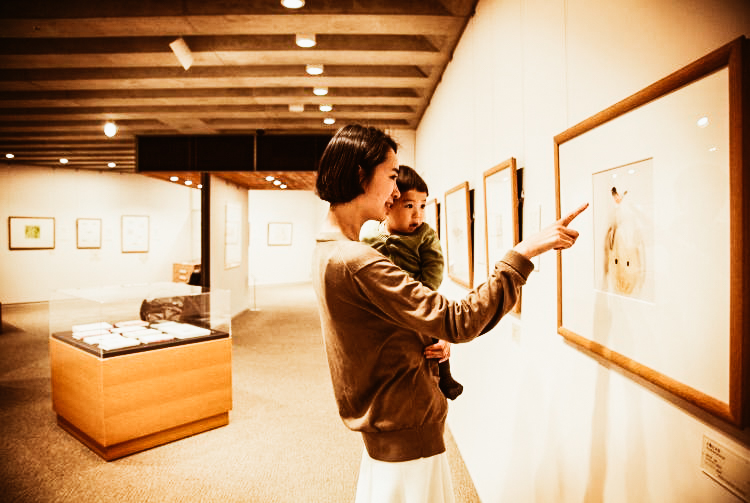
photo credits: gotokyo.org
The Chihiro Art Museum in Tokyo was established in 1977 in honor of the artist Chihiro Iwasaki (1918-1974), famous for his delicate pastel-colored illustration for children. Today this museum also houses exhibits with works by other illustrators from around the world.
Fukuoka Art Museum
Opened in 1979, the Fukuoka Art Museum offers a collection of 16,000 works: tea utensils, Buddhist art, paintings not only local but also famous paintings by Dalì, Mirò, and Chagall.
Fukuoka City Museum
Asian art takes on charm and originality that no other museum in the world will ever be able to offer. In fact, at the Fukuoka City Museum, we find works by artists who "exceed" the standard to create a "contemporary" Asia.
The Keio University Library museum
The Keio university has always been one of Japan's most important and its library includes collections of inestimable value, such as the Gutenberg Bible, ukiyo-e, and over 10,000 rare editions consisting of manuscripts and letters written by leading figures in history.
Kyoto National Museum
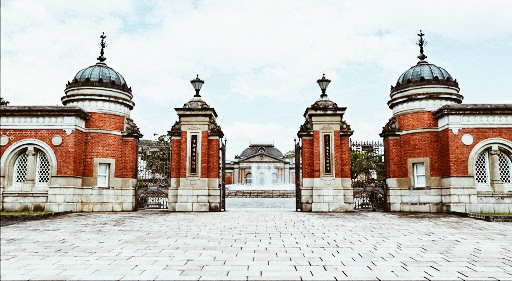
photo credits: intk-token.it
The Kyoto National Museum was opened in 1897 with the name of the Kyoto Imperial Museum. In 2014, the museum opened a new wing, the Heisei Chishinkan, to host exhibits from its vast collections, which include over 12,500 traditional Japanese works of art.
Tokyo National Museum
The Tokyo National Museum exhibits a large collection of works of art and antiques from Japan, from ancient ceramics to prints of the Edo period and works from other Asian countries.
The Kyoto Costume Institute
Japanese fashion has always influenced the world and the Kyoto Costume Institute (KCI) systematically collects and conserves exceptional examples of Western clothing through centuries.
Nagasaki Atomic Bomb Museum
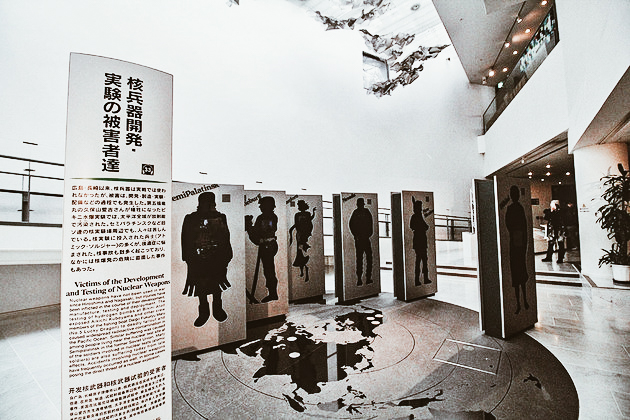
photo credits: shoreexcursions.asia
There is very little to tell for the Nagasaki Atomic Bomb Museum. It was born not to forget what happened on August 9, 1945, at 11:02 am when all the clocks stopped, visiting this place it's a tremendously moving experience.
The Museum of Oriental Ceramics, Osaka
Founded in November 1982, the Museum of Oriental Ceramics in Osaka includes about a thousand pieces of Chinese and Korean ceramics as well as works from the Rhee Byung-Chang collection and works signed by Hamada Shoji.
Sagawa Art Museum
Opened in March 1998, the Sagawa Art Museum offers the public the works of Japanese artists such as Ikuo Hirayama, Churyo Sato, and Raku Kichizaemon XV.
Museum of the Sakitama Ancient Burial Mounds
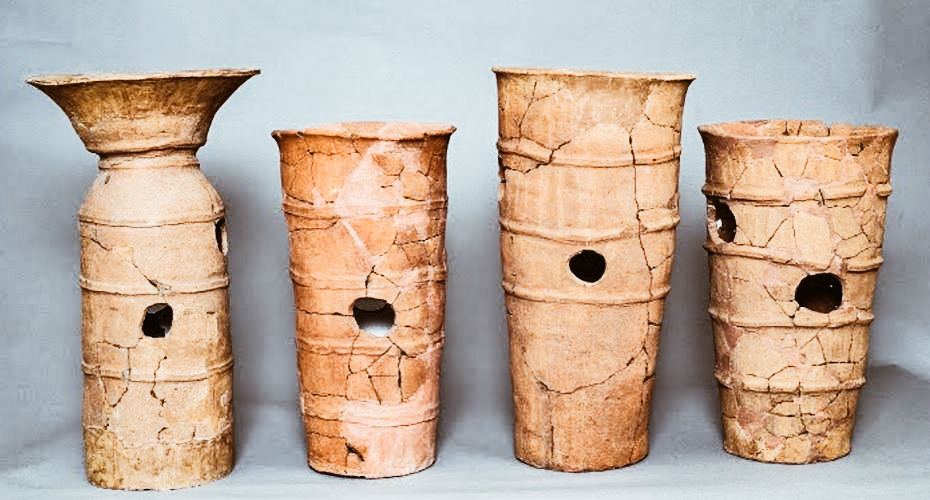
photo credits: smarthistory.org
In the Museum of Sakitama Ancient Burial Mounds we find a collection of artifacts, which later became national treasures. In fact, in the rooms of this museum, we see extremely valuable resources that will let you understand the ancient history of Japan.
If you think it is still not enough and you feel the desire to walk virtually through the cities of Japan, today it is possible! In fact, visiting the buildings and streets of the Rising Sun becomes easy thanks to Google Street View. Here millions of absolutely breathtaking panoramic images that will make you dream and transport you beyond any geographical border!
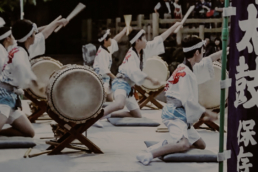
Atsuta Matsuri, lanterns and fireworks
There are many Japanese matsuri but today we decide to focus on Atsuta Matsuri, in the prefecture of Aichi.
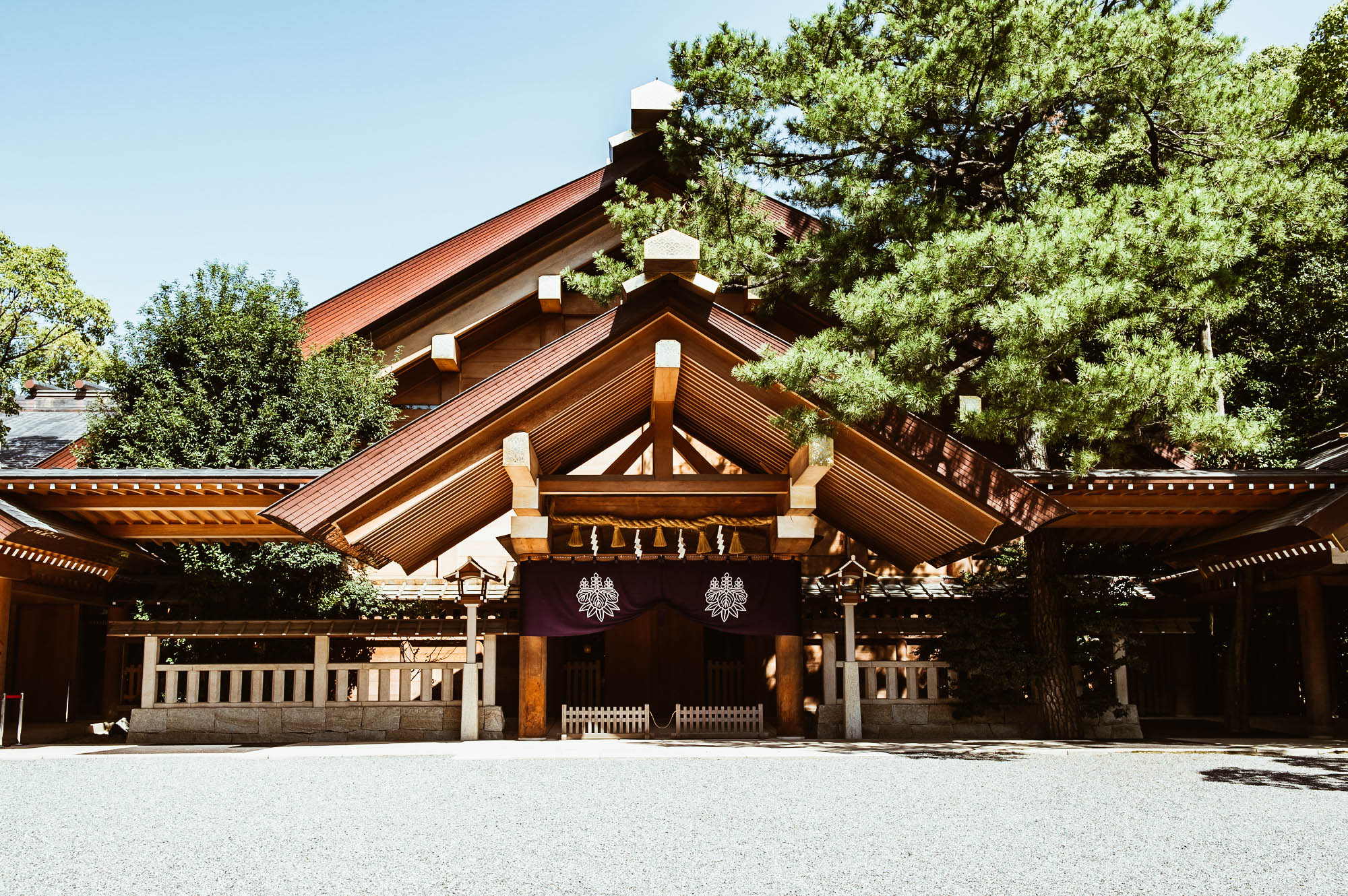
photo credits: thegate12.com
In the Chubu region, more precisely in Nagoya in the Aichi prefecture, if we enter the city, hidden among centuries-old cypresses, we will discover one of the most sacred shrines in Japan: the Atsuta Jingu. Venerated since antiquity with its 1900 years, it is believed to be the home of the Holy Kusanagi Sword of the Emperor, one of the three imperial insignia.
In this magical place, Atsuta Matsuri (諸ブー祭), better known as Shobu-sai, is held every year on June 5th.
Atsuta Matsuri day
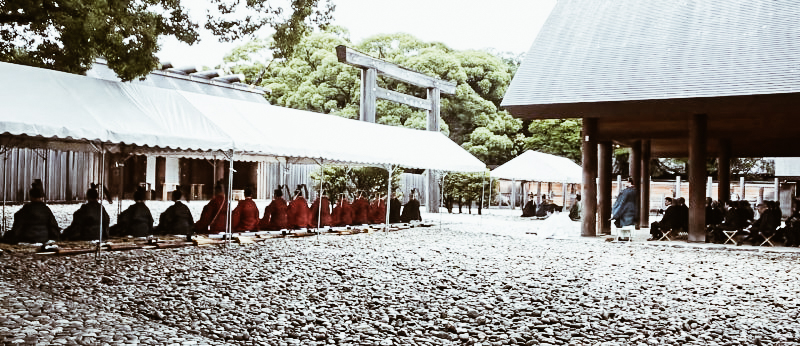
photo credits: kawaii-aichi.jp
Around 10:00 in the morning the celebrations begin with a special ceremony in which an imperial messenger is sent to the shrine to offer goheimotsu. These are in fact strips of white paper for Shinto rituals and which are used to celebrate a special ceremony dedicated to the gods and goddesses of Atsuta Jingu. After that, this splendid and characteristic Matsuri hosts various shows between the precincts of the Shrine.
The shows
The shows during this festival are many and varied, including kyudo, Japanese-style archery and kendo, Japanese fencing. But the real protagonist is the Atsuta-kagura, a type of traditional local Shinto dance accompanied by flutes and taiko, the typical Japanese drums. In addition to this, we find various performances including the Sumo and entertainment competitions such as the Kodomo Mikoshi, the portable shrines for children!


photo credits: kawaii-aichi.jp, goinjapanesque.com
The Festival reaches its climax when, at 18:00, the five makiwara kento, huge allegorical altars decorated with 365 lanterns each, are placed next to the entrances of the three torii doors of the sanctuary and are illuminated. Of course, there are stalls offering typical products and souvenirs of all kinds.
The chatter of people stops at 21:00 in the Jingu Koen park when a wonderful fireworks display raises heads and fills the eyes with lights and colors.


photo credits: goinjapanesque.com
The Atsuta Festival is the largest festival among the approximately 70 events held at the Atsuta Shrine every year.
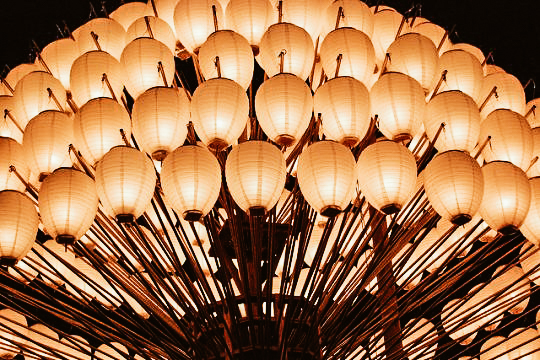

photo credits: nagmag.jp, kichijapan.com
If you are in the surrounding area, don't miss these magical lanterns and fireworks show to spend a fun day in the name of tradition! Like any festival, participation is free. For any information on how to reach the location, visit the official site of the Shrine in English.

Travel guide: Tokyo - Episode 04 - Breakfast in Tokyo
Breakfast is the most important meal of the day and this rule also applies to Tokyo! Today for the new post dedicated to our practical guides we will talk about the best places to have breakfast in Tokyo.

photo credits: oyakata.com.pl
The typical breakfast in Tokyo and Japan
When it comes to "breakfast", each of us has different ideas according to their habits: sweet, savory, protein.
I'm accustomed to fresh fruit and oat smoothies every morning, and I recently said to myself: "If I lived in Tokyo and wanted to try Japanese traditions, what could I eat for breakfast?"
Fortunately, even in Japan, breakfast has long been considered the most important meal of the day and is prepared and eaten at home. The traditional breakfast of the Rising Sun is based on the concept of ichiju-sansai (一汁三菜 = a soup, 3 dishes). The main dishes are Gohan (ご飯), a bowl of steamed rice, Shiru (汁) a bowl of soup, Okazu (おかず) the main dish and Kouno mono (香の物) a small dish of pickled seasonal vegetables.
Hatsufuji in Nihonbashi

photo credits: timeout.com
This is a place loved by everyone who goes to the office every morning. Hatsufuji in Nihonbash i is a restaurant where, through a simple machine, you can order a complete set of breakfast dishes between 7:00 and 11:00 in the morning.
Tsumugi in Tsukiji

photo credits: favy-jp.com
As part of the information center of the ancient Tsukiji Hongan Temple, Tsumuji offers a small shop and a spacious cafe with a warm and relaxing atmosphere. The breakfast, served until 11, offers the possibility to choose between two menus. The first choice is the traditional set which includes grilled fish, sweet and sour vegetables, tamagoyaki, rice and miso soup, muesli with rice crackers and fresh fruit.
Alternatively, the spectacular 18 Hinmoku No Asagohan which includes 18 dishes! Inspired by the teachings of the 48 great vows of Amitabha Buddha, it includes rice porridge, miso soup and 16 small seasonal dishes, such as duck with sansho pepper, konnyaku shiroae, tamagoyaki, tofu with white bean paste, yuzu and matcha jelly.
Tsukiji Sushi Sei in Marunouchi

photo credits: picrumb.com
Walking through Tokyo station, in the GranSta Dining sector, you come across the Tsukiji Sushi Sei. Here breakfast, served from 7 to 10, includes a special dish. We are talking about tai goma (red snapper sliced with sesame) and many other variations such as braised fish with salmon bacon and ikura. Each portion is rigorously accompanied by a bowl of rice, miso soup, tamagoyaki and sweet and sour vegetables.
Shinpachi Shokudo in Shinjuku

photo credits: tripifyapp.com
The morning frenzy of the Japanese can be experienced in this particular place located between the back streets of Shinjuku. Inspired by a rustic farm, the horseshoe-shaped counter guarantees fast service and tasty food. Here breakfast includes mackerel, grilled saikyo, marinated salmon and goma-aji.
Odashi Tokyo in Shinagawa

photo credits: ryutsuu.biz
Odashi belongs to a chain and as such offers a set menu and small ones extra additions that can be chosen from various offers. Breakfast, served between 7 and 10, includes lobster miso soup, pork and spinach in ginger soy milk broth, chicken congee, lotus root and Chinese pumpkin congee. These are all dishes to which you can add tofu, broth with pork and potatoes and saikyo miso soup.
Which of these local traditions intrigued you? Have you already found your favorite or do you know other fantastic niches to suggest? One thing is certain: breakfast in Tokyo is also an extraordinary experience!

2020, the year of the Rat
We are in 2020 and the time of the year of the rat has officially struck. Have you ever wondered why in Japan, at the stroke of each new year, the name of an animal is announced? For example "the year of the ram" or "the year of the ox" and so on?


photo credits: amazon.com , https://tokyo5.files.wordpress.com
This custom originates from the Chinese zodiac, which unlike our tradition, is not based on the month of birth, but on the year! Therefore, each year corresponds to one of the 12 animals of the horoscope: rat, ox, tiger, hare, dragon, serpent, horse, ram, monkey, bird, dog and boar.

photo credits: pinterest.it
Astrology has always fascinated everyone, even the most scepticals. 2020 is the year of the Rat, the first of the 12 signs, characterized by positivity and energy. In fact, if its influence will be that promised, this new year should see the evolution or start of new projects, promising juicy fruits for those who work hard.
In addition, famous astrologers such as Jessica Adams and Cathryn Moe say that 366 days await us in which "the union will be a strength". In this new year, nobody should face big challenges alone but join together to achieve a goal. Consequently, "sharing of power" will be one of the keywords.


photo credits: pinterest.it
We could witness an evolutionary process on a global scale, in which people could come to understand each other and collaborate for the collective good. This would have great positive social consequences.
The rat represents that part of the darker psyche where the true "I" expresses itself. The masks that have surrounded us so far will fall. This would lead to greater compassion and understanding even towards our own Planet (just think of the fight for climate change).
New energy within us will release all its power. And you? Are you ready to face this revolution given by the year of the rat?

Travel guide: Tokyo - Episode 03 - Best places to stay in Tokyo
Finding accommodation in Tokyo is extremely simple as the city offers types that fit everyone's needs. Whether it's a luxury hotel, a family one, a ryokan, the brand new capsule style, or something cheaper, Tokyo offers everything. However, what really makes the difference is the neighborhood. As we have seen in our blogs, each of them proposes splits of a complex and fascinating society, characterized by history, culture, modernity, technology and much more.
For this episode dedicated to our practical guides, we have decided to offer you and collect a list of what for us are the best areas to stay in Tokyo based on interests and their most outstanding characteristics.
Back in time: Asakusa, Edo all the way!

photo credits: ar.jal.co.jp
Asakusa, with its picturesque streets, offers history and culture without precedent. This neighborhood allows its visitors to immerse themselves in what used to be the old Tokyo of the Edo period. Traditional restaurants, inns, and shops where crafted souvenirs can be found everywhere. The center is the Sensōji temple, dedicated to Kannon Sama, the Buddhist goddess of mercy, the oldest place of worship in Tokyo.
Charm at great heights: the romanticism of Ebisu

photo credits: tokyocheapo.com
One of the Yamamote Line stations is Ebisu, a district of Shibuya with its tall skyscrapers. Here we also find the Yebisu Garden Place, a tower with European architecture, whose entrance is free. Surrounded by squares and gardens, here you can dine in a restaurant that looks like a French castle and you can fall in love with a breathtaking view of all of Tokyo. Ebisu is also home to the Mitsukoshi department store, the Beer Museum and the Tokyo Photographic Art Museum.
Extravagant nightlife: Roppongi & Shinjuku

photo credits: flickriver.com
Roppongi is the neighborhood that, par excellence, hosts bars, izakaya and restaurants that offer any type of cuisine. Roppongi is especially known for the Roppongi Hills, a gigantic complex that includes offices, apartments, shops and restaurants. But also cinemas, parks, a museum, a hotel, a television studio, and an outdoor amphitheater. At the center of this whole area stands the Mori Tower, a 54-story building.
Even more "outside the box" is Shinjuku, whose nightlife is vast and in some ways even perverse thanks to Kabukicho, the famous red-light district and the Golden Gai, a maze of narrow streets lined with an impressive number of tiny bars.
Far from the frenzy: Meguro

photo credits: realestate.co.jp
Predominantly residential, metropolitan life pauses in Meguro and the atmosphere is hipster. Here there are unique boutiques, elegant cafes, restaurants and vintage shops. However, what makes it all magical is the tree-lined area along the Meguro River. Here in spring the cherry trees give this neighborhood a rosy and extremely relaxing hue in which to enjoy a traditional picnic.
Kids will love Odaiba

photo credits: livejapan.com
There is no place more suitable then Odaiba for families. This artificial island offers plenty of entertainment for children of all ages. In fact, here we find the Toyota Mega Web, the famous Miraikan museum, Joypolis, Legoland and many shopping centers, overflowing with restaurants for every taste.
For lovers of luxury and food, nothing is comparable to Ginza

photo credits: gotokyo.org
There is no neighborhood known for its luxury shopping area like Ginza. Here we can find famous (and expensive) shops, but also department stores that, in the basement, host truly unique food shops. Moreover, Ginza is also famous for its restaurants that range from French haute cuisine to fusion dishes. But also for small izakaya and sophisticated cocktail lounges. In short, if you love drinking and eating and you want to devote yourself to gastronomic tourism, this is for you!
Fashion, dynamism and transport: Shibuya

photo credits: photo-collection.geo.fr
Want to experience the real frenzy of Tokyo? Shibuya will not disappoint you! This is in fact one of the most dynamic areas of the city. Constantly illuminated by the giant screens that are present on all the buildings, it is also the most colorful and characteristic area thanks to the young people who are dedicated to the art of cosplay. Not to mention the ganguro fashions (flashy and kitsch alternative clothing) and kogal (clothing and makeup are flashy and inspired by the West, exasperating our characteristics). Shibuya is one of the largest transport hubs in the country. From here, trains, metro, and highways will allow you to get anywhere at any time!
After reading each neighborhood's offers, which of these areas correspond to your personality? What do you look for in your stay in Tokyo? Write us your opinions and tell us about your experiences related to one of the most beautiful cities in the world!