







TOKYO TESHIGOTO celebrates the arrival in Milan
Are you ready to experience TOKYO TESHIGOTO in TENOHA MILANO with a special traditional and modern event?

TOKYO TESHIGOTO is a project that mixes the skill of the artisans of Tokyo and modern production. Surely you know how rich the traditional Japanese art that was created by Edo craftsmen is and how important it is to transmit it to the new generations. For this TENOHA Milano offers us another trip to Japan to discover the manual works of the masters called "Takumi" and Edo aesthetics. In addition to spreading the Edo aesthetics of "iki" and "inase", the Takumi are challenging new types of Tokyo crafts so that more people can get to know and experience it. You can find all TOKYO TESHIGOTO products at the TENOHA Milano shop, to touch the emotion of the Edo period with your own hands and bring it home.
TENOHA Milano obviously could not avoid celebrating this great news! Don't miss the TOKYO TESHIGOTO launch party! You will feel not only closer to the history of Japan but also enriched by something that normally you could not experience. It will be an extraordinary evening in which tradition is combined with modernity: the history of Japan enriched by the DJ set of Andrea Ratti. What are you waiting for? Do you want to spend one of those special evenings that only TENOHA Milano can organize for you?
Details
All products will be available for purchase from TENOHA & | SHOP
LAUNCH PARTY
When: 25 January from 18.00 to 20.00
Where: TENOHA MILAN - Via Vigevano, 18, 20144 Milan
FREE ADMISSION
OFFICIAL WEBSITE
https://tokyoteshigoto.tokyo/en/
More info:
https://www.tenoha.it/shop/tokyo-teshigoto/


An unusual Pokèmon appeared at Yoshinoya in Japan
A whole generation has been affected by these pocket monsters called Pkémon and now you can find them at Yoshinoya in Japan! But how is that possible?


2019 marks the 120th anniversary in the beef-bowl business for the popular chain Yoshinoya. The popular fast restaurant decided to celebrate it through an interesting partnership with the Pokémon franchise.
To catch’em all will be easy and super delicious, only 6 Pokémon available this time! From December 19th, customers across Japan will be able to order a new type of beef-bowl: The Pokémori!


The Pomémori at Yoshinoya
Available in three varieties, Gyudon, Kid’s Gyudon, and Curry Rice, all for less than 500 yen (US$5), this special menu includes a juice box and Pokémon figure.
The word “gyudon” means “beef bowl” in Japanese, so in honor of this incredible meal of Japanese cuisine something special has been arranged. You will get the chance to find six figures of Pokémon with “don” in their Japanese name.

Left to Right: Charizard (Lizardon), Groudon, Slowpoke (Yadon), Weepinbell (Utsudon), and the West/East versions of Gastrodon (Tritodon)
However, the surprises don’t end here!
We know that the Japanese culture has a strict policy when it comes to respecting the public areas. So for all good boys and girls who clean their plates, there is a special plus! It is, in fact, possible to discover one of these monsters hiding at the bottom of the bowls, which are also specially designed to resemble Pokéballs.
Unfortunately, the surprise bowls are only used for eat-in orders in Japan. However, if you order Pokémori to-go you can get specially designed containers and bags too.
Furthermore, it is possible to enjoy one of those Pokébowls in the comfort of your own home by participating in Yoshinoya’s Twitter contest. All that you need to do is photograph and tweet your receipt from either dining in or taking out a Pokémori order. Follow Yoshinoya’s Twitter account and retweet a specific contest post, you’ll be in with a chance to win one of the Pokébowls (only available in Japan).
\ポケモン+吉野家=『ポケ盛』発売記念‼/
✨ポケ盛専用ドンぶりを抽選で30名にプレゼント✨
🔊応募方法
①@yoshinoyagyudon をフォロー
②このツイートをRT
〆切1/5ポケ盛専用ドンぶりほんっっっとうに可愛い( ;∀;)💗
たくさんの応募待ってます🎶#ポケ盛ゲット pic.twitter.com/jNKdM8Zj2N— 吉野家 (@yoshinoyagyudon) December 11, 2019
All the Pokémons are already waiting for you at Yoshinoya. However, if you want to fully live the experience, you should check out the Yoshinoya Ebisu Station location, also known as one of the swankiest Yoshinoyas around. This location will be, in fact, redecorated in a Pokémon motif too.


Decorations are planned to stay up until 5 January, however, Pokémori itself will only last as long as supplies do. So hurry up, you really should catch’em all!!
Source: Yoshinoya
Photo Credits: Yoshinoya, perfectly-nintendo.com, nintendosoup.com


Travel guide: Tokyo - Episode 01
Can you ever imagine Tokyo as a modest fishing village? Probably not. Like so many other cities in the world - the atmosphere that was breathed in the Edo period was quiet and very far from today's frenzy. It was only when the emperor moved from Kyoto to Tokyo, after 1868, that the city radically changed his identity.

photo credits: visa.com.au
Today Tokyo, with its 23 districts, is the largest megalopolis in the world, a conglomeration of cities, lights and colors fused together that continue to amaze visitors.
Walking around the capital is an almost otherworldly experience. From the very crowded streets, you could turn the corner and find yourself suddenly in an oasis of serenity near some shrine or Shinto temple. Or, decide to venture out shopping in stores that sell strange and wonderful things, or take the subway (or train) and reach incredible places!
In our blog, you will find many articles that focus on Tokyo neighborhoods. However, what we want to suggest to you today are those unusual, unique and extravagant activities that, for those visiting the city for the first time, could turn into unforgettable experiences!
Admire Tokyo in its vastness

photo credits: lonelyplanet.com
A visit to the observatory of the Tokyo Metropolitan Government Office, a visit to the Tokyo Skytree or the Tokyo Tower, or going to Roppongi Hills at Tokyo City View becomes necessary to enjoy a breathtaking view. The unique and incredible scenery of the city will hurt your heart because going back will be difficult, very difficult!
The Pet Cafés and the thematic Cafes

photo credits: ddnews.gov.in
We have already talked about thematic cafés before, enchanted places where we can become children again and dream a little. However, we talked very little about Pet Cafes. In Japan they are very popular and Tokyo is full of these cute cafes. The concept is that of a place with soft lights in which to relax, pampering an animal: cats, dogs, owls, snakes and even hedgehogs!
Compulsive shopping at Daiso!

photo credits: planetyze.com
Exactly, compulsive shopping. In fact, Daiso offers 5 stories of articles of all kinds and all sold only for 100 Yen! Furthermore, the biggest Daiso is located in Takeshita Street and some others are scattered all around town.
Plunge into the green in Tokyo

photo credits: blogdiviaggi.com
There is no shortage of beautiful parks in Tokyo. We'll talk about it in-depth in the second episode of our travel guide on Tokyo, but it is absolutely one of the things to do while walking around the city! Cherry trees in spring and momiji (Japanese red maples) will give you moments of pure relaxation in autumn, so a stop at each of the city's parks is essential. Absolutely not to be missed!
Sumo Tournaments

photo credits: japanistry.com
If you visit the city during tournaments (usually January, May and September) you should give yourself the experience of attending the Japanese national sport combat sessions at Ryugoku! For the Japanese, in fact, Sumo is not just about sports, but about a real unmissable form of art.
Tokyo Museums

photo credits: jrailpass.com
Like any self-respecting city, Tokyo also offers museums, but in this case, they take on an even more special feature because there are so many types of them. From the historic Tokyo National Museum at Ueno, to the Edo-Tokyo Museum to Ryugoku, and the Ghibli Museum for Studio Ghibli lovers or the bizarre Museum of Parasites in Meguro!
Golden Gai

photo credits: theculturetrip.com
The Golden Gai is a small area of Kabukicho in Shinjuku, famous for its network of narrow alleys that are connected by even closer passages. Along these narrow streets, there are more than 200 tiny bars, clubs and restaurants that are absolutely unique and characteristic.
Travel on the Yurikamome-line

photo credits: wow-j.com
The Yurikamome-line is the railway line whose trains are driverless and speed through the skyscrapers of the city! A must-try when the sun goes down and the city lights come on...
Izakaya

photo credits: jamesmagazine.it
Izakaya is a typical Japanese restaurant where food is served to accompany a vast amount of alcohol. Usually they are places frequented by colleagues from a company who, after a long day of work, give themselves a break to talk about a bit of everything.
Sashimi for breakfast at the Toyosu fish market

photo credits: travel.sygic.com
How many times have we eat sashimi or sushi and say "wow, this is really good and fresh!" Well... we probably still have no idea what fresh and good means!!!

photo credits: corriere.it
These are only 10 points we thought of, but in reality, there are really a million things to do in Tokyo. For example, you can taste everything that exists with green tea, go to an onsen, cross the Shibuya intersection, participate in Hanami, pray in a temple, admire Mount Fuji. To not forget yet, Ginza, Shinjuku, Kanagawa, Saitama, Odaiba... Tokyo is not a city, but a wonderful dream!


Japan Italy Bridge interviews: Kenta Kambara and Nobuyuki Arai
We are back with another installment of our series "Japan Italy Bridge Interviews"! This time, we had the pleasure of interviewing the amazing Kenta Kambara, a wheelchair dancer from Japan, and Nobuyuki Arai, video director. These two collaborated with Gerbera Design's brand, KUDEN by TAKAHIRO SATO. The promotional video that they created together will soon be available online, but before that, let's hear about how it all began and what they thought of the experience.
JIB: To start, please introduce yourself.
K: My name is Kenta Kambara and I am a freelance wheelchair dancer who was born with a disability called spina bifida.
I work as a system engineer in my day job, and outside of that, I am a street performer and also an aerial acrobat and have performed at the closing ceremony of the 2016 Summer Paralympics in Rio de Janeiro.
A: My name is Nobuyuki Arai. After graduating from college as a photography major, I went to Germany and the Czech Republic to continue taking photos, and then began my work as a professional photographer in 2014. I’ve also been producing videos since 2017, and have also been working as a travel videographer since 2018.


JIB: Could you tell us about what led to your connection with KUDEN?
K: This all started was when an acquaintance of mine first told me that I’ve been invited to perform. Following that, I received a long and enthusiastic message from Mr. Sato, and it was his message that made the decision for me.
I was quite busy during that stretch of time, and it was also a period when I received many other offers to perform in videos too, so I was a little unsure. But his passionate message and him telling me that he could be flexible with the shooting schedule were what made me decide, “Yes, I’ll accept your offer.”
A: I was originally already acquainted with Mr. Kambara, the dancer and he asked if I would take part in this project as well. At the time, I have yet to come to know Mr. Sato, but he watched my videos on YouTube, and then asked to speak to me through Mr. Kambara. That was how it began for me.
JIB: Please tell us more about this collaboration that you’re doing with KUDEN now.
K: After accepting Mr. Sato’s offer, hearing about the brand concept from him, and receiving the storyboard from Mr. Arai, I began to think about my choreography as a dancer.
The Samurai Mode clothes were to be the stars of this video, so I wondered, “What movements would place emphasis on them?”. I thought of creating an atmosphere akin to swaying in the wind to bring out the unique characteristics of the clothes, like raising my arm and letting the wind blow against the sleeves. I wondered, what will come out of such movements that capture such an effect, or movements that are softer and lighter?
Adding to that, I combined those ideas with choreography and movements that I already have, and looked at the local topography while considering “how I would dance in this spot (chosen by Mr. Arai)”.
A: Like how it is with the Samurai Mode Jacket, Mr.Sato has a lot passionate beliefs and feelings, so I wondered, “Should create something that I personally really, really like?”
Of course, in the end, I did come up with something I personally liked, but I also pondered over what Mr. Sato was looking for. For example, right before the shoot, it’s sad but we heard that the sewing factory went bust, and I felt that it would be great if we could express that Mr. Sato’s emotions surrounding these clothes in the video. And, what was going to express those emotions was Mr. Kambara’s movements, so then I had to think about how I could magnify Mr. Kambara’s moves. For the shooting location, I chose a place that was wide and where nature’s textures came through strongly. From there, I took in ideas and created the final product.
The Samurai Mode Jacket, Mr.Kambara’s dance, Mr.Sato’s emotions; there were so many “idea elements” and combining them together created the video.


JIB: What made you want to work with KUDEN for this promotional video?
K: As I’ve mentioned, I was probably reading the personal message from Mr. Sato that made me decide that I wanted to do this. Because it really was a very long, very enthusiastic message (lol). And although what could be done isn’t much because of our schedule, I’m grateful that I was given the chance to work with such a passionate person after all.
A: Before the production of this video, I’ve actually had a few shoots with Mr. Kambara before. Mr. Sato have watched them but… they were simple shoots that were done at the time, and both Mr. Kambara and Mr. Sato spoke about wanting to do a proper shoot some day. So, when Mr. Kambara contacted me about this new project, I was more than happy to join in and be a part of it.
It was after that when I got to meet Mr. Sato, and while speaking to him, I could tell that he was a very passionate person with strong beliefs. To me, Mr. Sato is older than me and a mentor, but Mr. Sato said to me, “Use me (this project) to have fun”, which made me feel that as long as I was to produce a video with Mr. Kambara and Mr. Sato, I would honestly be able to create something interesting.


JIB: After having completed this shoot, what do you think of the experience?
K: After watching the video, you’d probably understand that it was quite hard work (lol). Especially because it was raining heavily that day. But the footage turned out as it did because of that, and thinking about it now, it was fun and this is something that was only possible because of that downpour. It was tough, but that made it fun as well.
A: Every time I’m about film something, I’m always very nervous. Because of that, I’ve felt quite a bit of pressure from the get-go. Rather than creating something from scratch, this time, I had Mr. Kambara’s dance in my head, which he had shown me numerous times, and had already picked a song that would be best suited for it. I spent days cooped up at home, listening to several hundred songs to decide on that.
I definitely also had the sense that “I can’t deliver something disappointing!”. Even on the day of the shoot, I kept watching the filmed footage and thinking, “How can I make this better?”.
In the past, when I’ve done shoots with Mr. Kambara, he has never said to me “I can’t do that” when I asked anything of him, so I ended up having more and more requests, like “I’d like you to do that”, or “I’d like a bit more from you”. But, in the end, I guess that’s because Mr. Kambara fulfills them for me (lol). The weather wasn’t great either, but I feel that we were able to create something wonderful.
JIB: What are your future plans? Will we be seeing you collaborate together again in the future?
K: Going forward, I want to continue taking on the challenge of more interesting projects too. In terms of specific goals, I hope to perform at the opening or closing ceremony of the 2020 Tokyo Olympic and Paralympic Games.
Especially so for the Olympic Games. There are no events in the Olympic Games that wheelchair-bound athletes can participate in, but we can still take part in the ceremony, so there’s that.
Instead of limiting myself with the idea that “I can only participate in the Paralympics because I’m wheelchair-bound”, I’m setting my sights on the Olympics to dance on that stage and create more interest in the Paralympic by doing so. I think this makes it all that much more meaningful.
And to shoot something with this team again… Of course, I’d want to. I want to, but when asking myself, “Will you be able to deliver something that tops this?”, I can’t say with a hundred percent certainty nor confidence that I will be able to come up with an even better choreography than this time’s. In other words, I am satisfied with this video. I feel that we’ve made something that’s way better than I could’ve ever imagined.
A: When you film a video, you can follow your own rules, but when I’m creating something, I want to make people feel that “rules don’t matter”. And that’s why, for this project, I decided to put aside everything that I had always and ever done to steadily create something new with a fresh mindset and without being bound by rules or methods.
To me, I do feel that we really did produce something great for this promotional video (PV), but of course, while doing this, I’m still hoping that I’ll create that’s even better for my next work and I’ll work towards achieving something better in the future, so with those thoughts in mind, I believe that I’ll certainly be able to create something amazing for my next production.
Rather than saying exactly when the second phase will take place or what it will be, I think that I would be better if I can feel and look at Mr. Sato’s and Mr. Kambara’s emotions at that time with a fresh perspective and then bring it to life in a video.
JIB: For our blog, please tell us what you think of the relationship between Japan and Italy.
K: My impression is that the relationship between Italy and Japan isn’t distant, but neither are the two countries very close. But Japanese people love Italian cuisine. Of course, I love Italian cuisine too. I’ve never been to Italy, but I want to visit someday. And, if possible, I want to dance there too!
A: The impression that I have of Italy is that it is cool. Be it with fashion or food, or cars and so on. Japanese receive good influences from them.
On a personal note, I have experience of working with an Italian company president. He was very unique and smart and kind. He had a friendly image, and I have even gone to Italy when he invited me to his wedding. Compared to a Japanese wedding, it was much more informal and had an enjoyable atmosphere.
I got to see all kinds of wedding celebrations when carrying out bridal photoshoots, and because of that, wedding ceremonies are have left a deep impression on my mind.
I originally wanted to be positively influenced by Italian style and I think that there aren’t many Japanese like me who have received such wonderful influences from Italians.
Through these, I’ve personally received a lot of positive influence from Italy, but I still really don’t know what kind of positive influence Japanese people can leave on Italy, so I think that going forward, it would be great if I, as a videographer and as someone who conveys information, can deliver Japan’s good points to Italy. This time’s video can also be considered as one of those. I think it would be great if we were able to convey the aura of the Japanese Samurai through Mr. Kenta Kambara’s dance, which resembles the wielding of a sword in battle, and through the jacket that he wears, which was inspired by Japanese traditional Kimono.
JIB: Lastly, please leave a message for our readers.
K: I’m very excited about having Italians watch our video. I’d be happy if you feel something being conveyed to you because it will be through dance instead of a language.
A: I’m very glad that the video that we made will be seen by lots of people within the country and from abroad as well!
Talk about the next project has also sprung up within the team, so I’ll take this opportunity to say that we hope that you’ll keep an eye out for our upcoming activities. We’ll continue creating amazing productions, so please do look forward to it.


And that was our intimate interview with Kenta Kambara and Nobuyuki Arai! Having read it, how do you feel? What do you think? Do share your comments with us on our Facebook page!
Also, before you go, do know that the Samurai Mode Jacket mentioned in the interview is now available in their online store alongside their newly released Samurai Mode Shirt! They do also offer gorgeous vintage Kimono and Haori in their store, so do make sure you check it out! You never know what you may find!
- Contact -
E-mail: support@ku-den.jp
- Links -
Website: https://ku-den.jp/
Facebook: https://www.facebook.com/kudenjp/
Instagram: KUDEN by TAKAHIRO SATO


Bringing Japan to Italy: episode 09 - Codice Bianco
A few months ago, in conjunction with the Novegro comics festival, we had the opportunity to interview Codice Bianco. For this ninth episode of 『Bringing Japan to Italy』, the artist specializing in sculptures and origami speaks to our microphones.
Codice Bianco kindly granted us this exclusive interview for Japan Italy Bridge to help promote and share more and more Japanese culture. Furthermore, we talk about how the art of creating origami has spread in Italy over the last ten years.
Special Thanks: Associazione Ocha Caffè
Bringing Japan to Italy: episode 08 - Alex Kerr
In conjunction with the release of his book "Lost Japan", Alex Kerr held a conference at the Palazzo Reale in Milan. We at Japan Italy Bridge had the opportunity to meet him and ask him some questions.
In this episode 8 of our Bringing Japan to Italy series, Alex Kerr tells us about his secret Japan. Son of an American navy family, from a young age he travels the world between Italy, Japan, USA, and then returns to the land of the Rising Sun. Since his college years, Alex Kerr has made Kyoto his life base.
Here he discovered a new world, a Japan that we Westerners can hardly see. A country made of traditions, small villages and thatched-roof houses with antique wood floors. He tells us how his life has changed thanks to winning the Scincho Gakugei literary prize. As a result, Alex Kerr came into contact with a group of Litterti and Japanese artists with whom he still collaborates today.
But now we leave you with the words of Alex Kerr and his secret Japan. Enjoy the video!
Special Thanks: Associazione Giappone in Italia
Lost Japan: Amazon US
Bringing Japan to Italy: episode 07 - Yoko Takada
A few months ago, in conjunction with the Novegro comics festival, we had the opportunity to interview Yoko Takada. For this seventh episode of 『Bringing Japan to Italy』, the artist specializing in Japanese culture, tea ceremonies, Kimono dressing and much more speaks to our microphones.
Yoko Takada has kindly granted this exclusive interview for Japan Italy Bridge to help promote and share more the Japanese culture. Furthermore, we talk about the similarities between Japan and Italy, and why the bow is so important in the land of the rising sun. Did you know that? Enjoy the video!
Age of Samurai: Battle for Japan soon on NETFLIX
For all the TV series addicted that lately are going through a crisis of abandonment (or disgust) for the latest Game of Thrones series, do not despair, "Age of Samurai: Battle for Japan" is on its way.

photo credits: wikipedia.org
Age of Samurai: Battle for Japan, the series
According to Deadline, Netflix in collaboration with Blu Ant Media-run Smithsonian Canada, would have included in its programming Age of Samurai. in fact, described as a real Game of Thrones of feudal Japan, the series will tell the wars between the various kingdoms of that era.
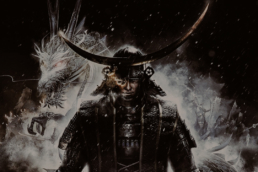
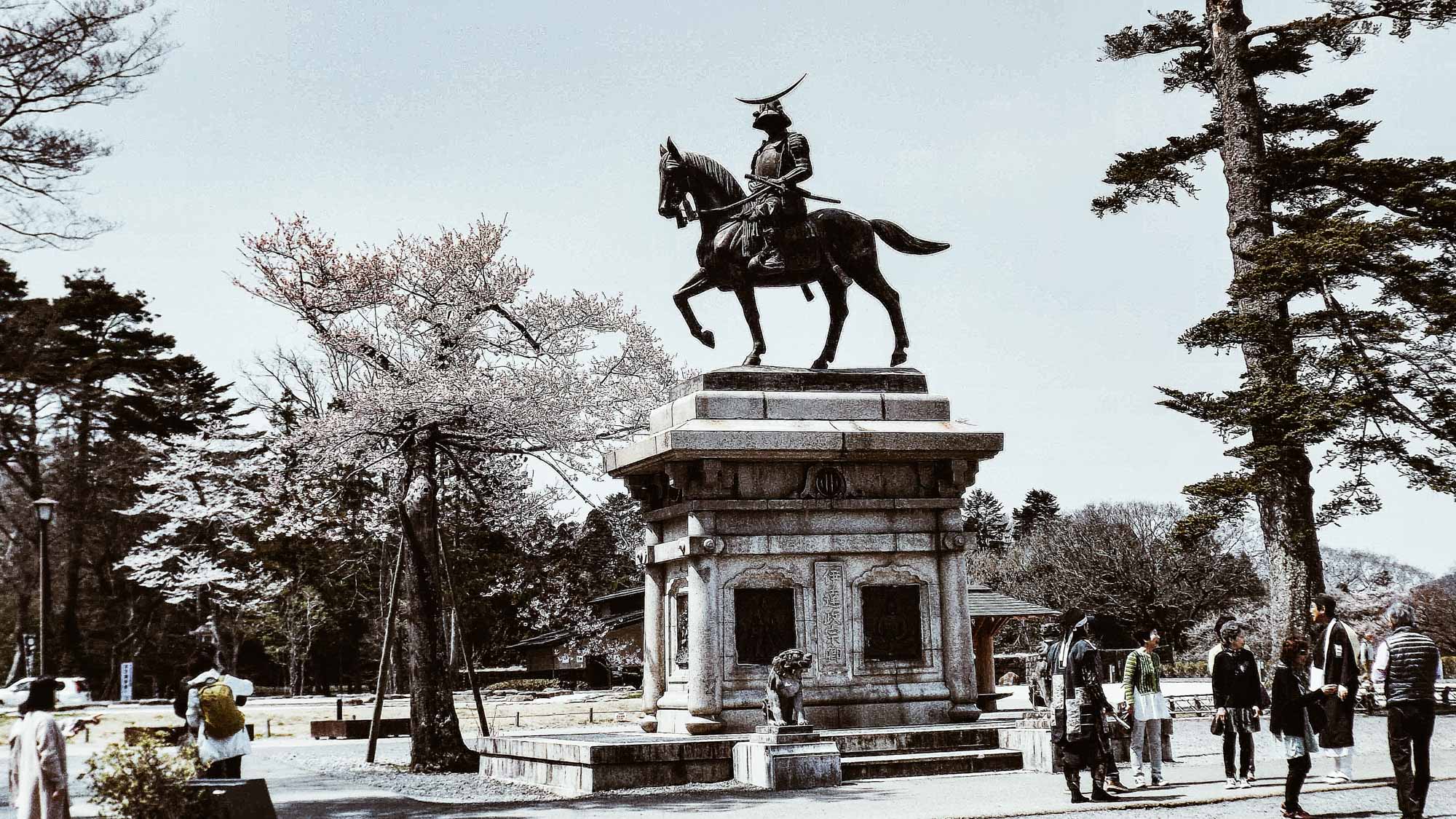
According to previews, the focus of the series will be the figure of Date Masamune, the famous samurai also known as One-Eyed Dragon. He fought alongside the three founding fathers of Japan, warlords who led fierce samurai armies against one another. The purpose of these wars was the unification of the nation about 400 years ago.
The epic figure of Date Masamune, whose legend tells of having lost an eye infected with smallpox as a child, is the protagonist. Furthermore, after killing his younger brother, he succeeded his father as clan leader when he was only 17 years old.
Also conquering the neighboring clans, Date Masamune began the rise to power to unify northern Japan under his control.
Production details
Netflix has commissioned to produce the series at the Canadian production company Cream Productions, already behind the PBS series The Dictator's Palybook, BTK: A Killer Among Us and Fear Thy Neighbor.
Furthermore, executive producers, as well as Cream's CEO and co-founder David Brady, President Kate Harrison and senior production executive Matthew Booi, will be Simon George of the movie Jason Silva for Nat Geo Origins: The Journey of Humankind, Barbarians Rising for History and Showtime documentary Pariah: The Lives and Deaths of Sonny Liston.
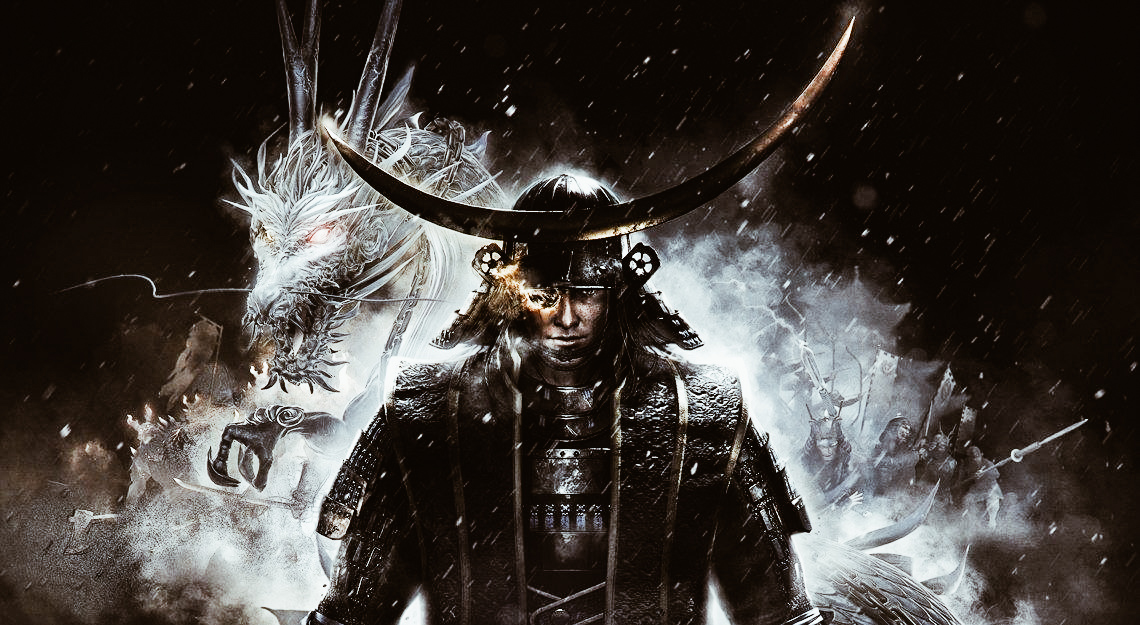
photo credits: dualshockers.com
According to the source, Age of Samurai: Battle for Japan is already being filmed in Japan, the United States and Canada. The series is in fact expected to land on Netflix by the end of the year.
We look forward to it and look forward to seeing this new series in one go! And you?