







The Animal Crossing Phenomenon
As we already know, Japan is a land of trends that come and go, but the recent Animal Crossing phenomenon has involved the whole world, and we're not just talking about the gaming one.
Animal Crossing, Nintendo's worldwide phenomenon
written by: Sara
When it comes to writing about video games in our blog, I'm always strongly questioning whether or not to do so because there are myriad titles from the Rising Sun worthy of note! This time, however, we couldn't help but wonder: the video game in question has really won everyone over, especially during the quarantine period with its simplicity, its "chill" mood and its bright colors. Yes, I'm talking about Animal Crossing!
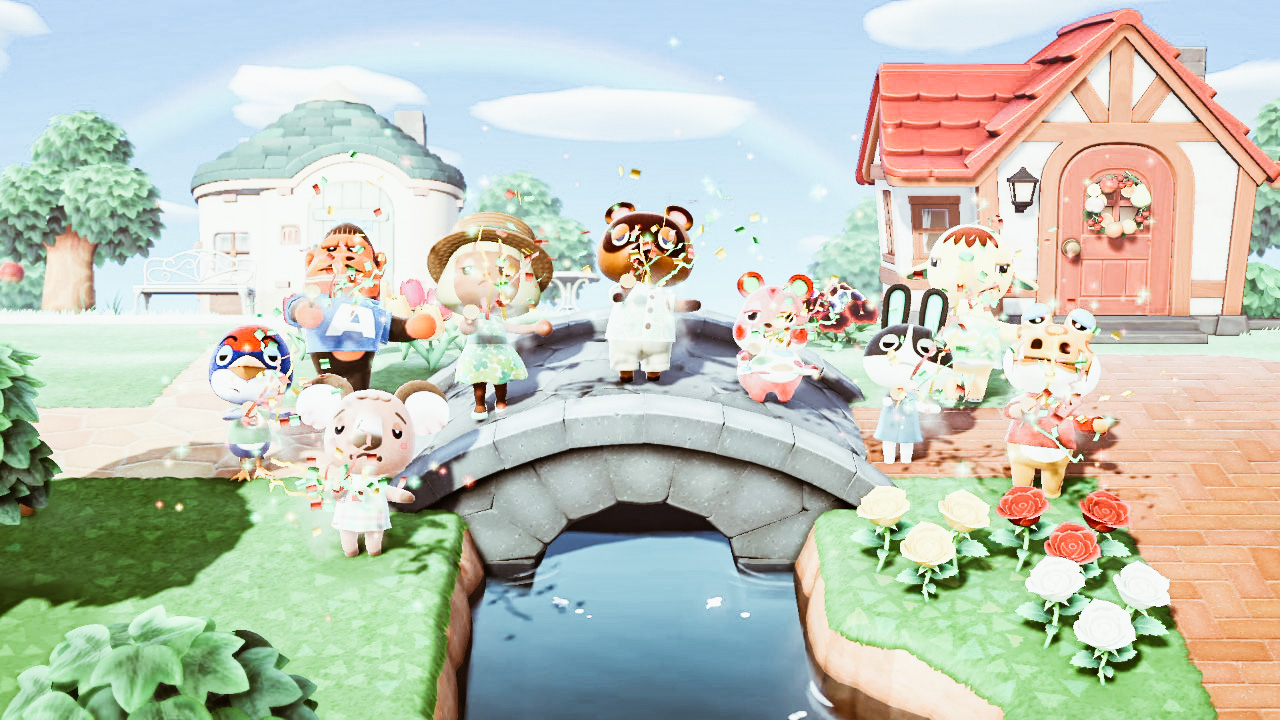
photo credits: gamereactor.it
The various versions
The Japanese title どうぶつの森 (Doubutsu no Mori) literally means "Animal Forest" and was developed for Nintendo by game designer Hisashi Nogami back in 2001 and quickly became one of the most popular video games ever. At its first release, in fact, there were several editions such as Animal Crossing: Wild World, Animal Crossing: Let's Go to the City, Animal Crossing: New Leaf and the very recent Animal Crossing: New Horizons; in addition to cute spin-offs such as Animal Crossing: Happy Home Designer and Animal Crossing Pocket Camp, the latter available for Android and iOS.

photo credits: pinimg.com
Simulator of life, this game catapults us into a world inhabited by curious anthropomorphic animals with which you can interact. There is no real goal, the strength of the series is to customize your village, collect objects, explore and... relax. In addition, the time flows exactly like that of our reality. The day and night, the seasons, the festivities, alternate following the rhythms of our daily life.
The latest edition of the game, New Horizons, is set in a deserted island, totally customizable thanks to the Terra Forming feature that allows you to let your imagination run wild and recreate environments of the most varied inspiration.

photo credits: twitter.com/ryuryu_12mj
Once you have created your own style, furnished the furniture, invited friends to visit the island etc etc etc what is left to do? Some might say that playability runs out, but it doesn't. In fact, events and updates make New Horizons an endless and fascinating video game where you can celebrate weddings, birthdays and ceremonies of various kinds. Create a party with friends, celebrate holidays such as Christmas, Easter, Tanabata, participate in festivals of various kinds, competitions and surprise events! Once again, Japan has given us something unique. A game to play when the world around us is stifling and hectic or simply when we want to escape, but we can't do it physically.

photo credits: twitter.com/opeope1006
All titles in the series are available on the official NINTENDO website.


MONDE, the artist who creates a little Tokyo in your house
Monde, a famous Japanese designer recreates special dioramas for our libraries. First of all, what is a diorama? A diorama is the reduced-scale reproduction of scenography that recreates different settings. The diorama is also called plastic, but it is not used in the architectural field. The word Diorama itself means "to look through" and it’s in fact the reproduction of a scenography inside an open box that allows you to admire its content.
MONDE, the artist who creates a little Tokyo in your house
Autore: SaiKaiAngel | Photo Credits: MONDE Twitter

Initially, the diorama presupposed the reproduction of the scenography inside a semi-open "box" equipped with a glass in order to admire its contents. Dioramas differ from plastic models also in the precision of their details, extremely accurate.

Monde decided to create Dioramas and use them as bookends. These are magical 3D dioramas that allow us to experience a world apart and transform even the simplest of bookcases into something unique. Just look at them carefully to fall in love and realize that the work of art is perfect even in the smallest details. If you don’t have the opportunity to experience the alleys of Tokyo even in their most minute details, you can turn your library into a secret passage to Japan.
Depending on the diorama, you will find an arrangement of plants and lights made with different materials, which actually create the illusion of scrutinizing a dimly lit Japanese alley, but directly from your home! The artist told Buzzfeed News Japan, "I thought it would be interesting to create a path in the gap between the shelves" and in fact, his idea proved to be not only brilliant but also innovative!
The artist created this project for the Design Festa, an international art event in Tokyo, with "detailed replicas of the winding and narrow alleys of Japan." Monde creates objects inspired not only by the city but also by animals and insects. Do you want to have these small universes at home? You can contact the artist directly on his Twitter profile

What are you waiting for? Monde has created the way to have Japan in your homes. Fall in love with the alleys of Tokyo and enjoy them comfortably seated on the sofa. Tokyo has never been so close thanks to Monde.


Lucky charm, directly from Japan
Japan has rich and varied traditions, one of the most famous of which is the one linked to lucky charms or amulets. In fact, o-mamori (お守り) are easy to find and just go to any temple to buy them. But what exactly are they and how are they made?
O-mamori (お守り), amulets brings luck and lucky charm
author: Sara | source: Tokyo Weekender
Lucky charm par excellence, these amulets instil protection precisely because 守り (mamori) means protection/guide. In fact, an auspicious prayer written on paper or wood is then wrapped in a fine silk cloth. Made of different colours depending on the type for which they are intended, these lucky charms represent love, health, luck, money, learning, etc.
Their effectiveness is destined to wear off after a year or to achieve their purpose. In fact, in the end, you should take them where they were purchased so that they are burned in a sacred fire.
The story of the O-mamori
Their history has Shintoist and Buddhist religious roots. In fact, priests thought they could protect people by driving away evil spirits through small pocket blessings. In fact, the strength and protection of the gods were encapsulated here.
Over time the omamori have multiplied, there are many different features and they can be purchased in the sanctuaries and in the times scattered throughout the Japanese territory.
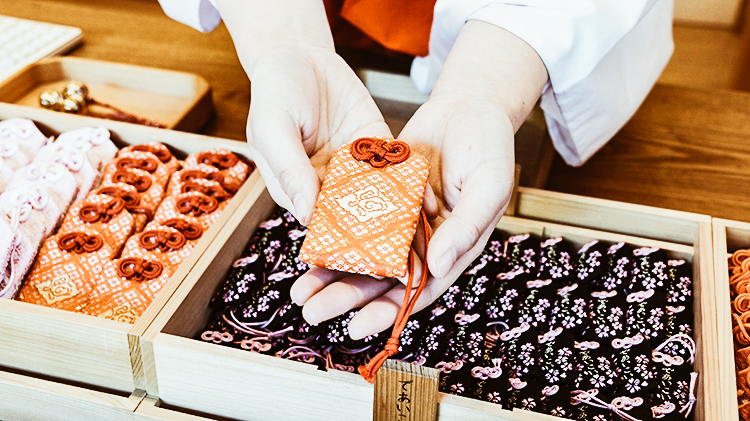
photo credits: web-japan.org
Traditional Omamori: protection for every need
KATSUMORI 勝守, the success
The prayer of this omamori will ensure that the one goal you have set yourselves and to which you are dedicating your energies will be realized.
YAKUYOKE 厄除け, ward off evil
Often achieving a goal can be difficult or even hindered, so this amulet will help prevent potential demons that could inhibit success.
SHOUBAI-HANJOU 商売繁盛, money
Usually of bright yellow colour and shaped like a "bag", this omamori can be more generic and therefore guarantee monetary fortune or more specifically how-to protect investments, savings or good business.
GAKUGYOU-JOUJU 学業成就, education and learning
Encouraging and motivational in studies this omamori is very popular among students and can be seen hanging from their backpacks as a good luck charm for school careers.
KOUTSU-ANZEN 交通安全, a safe journey
Travelling safely is one of everyone's desires and this amulet has become the most loved and popular among those who drive public transport (buses, taxis and aeroplanes). Its function is to make the roads safer and protect drivers and passengers from road and aerospace inattentiveness. In fact, there is its own version dedicated to aeroplanes that takes the name of KOKU-ANZEN.
EN-MUSUBI 縁結び, love
There is little to explain, whether you are single, engaged, married or about to have a baby, these omamori have only one function. In fact, their purpose is to guarantee and strengthen love, give happiness, simplify things, protect the heart.
KAIUN 開運, Fortuna
A general omamori, that of fortune, this one does not dictate guidelines or constraints. It is simply a fortune enhancer, a lucky charm for any choice or occasion.
SHIAWASE 幸せ, happiness
In the wake of KAIUN, SHIAWASE is also a "guarantor of happiness". In fact, this becomes a motivator to improve one's life by remembering the small nuances that can change all points of view.
KENKO 健康, health
This talisman, as it is easy to guess, aims to protect against disease, keep the body healthy and help those who have it to live a long life.
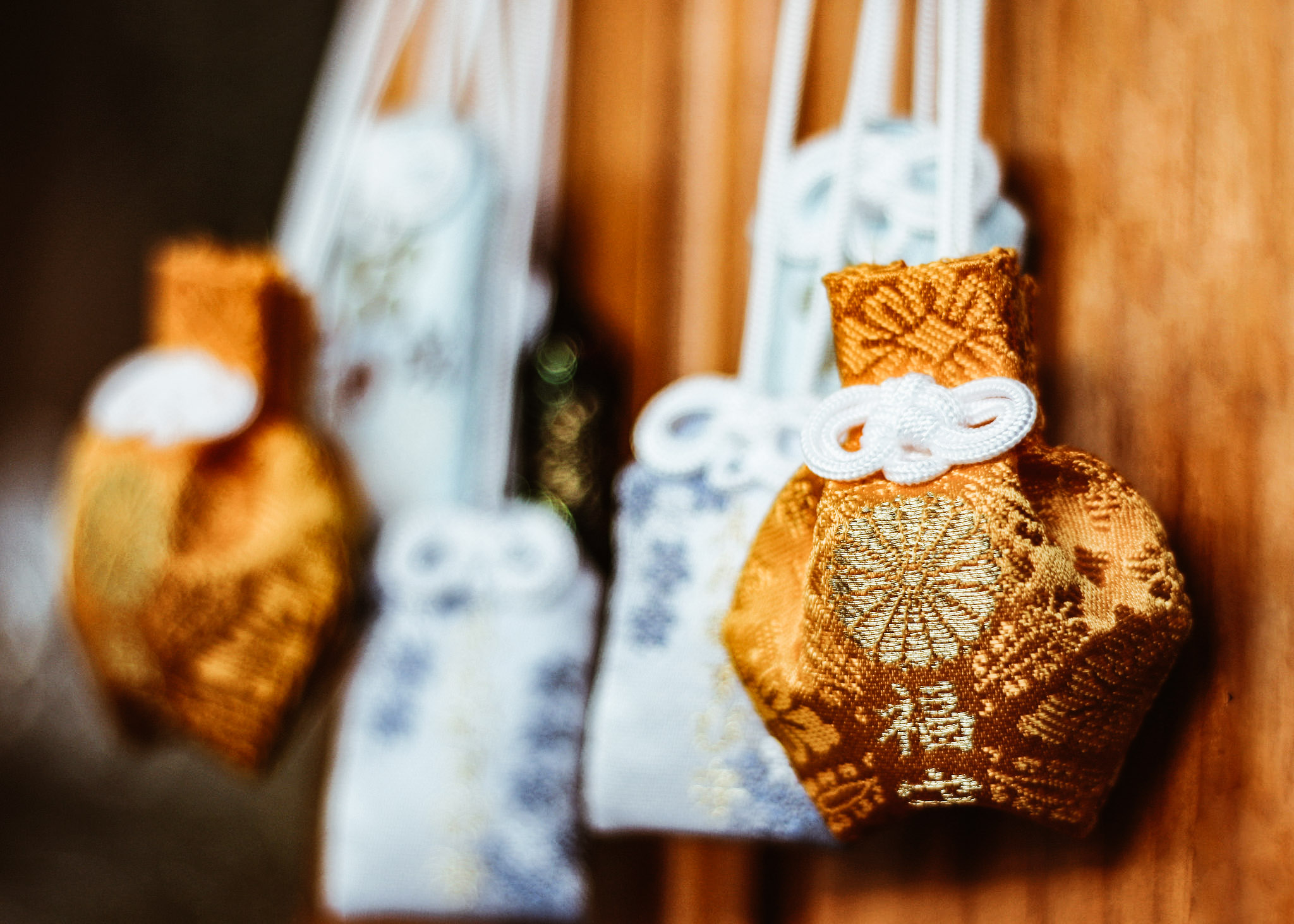
photo credits: Fiona Dawkins
Omamori details: sometimes you have to hit the mark
FROM A LIE TO THE TRUTH
This omamori is very different from what we're used to. In fact, it is made entirely of carved wood and is shaped like a little bird. It can only be found once a year, on January 25th at the Shrine of Yushima and its purpose is to transform all the lies into a song of truth.
THE "ETERNAL" BEAUTY
There is the generic omamori aimed at overall beauty. However, there are also specific omamori to have beautiful legs, or anti-ageing or to have a slimmer waist, beautiful eyes, better skin and much more.
PETS
It's not that hard to find protective amulets for animals! They deserve a special blessing too, don't they?
TECHNOLOGY
It might make us smile at the thought of an amulet that can protect against the pitfalls of the internet or the difficulties of using electronic devices, yet it exists!
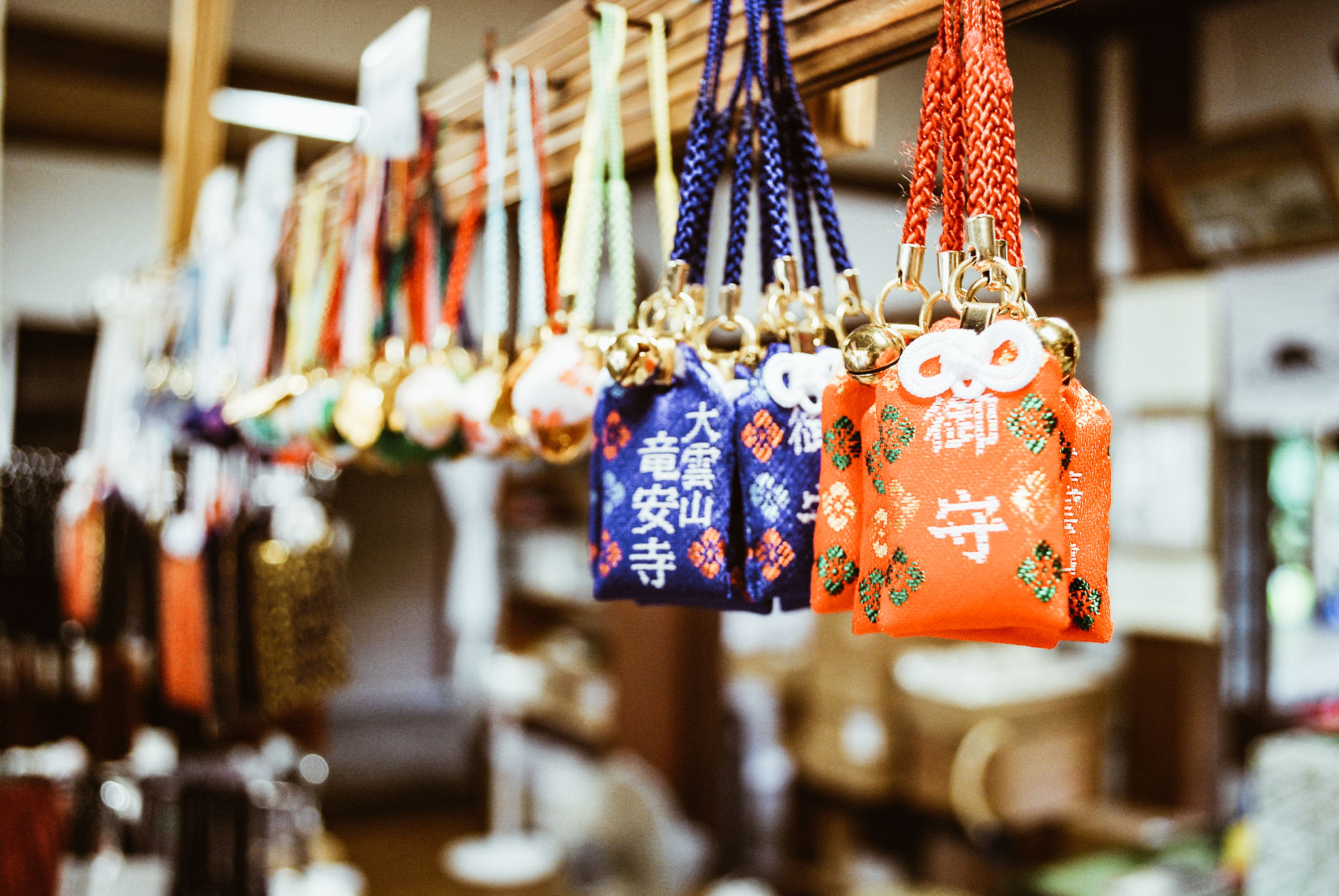
photo credits: Ryuko Studio Mexico
We could say that there is a lucky charm for each of us, unique combinations that probably won't change our existence. However, they are a nice way to wish the good of those we love or simply adorn our objects and means with something that reminds us of our goals.

Kit Kat, the 10 most unique flavors directly from Japan
"Have a break, have a Kit Kat" was the famous slogan of the world's most famous snack commercial. However, staying on simple chocolate after a few years is almost "boring". That's why the Japanese have invented several new flavors and associations to enjoy it even with your friends!
Kit Kat, the 10 most unique flavors directly from Japan
Author: Erika | Source: Guilty Yeats

photo credits: fpsconnexion
From Japan to the United States, Kit Kats are now the most famous snack in the world. If you love these bars as much as we do, you may already know the various flavors in the world. However, for those of you who are unaware of these flavors, today we have collected the most famous ones.
Matcha Kit Kat
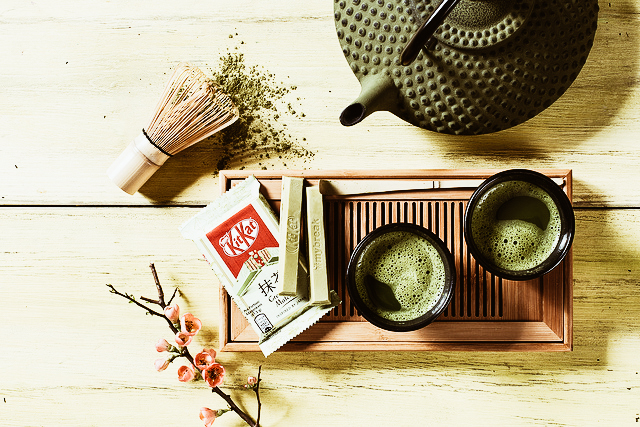
photo credits: wirtschaft-tv.com
Of course, this had to be the first on the list. Already present in several Italian and international supermarkets, the Matcha Kit Kat is certainly everyone's favorite. With the typical taste of Japanese green tea, the Matcha Kit Kat is a very satisfying snack and if you love Matcha as much as we do, then this is the snack for you!
Lemon Kat Kit
You know that citrus and chocolate are always a good match. In fact, Kit Kat has created a special edition dedicated to Lemon Cake and it has in fact depopulated. It actually seems to really eat a lemon cake!

photo credits:matcha-jp.com
New York Cheesecake
The Japanese are a cheesecake gourmand, they have cheesecake for all tastes, so they couldn't miss the cheesecake Kit Kat. Every bite of these bars is like melting a delicious chocolate cheesecake in your mouth. This could be the snack par excellence that can also be used as a dessert!
Red Almond Kat Kit
Cranberries, dark chocolate, and almonds, this is the delicious trio for these bars, a unique flavor. Perfect for a snack at any time, a sweet and crunchy taste with every bite!
Cookies and cream
If you love cookies and cream, this is the option for you! Not only is each bite a creamy biscuit flavor, but combined with the crispy wafer creates an incredible mix. One of the best in the world, we are sure it will satisfy all your sudden cravings.
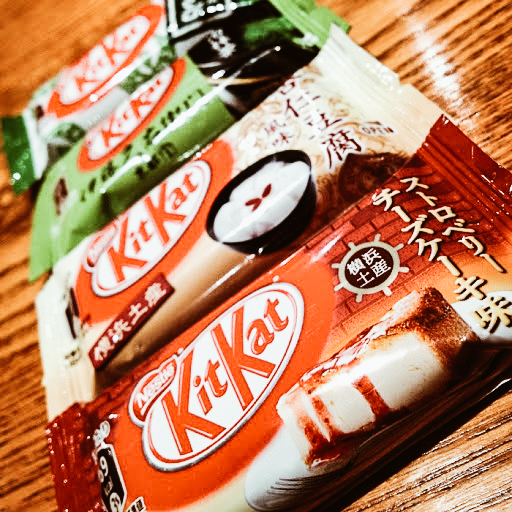

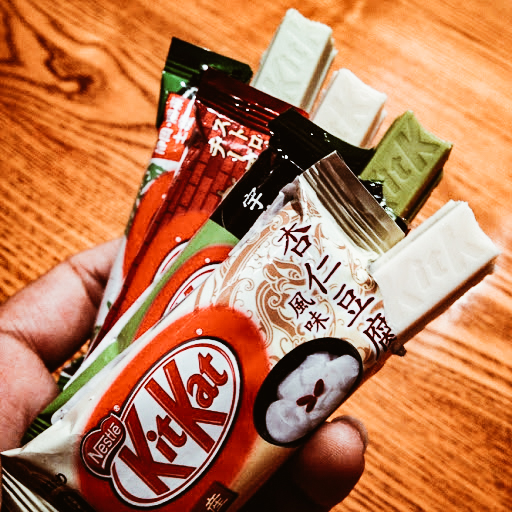
photo credits: wikipedia.org,food-spotter.com
Azuki Beans Kit Kat
Here we go again with the typical Japanese flavors. Sweet but not too much, these bars have a flavor reminiscent of the filling in Dorayaki, but with chocolate in addition. One of the rarest varieties but definitely worth trying!
Strawberry cheesecake
One of the most popular flavors in Japan, these bars should be savored with every bite. Tanks to the strawberry, you will taste these bars as if you were eating a real cheesecake. Also, the crunchiness of the wafer makes these bars have everything you need to qualify as a dessert.


photo credits: wikipedia.org, fpsconnexion
Beni Imo Kit Kat
This is perhaps the most peculiar Japanese taste of all. With the sweet purple potato, it may not seem like the snack to fall in love with, however, once you try it you will change your mind. With just the right amount of sweetness, it also makes it perfect for everyone who doesn't like too sweet snacks.
Raspberry Kat Kit
Another fair exclusive of Japan (unfortunately) is the raspberry one and if you are a fan of this fruit, this bar will become your absolute favorite. In fact, with every single bite, you'll find the crunchiness of the wafer and the freshness of the fruit and if that's not enough to make you want to try them, then we don't know what could do it!
Unfortunately in Italy, it is difficult to find all these flavors, however, you can go to Japanese shops or restaurants in your city and see if they have any available. Alternatively, online shops always offer a wide choice! Which is your favorite?


Where to go when the borders reopen
Traveling to Japan: where to go when everything is over
Author: Erika | Source: The Japan Times
Due to the COVID-19 pandemic, at the moment it is impossible to travel to Japan, however, nothing prevents us from dreaming but above all planning our next trip! Let's start by telling you about some particular places that you should absolutely include in your "travel to do list".
Tohoku: Michinoku coastal trail
If you love long walks and hiking, this is the place for you. In fact, along the coast of Michinoku, you can find a path for all those who like to venture into nature. It is a hiking trail that runs 1,025 kilometers along the Pacific Ocean from South Aomori Prefecture to Fukushima Prefecture.
The trail follows the old Sanriku Hamakaido, an ancient trade route that cut through the depths of the forest and glades. This will not only allow you to see an unusual side of Japan but also to spend some beautiful moments surrounded by nature.
Ishikawa Prefecture: Kiriko Festival in Noto
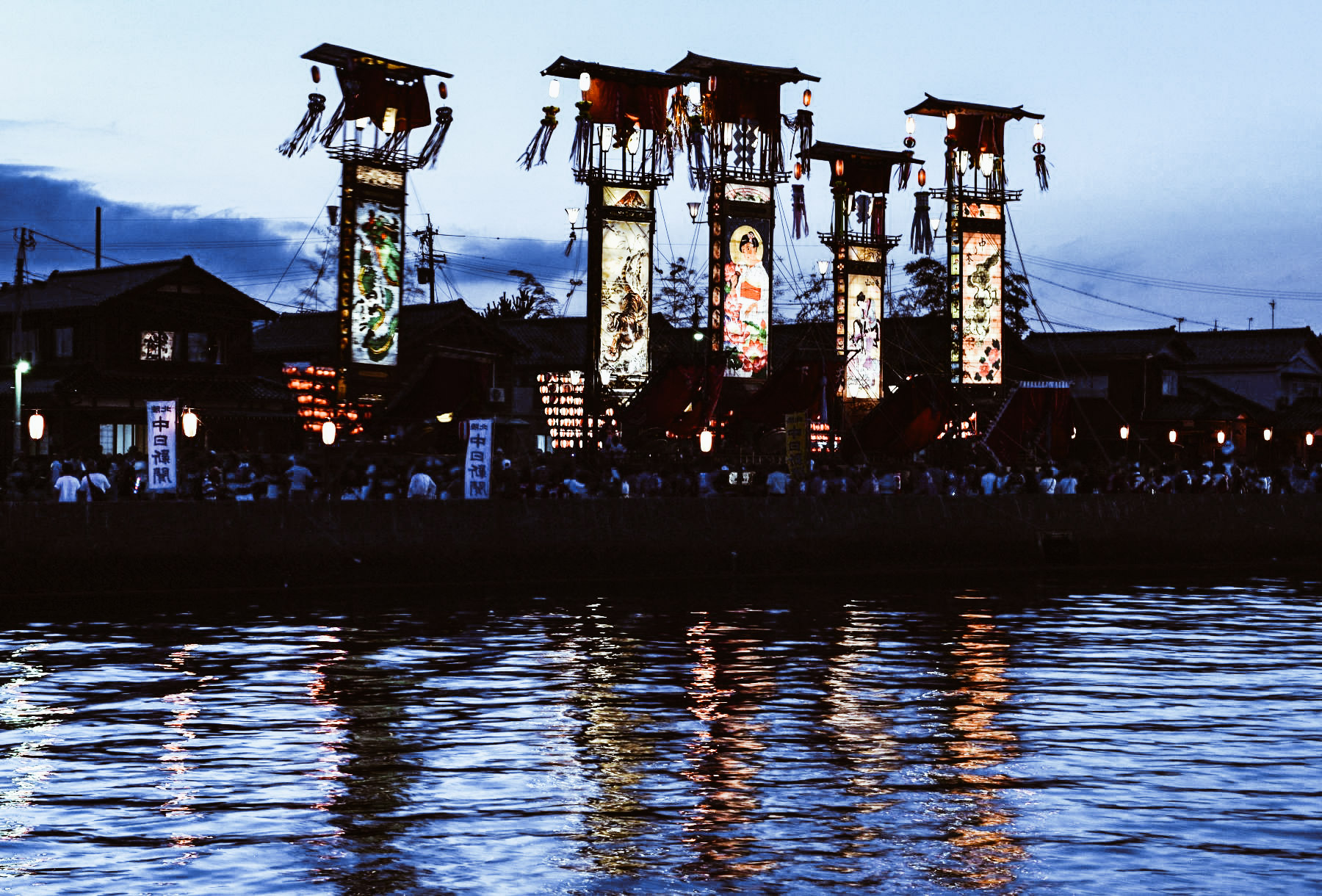
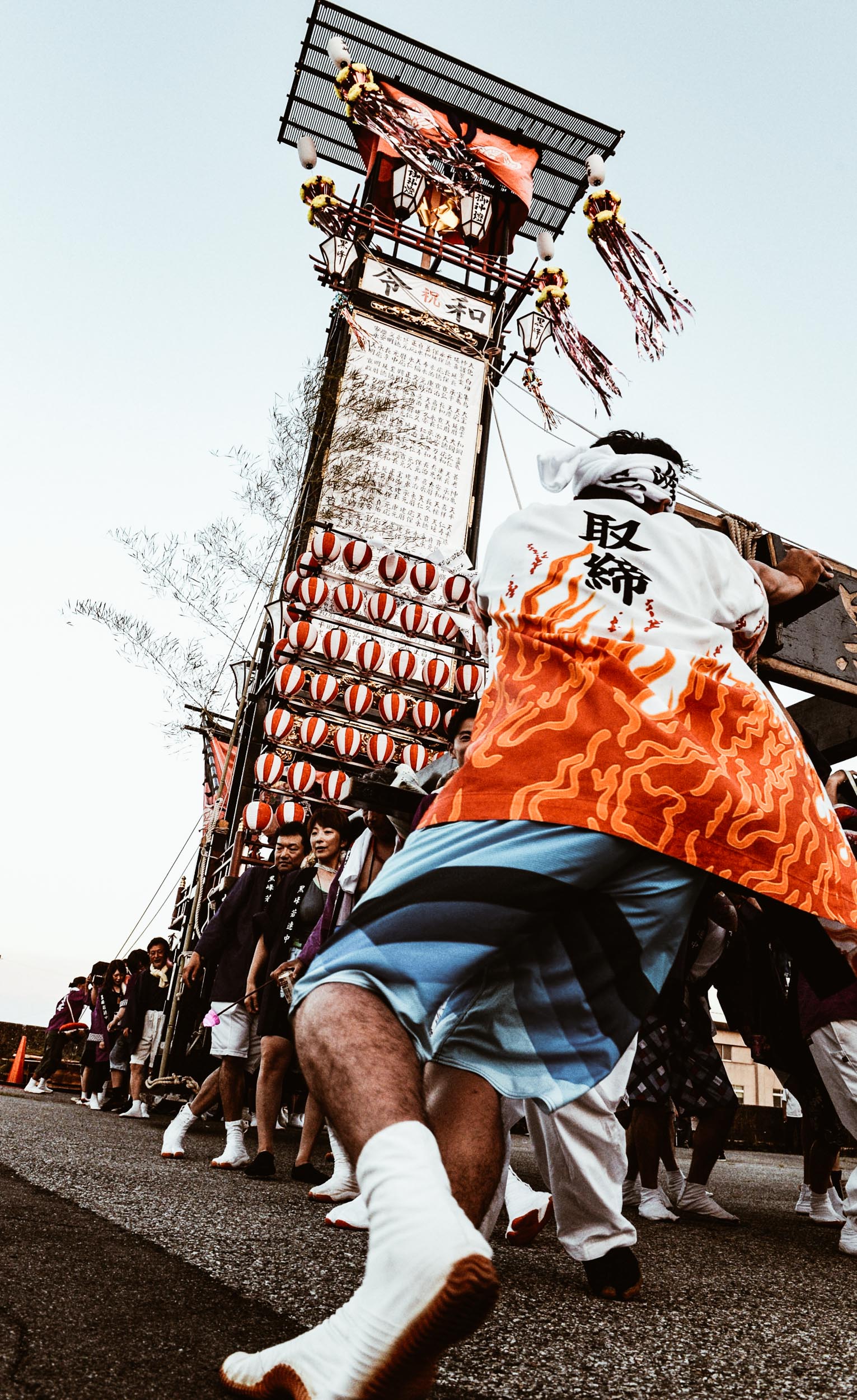
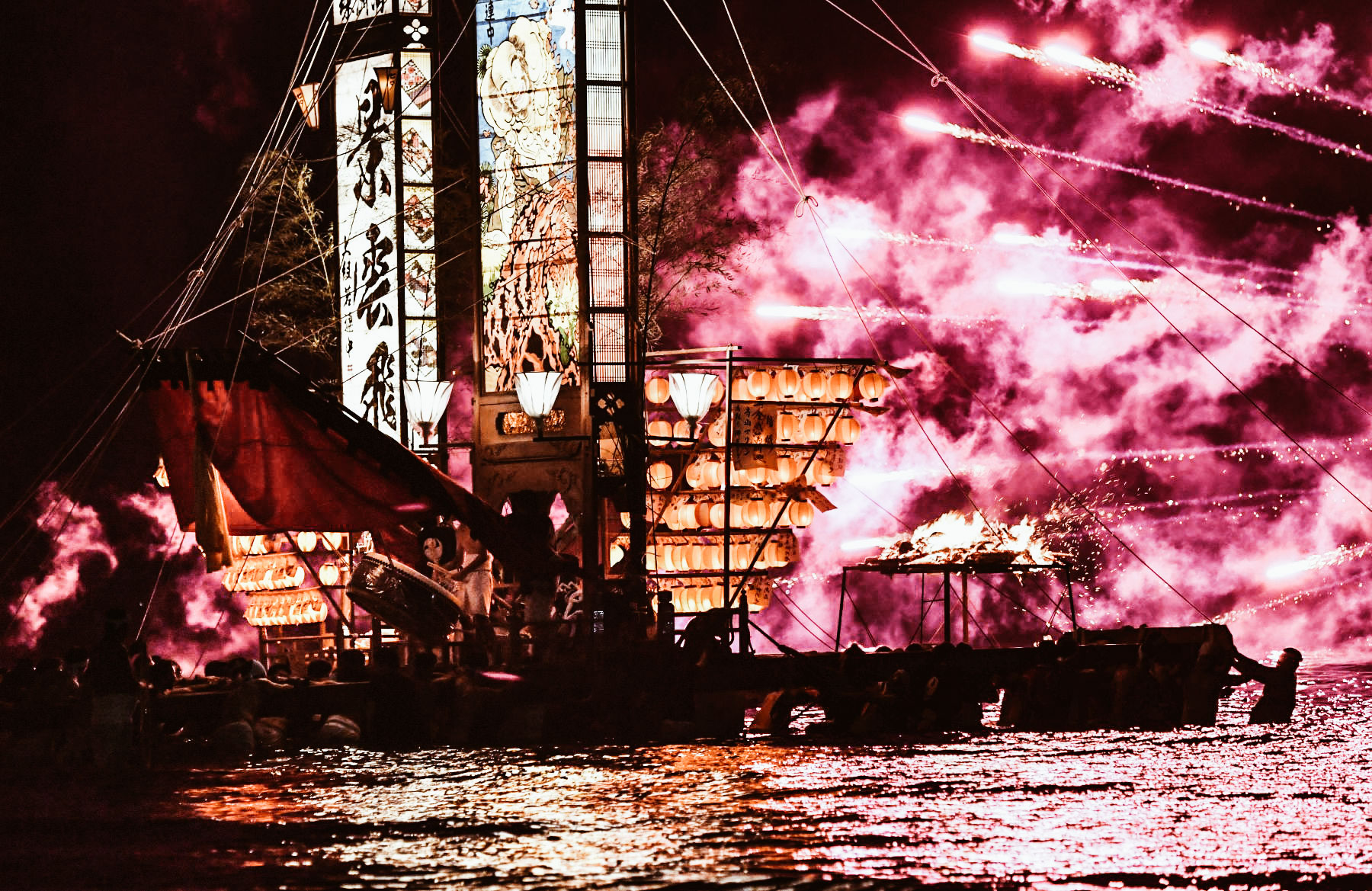
photo credits: japan-forward.com
There are many festivals in Japan, some more traditional, others more eccentric and exuberant. However, the Kiriko festival of Noto (floating lanterns) in Ishikawa Prefecture is one of the most impressive. In fact, if you have ever had the fortune to attend, you will surely have felt teleported back to the Showa era (1926/89). Tradition has it that every year, everyone who belongs to the prefecture returns to Ishikawa to bring the great kiriko of their neighborhood.
Every year, men with matching happi of various colors, carry 15-meter kiriko weighing 2 tons through the streets of the city accompanied by the sound of flutes and drums.
However, the Ishikawa Peninsula also offers many other attractions, such as Kanazawa Castle, one of the many beauties of the rising sun. So if you're planning to travel to Japan, this is definitely one of the must-see destinations.
Tokyo: The back streets of the Kita district
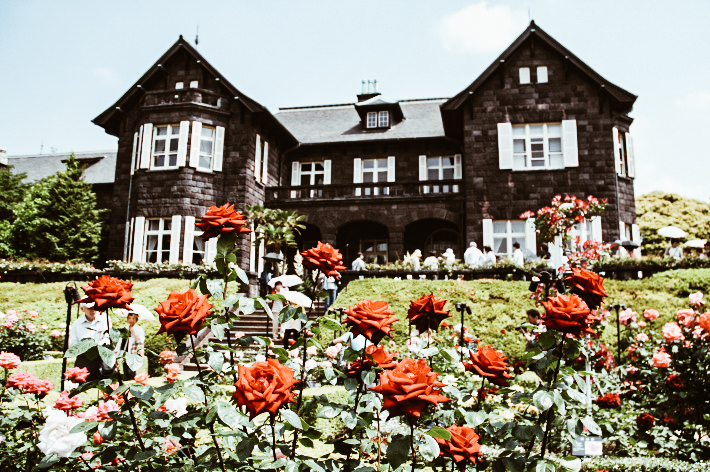
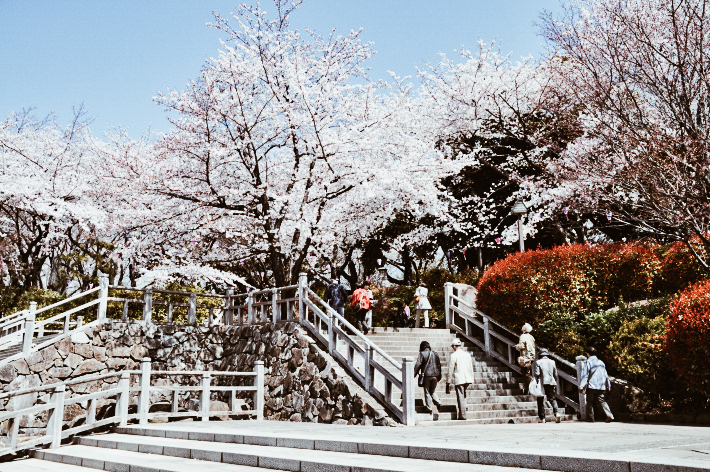
photo credits: tokyo2020.jp
If you've ever been to Tokyo, you may have noticed that the city not only has its most known neighborhoods but is made up of many small side streets that hide endless secrets and delights. It's very difficult to choose what to see first, but the Kita district is one of the most particular and less known.
In these small streets in fact you can find small family-run shops that date back to even before the first World War. Surrounded by the shops of Wagashiya (traditional sweets), here you can taste the best and most particular dango and sweets in the city.
Don't forget the beautiful Japanese gardens, with colossal lanterns and typical Japanese maples, waterfalls, and rocks that make this place a sublime masterpiece.
Fukuoka Prefecture: the yatai
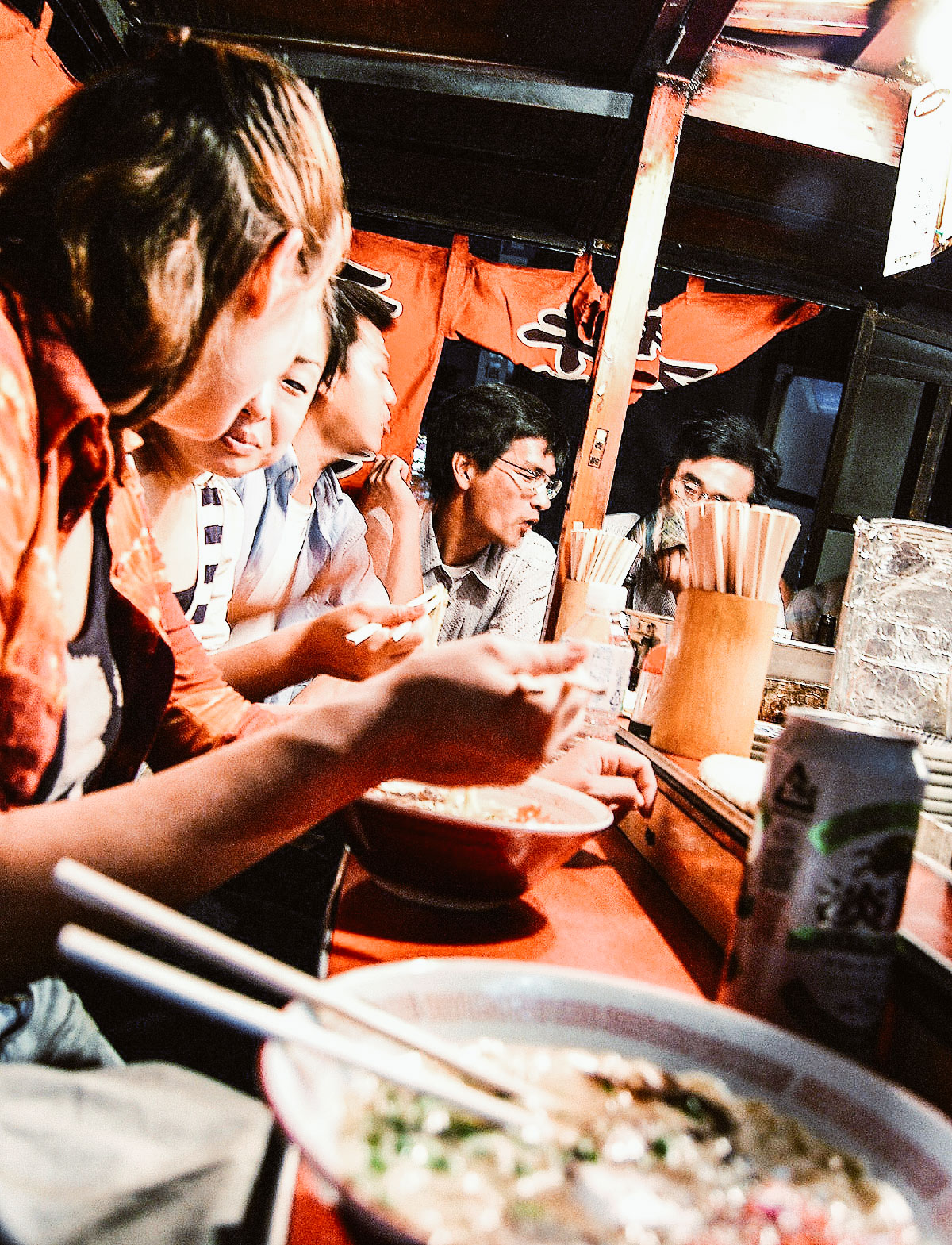
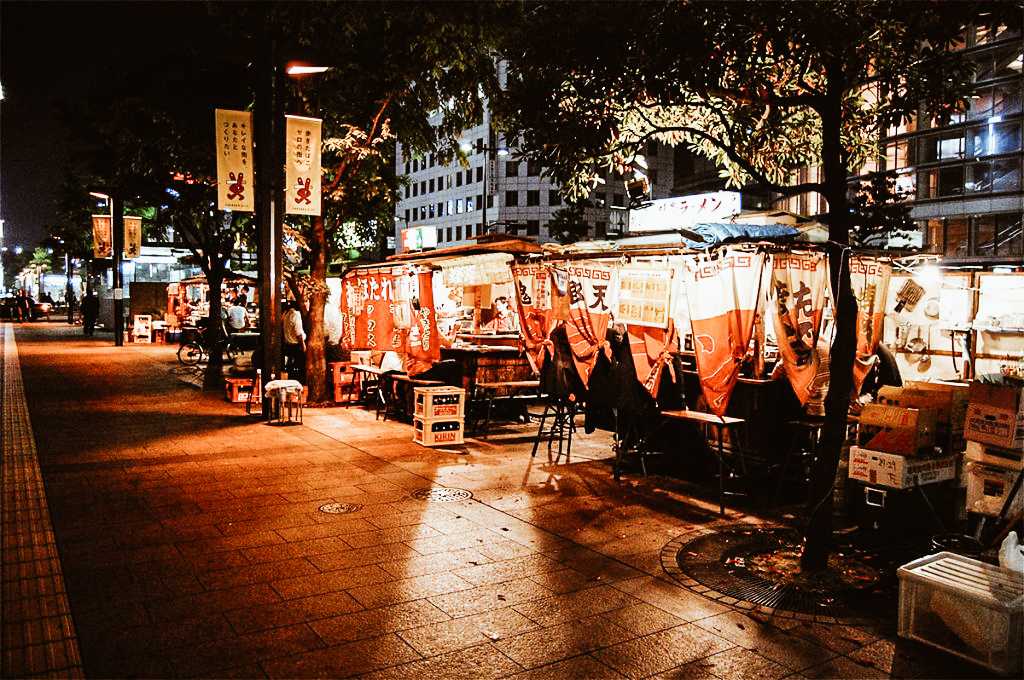
photo credits: gaijinpot.com
Traveling in Japan means not only visiting the various cities but also experiencing all the traditions of the culture of the rising sun. In fact, in the prefecture of Fukuoka, around 5 pm, the streets fill up in anticipation of the evening and it is here that we can find the many yatai, street food stalls. Outside the stations, at the corners of the most famous intersections, along the river and even on the streets of Nakasu, we find these typical street shops.
The food served here is mainly street food that focuses on Tonkotsu Ramen, the specialty of Fukuoka, but also yakitori and other delicacies. However, one of the things they have in common is the atmosphere, the people who crowd these stalls, and the managers who try to place as many orders as possible. A true moment of tradition and a cross-section of Japanese life not to be missed.
Tokushima Prefecture: Iya Valley
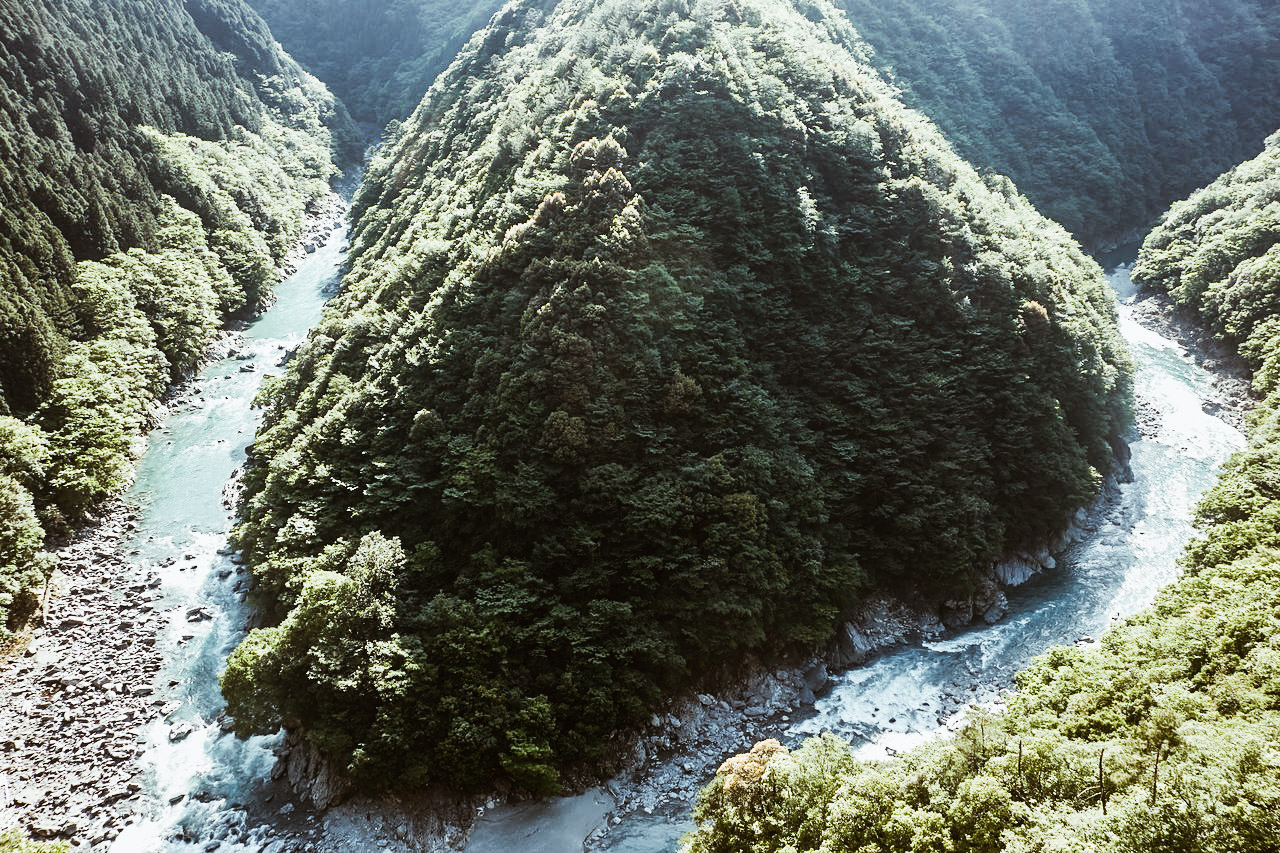
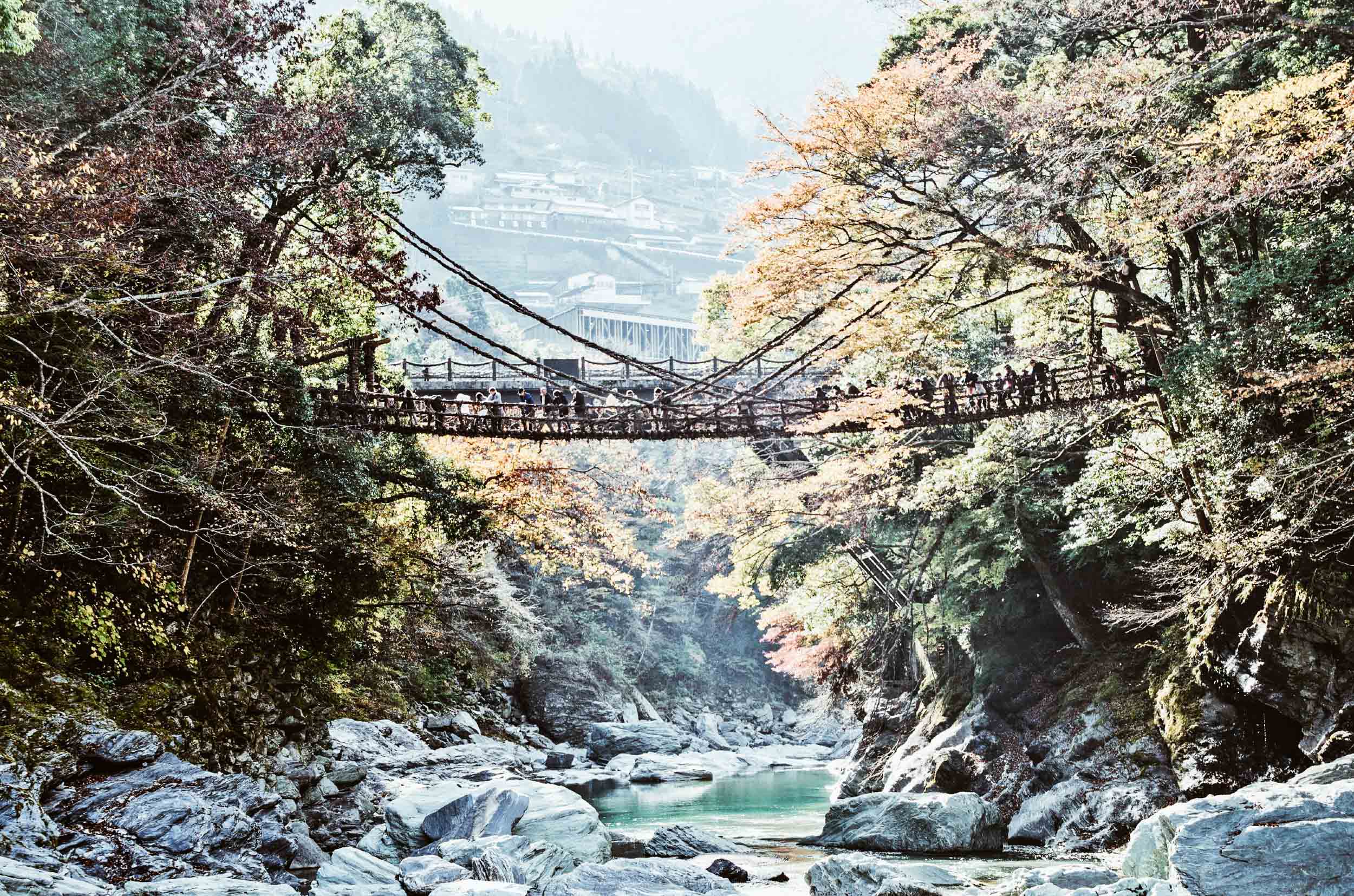
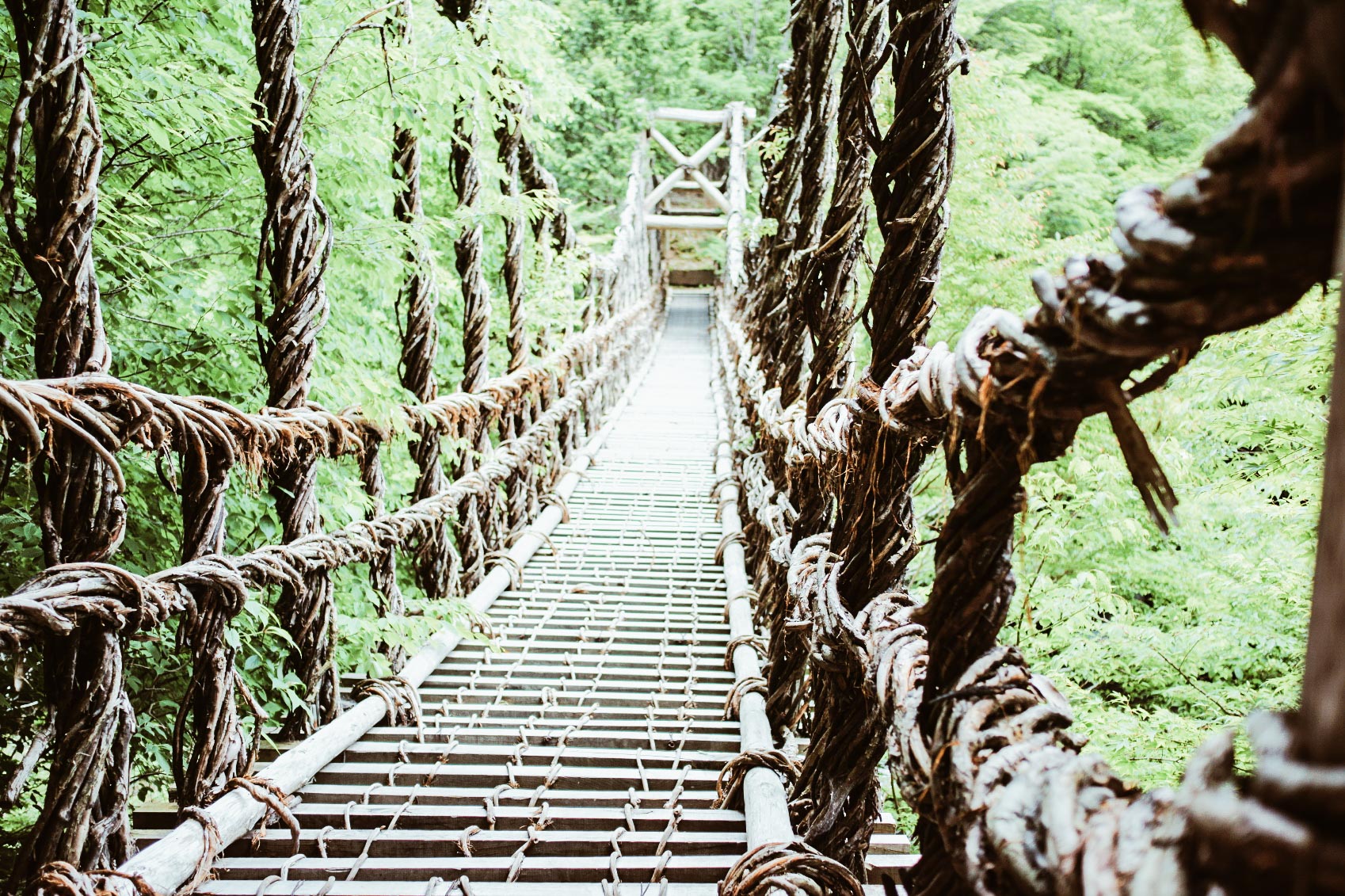
photo credits: tripadvisor.it, gaijinpot.com
If you are planning to travel to Japan, you absolutely must include this destination within your destinations to visit. In the heart of Shikoku, we find the Iya Valley, an almost magical place to explore, with turquoise waters and lush mountains. Here you can not only immerse yourself in nature and the real Japanese countryside, but we can also find cheap accommodation and excursions for all adventurous tourists. In fact, here you can discover a remote, mountainous Japan with thatched-roofed houses, traditional thatched vine pits, and the famous 88 temples of Shikou. A destination not to be missed.
Okinawa: Kerama Islands
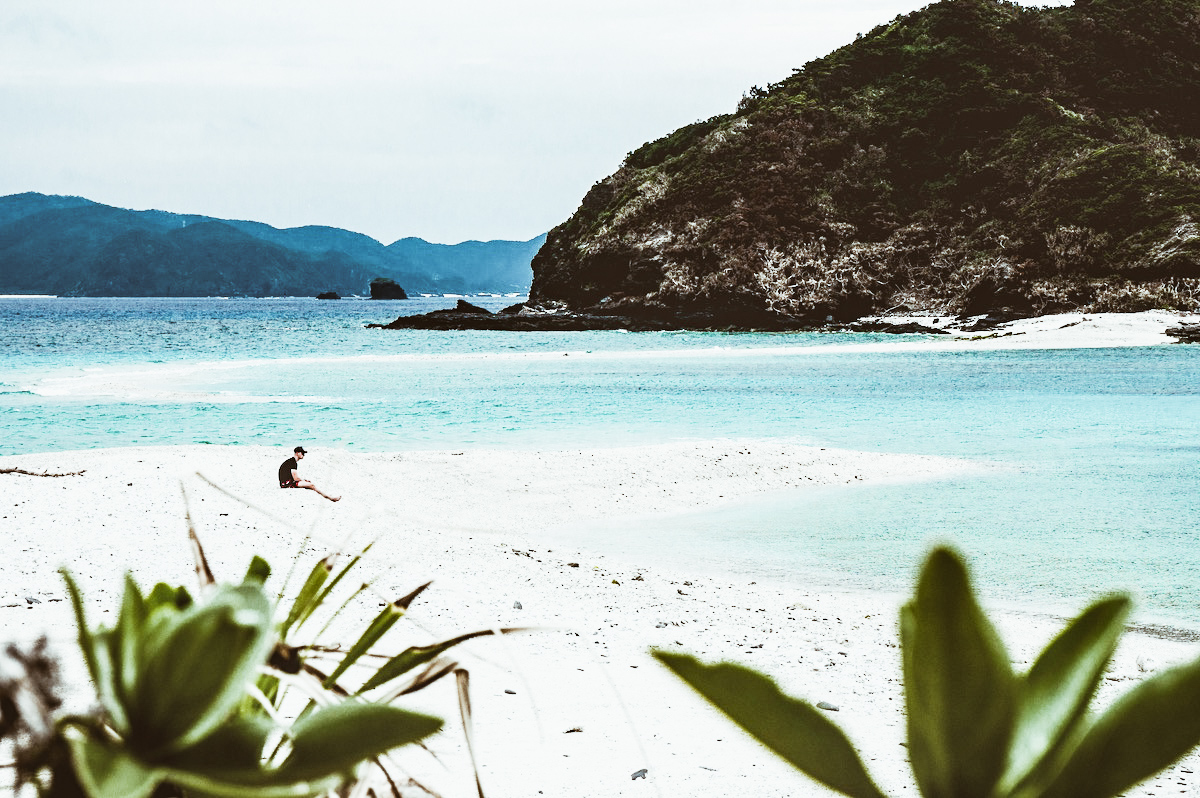

photo credits: watabi.it, viagginews.com
Okinawa is not only one of the most beautiful places in Japan but in the world. Between white beaches and crystal clear waters, the Kerama Islands are a jewel of nature. There are quick ways to get to the main island, however, taking a cruise from Kagoshima will help you discover places unique in the world. Passing between the islands of Okinoerabujima and Tokunoshima, you will see spectacular landscapes hitherto unknown to you. Among sea breezes, snorkeling with turtles, and trekking on the abandoned roads of Zamami Island you will discover a hidden world of corals and colorful fish.
Prefecture of Niigata: Museum of Northern Culture
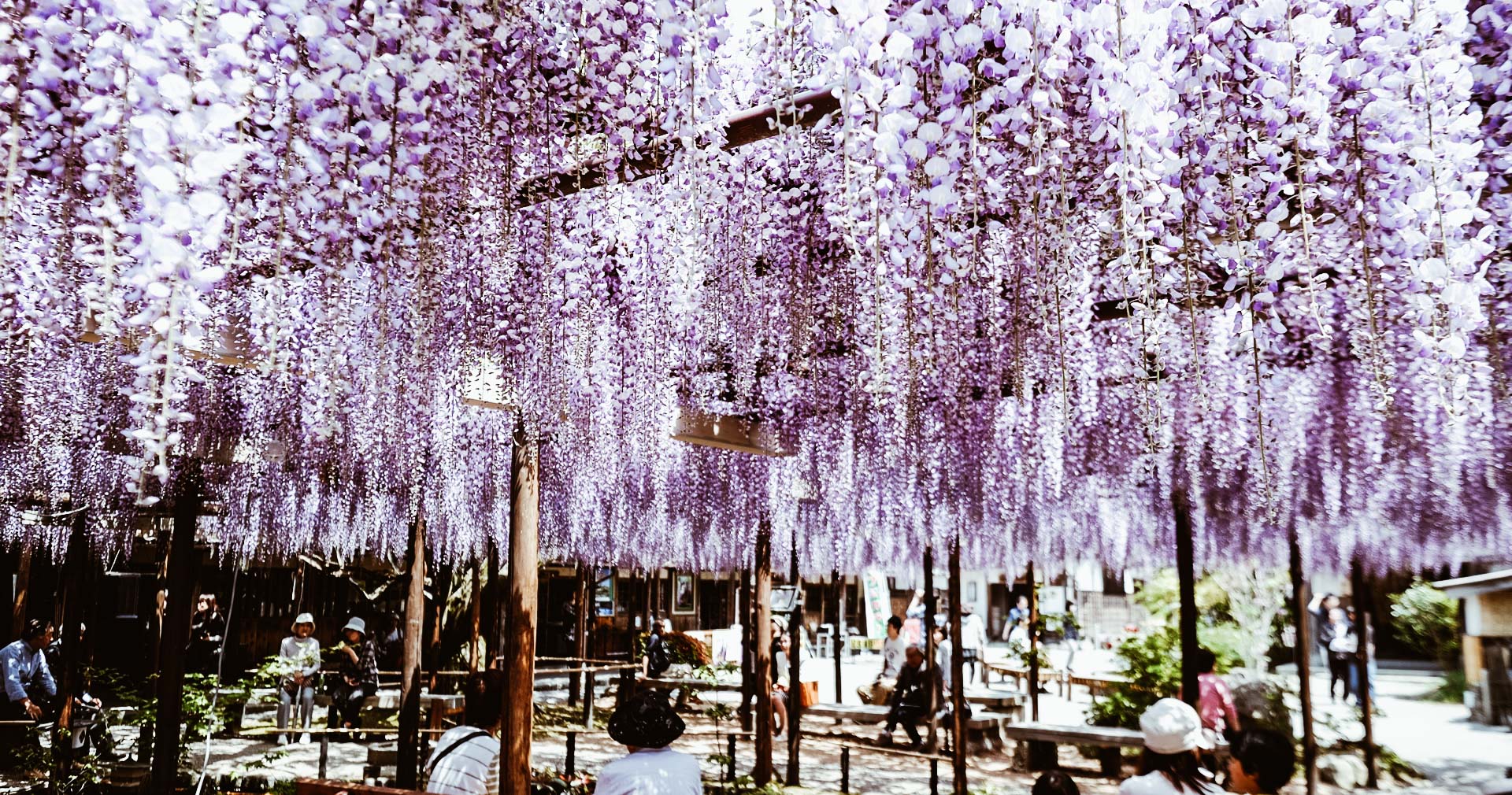
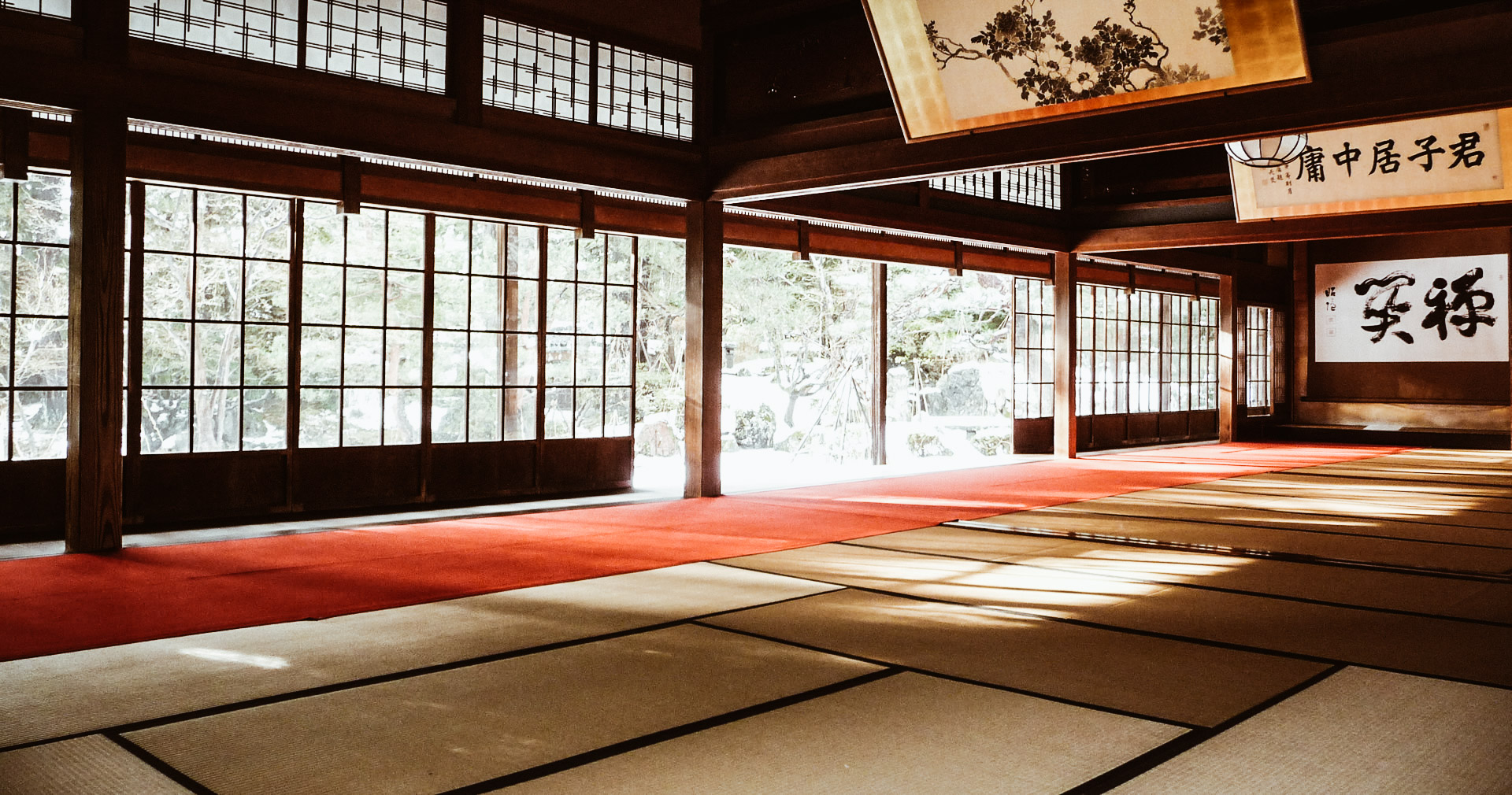
photo credits: hoppou-bunka.com
You can find the Museum of Northern Culture in the village of Soumi in the former palace of the Ito family. Here, the residence and garden were converted into a private museum after the war. With a landscape created by Taiami Tanaka over 5 years, the building houses a reception hall consisting of 100 meters of tatami. With a very special garden decorated with waterfalls, stone lanterns, wisteria, and miniature bridges, the park remains one of the main attractions of the area.
Not only will you feel relaxed to enjoy the view of this landscape, but you will also feel like you are going back in time. One of the most precious places in the prefecture.
We definitely recommend these destinations if you are planning to travel to Japan, and of course, we are curious about your feedback!

Far East Film Festival 22, this year in streaming
Far East Film Festival 22, this year in streaming
Author: Erika
This year due to the COVID-19 emergency many countries found themselves having to reorganize, or even cancel, several events. However, our friends from the Far East Film Festival decided to continue with the 22nd edition and found a perfect way to respect the rules. In fact, only for this year, the Far East Film Festival will be held from June 26th to July 4th via LIVE STREAMING, also thanks to the MyMovies live platform!

Face to face, Heart to Heart is this season's motto. Taken from the homonymous hit of the eighties, this is the perfect synthesis of this new edition.
An edition that does not give up and that will take place online! Face to face, through the thin glass of the displays, heart to heart, because the festival community in Udine is literally one big family.
From 26 June to 4 July, the structure of FEFF 22 will be remodeled. In fact, we are not only talking about a switch up, with the films in competition to watch on-demand but an authentic transformation. All content will be adapted, as far as possible, to the dynamics of streaming.
During these months of lockdown, the audience has already attended en masse the MyMovies platform as a virtual theatre. In fact, it will be here that the online streaming of all the films in competition will take place. Obviously, the whole will not only be a reservoir of titles but the meeting point for all the participants of the Far East Film Festival.
Moreover, from June 30th to July 2nd, Focus Asia, the festival's Industry area, will also be online, with the FEFF in progress section (the first and only European platform dedicated to Asian films in post-production), the project market and a rich webinar program.
The accreditation campaign will start in a few days, on June 1st to be exact and soon the staff of FEFF 22 will share the complete list of the broadcast schedule. Let the umpteenth journey, the umpteenth challenge, the umpteenth adventure begins!

Things to do during Quarantine: Traveling to Japan through Movies
Embark on a Journey to Japan through movies
written by: Erika | source: Tokyo Weekender
The long quarantine is almost over but travel is still impossible, so let's continue our section on things to do in quarantine, and today we will explain how to discover Japan through movies.

With the coronavirus pandemic, the world's borders closed, airports blocked and flights canceled prevented people from traveling. This not only caused the tourism business to drop but also prevented us from getting to know and explore distant countries such as Japan. Precisely for this reason, today we share with you a simple method to be able to explore the land of the Rising Sun directly from your home. In fact, here are 5 films that will help you experience Japan as we know it today and as it was long ago.
Departures (2008)
An Oscar winner, this beautiful film tells the story of the city of Sakata and its surroundings in the Shonai region of Yamagata prefecture, north of Japan. A work of art from the world of cinema, the film tells of a man who returns to his hometown after a failing career as a cellist. Here, the man begins a new life and a new career as a traditional funeral director. Unhappy with the situation but fighting against the prejudices connected to his new job, the man begins to love his new profession.
Initially regarded as a taboo, Departures then proclaimed the international recognition of director Yojiro Takita. Along with this, the building used for filming has become a very popular film location. However, the film's memorable scenes were shot in the countryside around the Gakko River and the snowy Mount Chokai. This feature is perfect for those who want to know the most rural locations in Japan and the more traditional customs of the rural life of the Rising Sun.
Memoirs of a Geisha (2005)
Famous film and Oscar winner, Memoirs of a Geisha is one of those must-have films related to Japan. From the award-winning director Rob Marshall, this movie has indeed changed the face of Kyoto tourism. Although the film was not entirely shot in this city, the story lets us travel to the Kiyomizu-Dera temple, through the torii of the Fushimi Inari and the Arashiyama bamboo forest.
The film tells the story of the life of a 9-year-old girl whose father sells her to a Geisha house. In fact, we will set off on a journey that will transform this little girl into one of the most sought after geisha of the time. Not only does this film help us discover landscapes and traditions that are now almost lost, but it brought the culture of Geisha to the west for the first time. However, at the same time, Memoirs of a Geisha is also a celebration of Japan's harmony and unique ways of life.
In fact, the traditional tea ceremony, the beauties of the Zen gardens, the classic Buddhist temples, the traditional houses of the Edo period in the historic Gion district are the backdrop to this story. A perfect way to describe magical Kyoto and the experiences that can be faced in the ancient capital of Japan.
Lost in Translation (2003)
The film that launched the careers of Sofia Coppola and Scarlett Johansson, together with Bill Murray, this movie tells the story of a couple of friends who meet in a hotel in Tokyo. Filmed almost entirely in Japan, here we can see the contrast between the nightlife of the city and the colorful and noisy districts of Tokyo, together with the calm of the temples.
Winner of two Academy Awards, the film is a journey into modern Tokyo life. Moving from the neon graphics of the Kabukicho streets in Shinjuku, up to the beautiful images of the famous Shibuya crossing, the Tokyo Tower and the Rainbow Bridge in Odaiba. In addition, the film also shows us the countryside when the protagonist embarks on a journey to Kyoto. In fact, from the shinkansen, we can see the flowing of the Japanese countryside arriving then to the Nanzenji and Heian Temples. Let's not forget the beautiful scene where Murray plays golf in Kawaguchiko with the iconic views of Mount Fuji.
In short, a must-see movie for anyone who wants to find out more about Japan.
Rhapsody in August (1991)
One of the last films of the revolutionary director Akira Kurosawa, this film is set in a small town near Nagasaki. With a compelling but minimalist narrative, the story is about four teenagers who visit their grandmother during the summer. With a backdrop of cicadas, forest adventures, rickety wooden houses, and Buddhist ceremonies, the kids face a perfect holiday in the countryside of Japan.
In a bucolic portrait of Japanese country life, the four teenagers spend more time with their grandmother, listening to her stories. Subsequently, in the second half of the film, we will be able to see Nagasaki after the war with the bright colors of youth. In fact, the four young people embark on a journey to see the bombing sites and the school where their grandfather was a teacher when the explosion occurred.
A film that allows us to know the world of Japan after the war, but which at the same time becomes a denunciation of the guilt of the wars themselves. Controversial but at the same time enlightening, Rhapsody in August is a truly unmissable film for anyone who loves cinema and Japan.
Times of Joy and Sorrow (1957)
This time the acclaimed director Keisuke Kinoshita tells us the story of a lighthouse keeper, his wife, and their travels in 10 different lighthouses along the coast of Japan. A relationship and travels that cover 25 years of marriage, through this film we discover Japan through several years starting in 1932.
The famous site of Kannonzaki, the nation's first lighthouse, worked as a set for the opening scenes. In fact, here we now find a statue of the protagonists of the film. Thanks to the amazing work of the director of photography, through this film we have the opportunity to embark on a journey through the various lighthouses of the nation. In fact, in this regard, we see the beautiful scenes of the Hajikizaki lighthouse on the island of Sado, a wonder for our eyes.
Subsequently, the couple's journey takes us to some of the most remote areas of Japan and the adventures and misadventures of the protagonists introduce us to the lighthouse's staff.
An exciting film that accompanies us on a postcard trip of the shores of Japan, between waves and cliffs, absolutely not to be missed.

Things to do in quarantine: Building a miniature Akihabara
Building miniature Akihabara in your home
written by: Erika | source: TimeOut Tokyo
Although things are starting to get better here in Italy, we continue our section on things to do in quarantine, and today we share with you how to build a mini Akihabara.

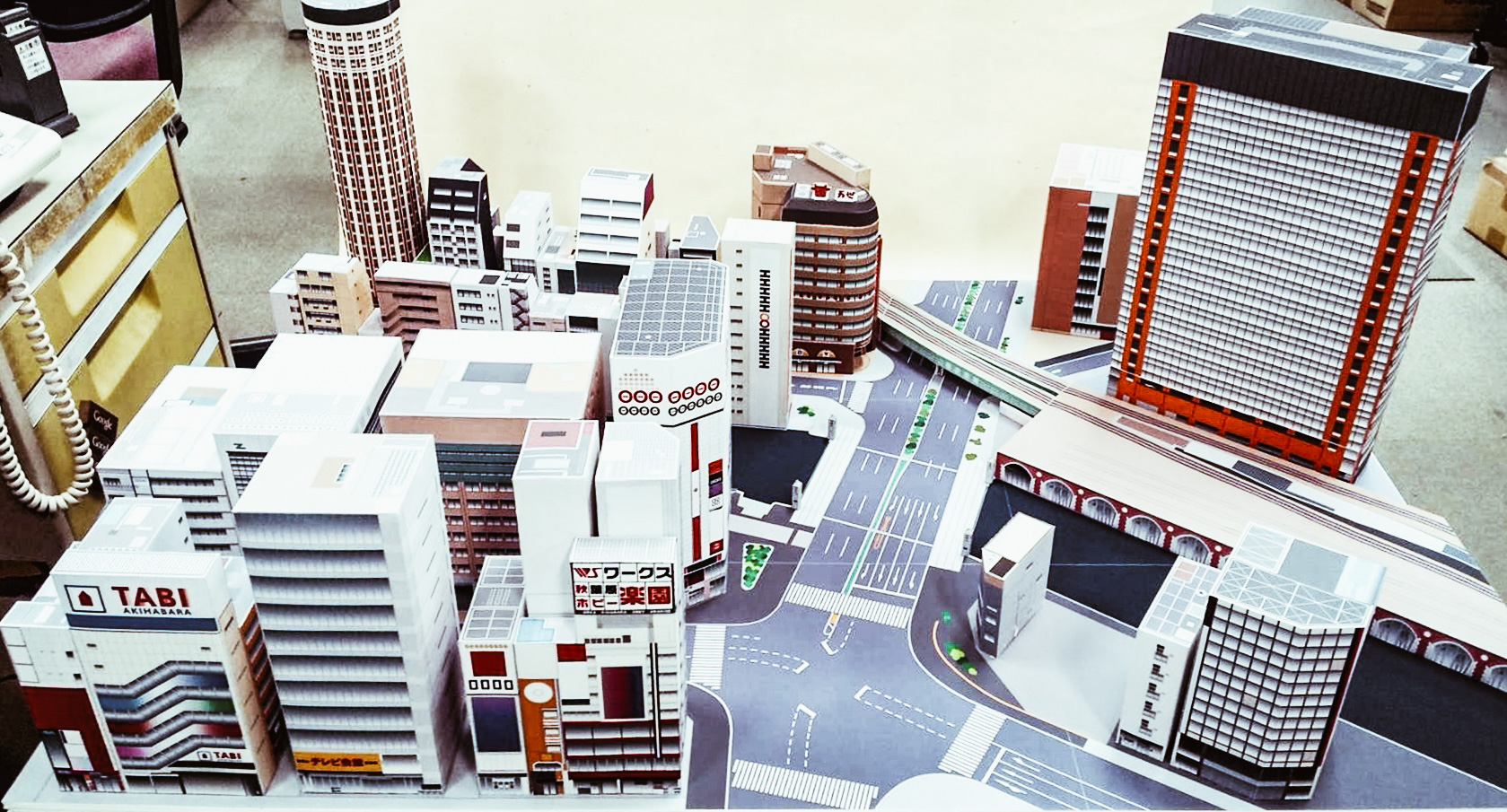
Akihabara is one of the favorite destinations for all otaku and fans of Japan, a historic district dedicated precisely to everything that is manga, anime, and video games. In this delicate moment, we are not yet allowed to travel. However, there is no need to take the plane to get to know new places and visit the ones we have already seen. In fact today we share with you the opportunity to recreate miniature Akihabara directly from your home!
In Akihabara, there are not only many places dedicated to that world that we would call nerd, but there are also many clubs and shops dedicated to various hobbies. One of them is the Mansei Club, a corner offering a variety of fun games, origami instructions, and paper models all for free.
If you're still stuck at home and don't know what to do, you can now recreate the iconic Tokyo neighborhood with these detailed paper models. In fact, the streets of Akihabara are all reported in these detailed scale reproductions. Creating this model is very simple, just follow the instructions listed in these PDFs available for free for download. In fact, these reproductions perfectly show the buildings of Akihabara and also where these buildings must be positioned. Although the instructions are in Japanese, it is actually very simple to follow them also thanks to the various illustrations.
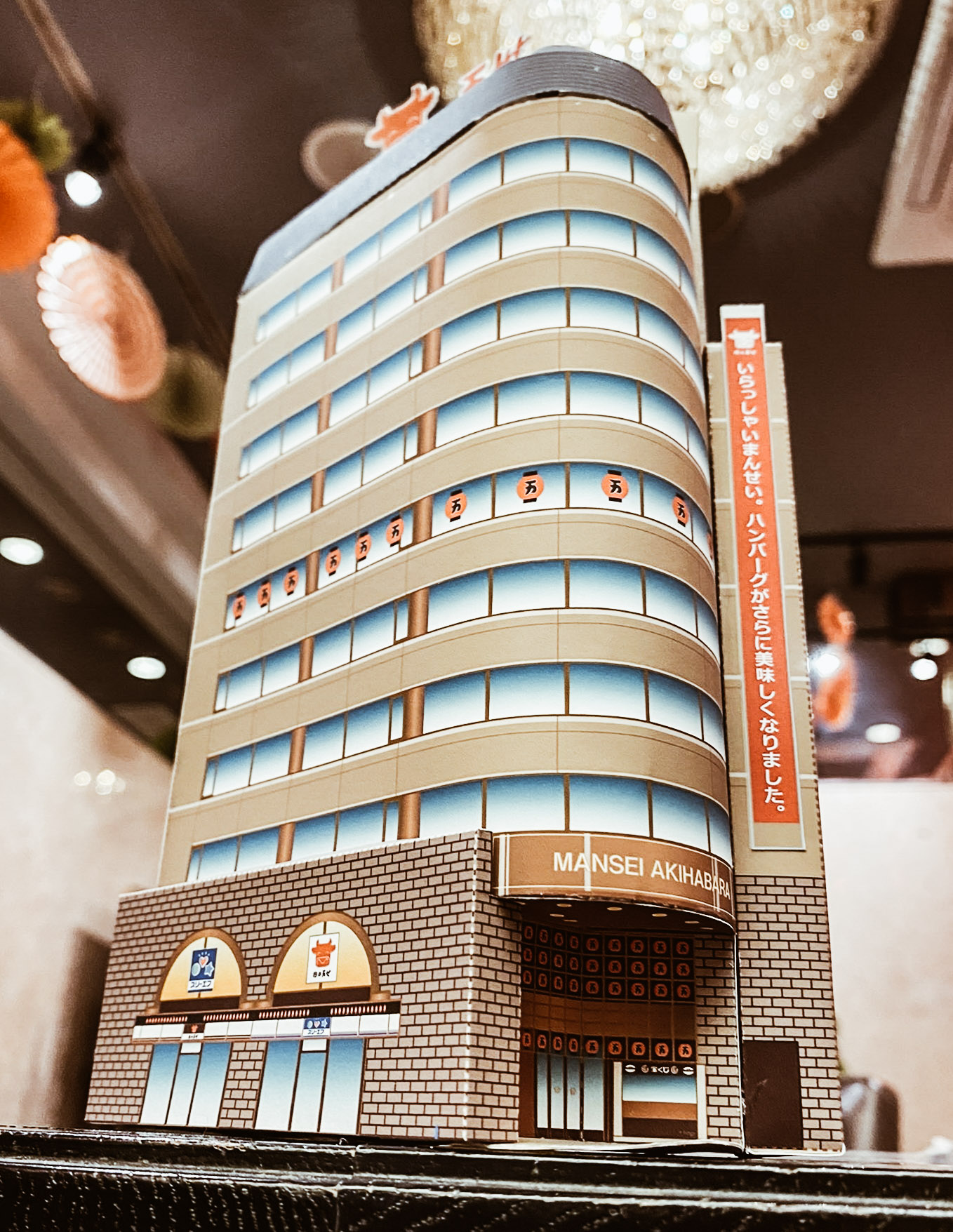
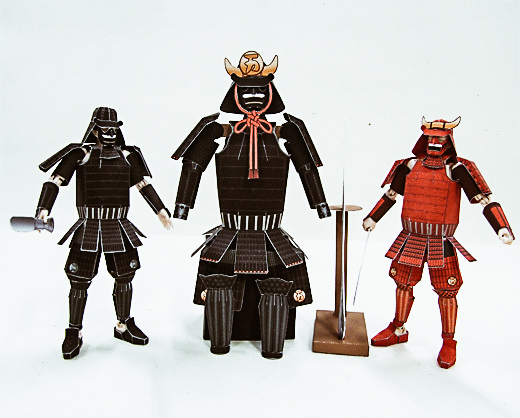
However, if building an entire neighborhood seems too complicated for you, don't worry there are many other possibilities. In fact, Niku no Mansei offers more than 50 paper models that you can download for free. With a design that varies from reproductions of famous Samurai up to reproductions of the most famous Japanese foods. In short, here we find the opportunity to satisfy every taste and every type of hobby! You just have to choose your model, download it, and get to work! We are curious to see the results!