






Shinrin-yoku, forest bathing
The Shinrin-yoku so loved by the Japanese is what we call "forest bathing" and can be healing and regenerating. This practice, whose major exponent is Dr. Qing Li of the Nippon Medical School in Tokyo, is also becoming very famous here in the West. But let's see in detail what it is.
Shinrin-yoku, the forest bathing loved by the Japanese
Author: Erika | Source: Tokyo Weekender
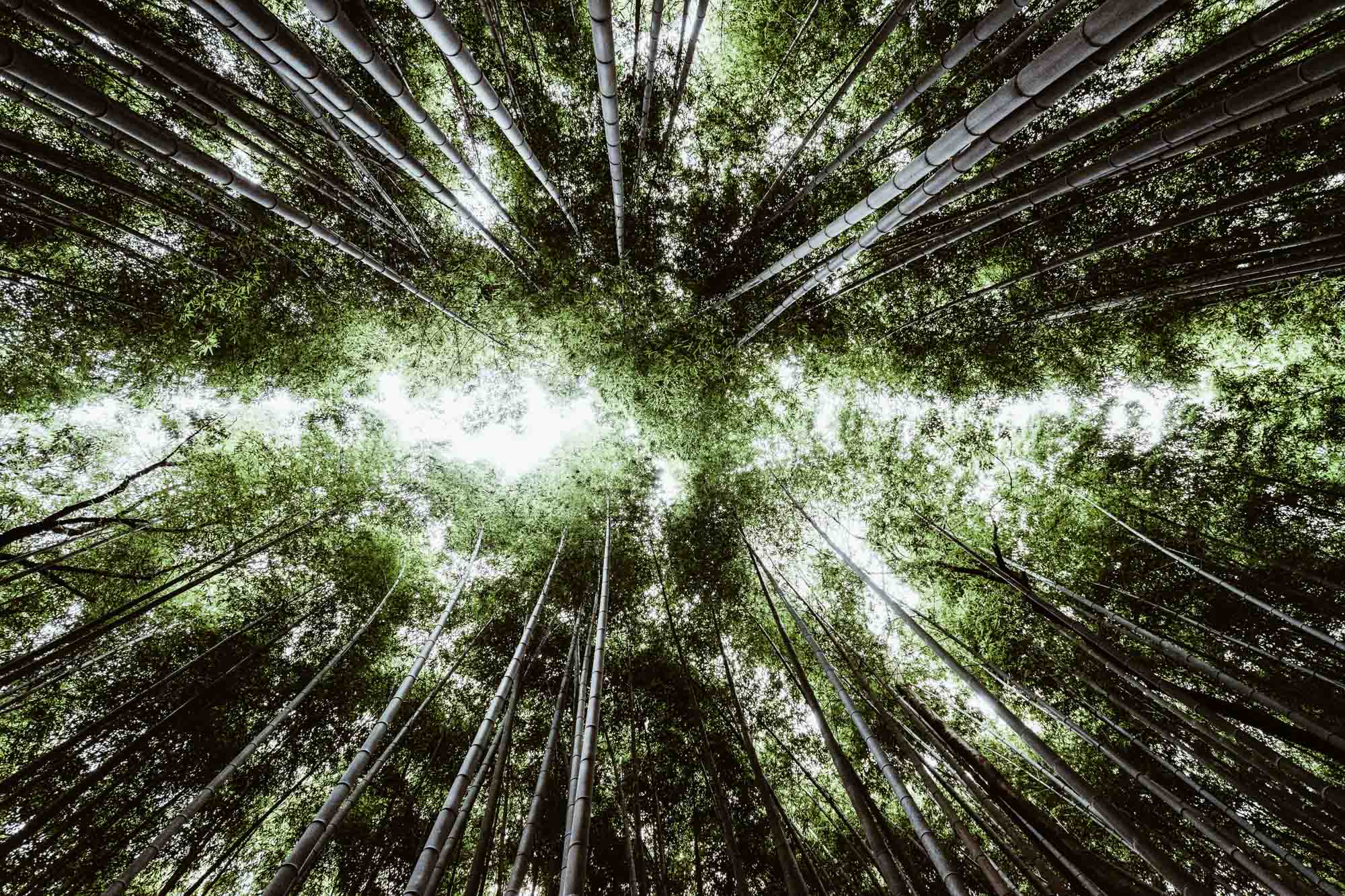
One of the world's biggest health trends at the top of the charts, the Shinrin-yoku has become internationally renowned. However, its diffusion dates back to the late 1980s in Japan. In fact, Forest Bathing has for years been considered a true practice of preventive medicine in the land of the Rising Sun. In support of this, there are numbers of researches conducted around the world that have shown how to spend regular periods of time immersed in the quiet of the woods helps to strengthen the immune defences and prevent diseases But what exactly is this about?
What is Shinrin-yoku, Forest Bathing?
Literally, Shinrin-yoku (森林浴) combines the kanji of "forest" and "bath", and is commonly translated as "bath in the forest". Promoted some forty years ago by the Japanese government, Shinrin-yoku consists of walking in the woods and applying special breathing techniques. However, forest bathing activities are not limited to breathing. In fact, whether you stay active or simply decide to take some time to relax in the forest area, this also brings you back to this practice.
First used in 1982, this term was promoted by the Japanese Ministry of Agriculture, Forestry and Fisheries to encourage healthy lifestyles and protect the nation's beautiful natural ambients. Since 1986, the Forsetale Agency together with the Green Civilization Society has indicated more than 100 areas throughout Japan where this concept of bathing is possible. Even today, there are various techniques to keep healthy, but forest bathing is one of those concepts that goes well with Japanese ideology.
In the early 2000s, several universities and research centres conducted experiments to find out how effective this practice was. The various studies were unanimously positive. In fact, it has been shown how spending time between trees reduces stress, improves mood, lowers pulse rate and blood pressure. But not only that, it also increases concentration and creativity as well as strengthening our immune system.
Perhaps sensitivity, and in particular deeply spiritual and historical respect for the natural world, has made this practice thrive in this nation.
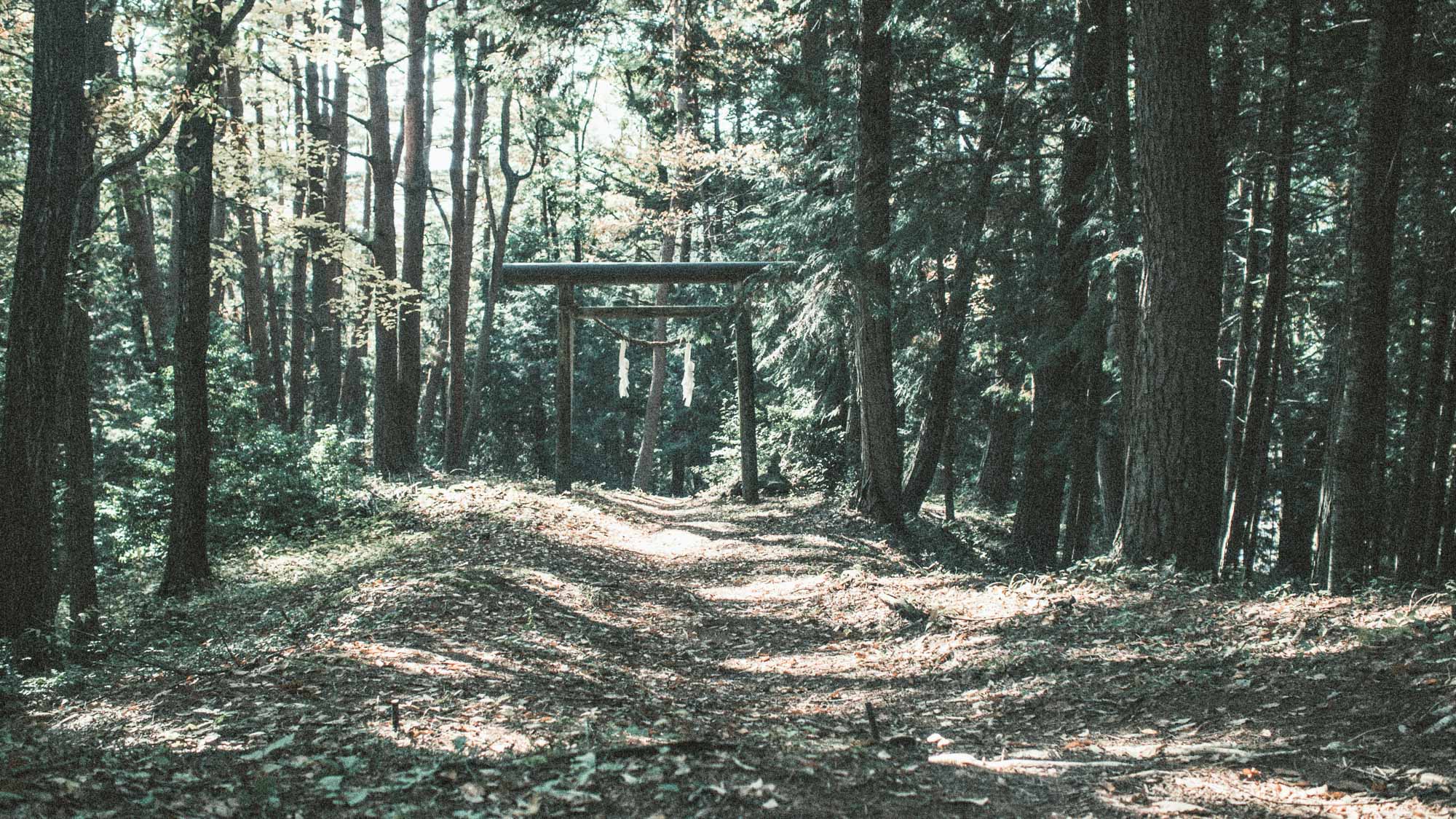
Forest Bathing becomes international
Following the strong success achieved in Japan (about 5 million people practice Shinrin-yoku in the country alone), forest bathing has also become very popular internationally. Today, in fact, it has many followers also in the West, the Duchess of Cambridge herself is a fan, as reported by The Guardian. In this regard, in England, many institutions are promoting this practice as a way to relieve daily stress.
One of the leading figures on the subject, Quing Li, president of the Society of Forest Medicine in Japan and author of the book Shinrin-Yoku: The Art and Science of Forest Bathing, commented:
"Shirin-yoku is for all intents and purposes a preventive medicine. People spend most of their lives indoors. In the case of the Japanese it is 80% of the time, and in the case of the Americans it is as much as 90%. But man is made to live outdoors. We are designed to be connected to the world of nature".
You have to try the Shinrin-yoku
Forest bathing is an easy and inexpensive activity. In fact, it can be done at any time, whatever the weather conditions and does not require special equipment or physical fitness. You can build your experience to measure and according to your needs.
In Japan, the Forest Therapy Society is a non-profit organization that identifies areas with forests and pedestrian roads that have been scientifically evaluated. Here you will find a certified "forest bathing effect". Currently, 62 areas have been certified in Japan, each of which offers "forest therapy roads" with wide access paths suitable for quiet walks, some of which are also wheelchair accessible.
In Italy, we find several destinations equipped for forest bathing, first and foremost Trentino Alto Adige. In fact, on the Renon plateau and in Fai Della Paganella, we find nature guides specialized in "balance excursions" and a "Parco del Respiro". It is precisely this region, in the last few years, has put a lot of emphasis on full immersion experiences in nature, including forest bathing.
But that's not all, also in Piedmont within the Zegna Oasis, we find three paths dedicated to forest bathing, which are unique in Europe.

Japan History: Eugène Collache
Eugène Collache (29 January 1847 Perpignan - 25 October 1883 Paris) was an officer in the French Navy of the 19th century. He left the Minerva ship in the port of Yokohama with Henri Nicol to rally other French officers, led by Jules Brunet, who had embraced the Bakufu cause in the Boshin war. On November 29, 1868, Eugène Collache and Nicol left Yokohama aboard a commercial ship, the Sophie-Hélène, chartered by a Swiss businessman.
Eugène Collache, between France and Japan
Author: SaiKaiAngel

photo credits: wikipedia.org
Eugène Collache and Boshin's war in Japan
Eugène Collache and Henri Nicol first reached Samenoura bay in Nanbu province (modern Miyagi prefecture), when imperial forces had subdued the daimyō of Northern Japan and that those in favour of the shōgun had fled to the island of Hokkaidō. In Aomori, they were warmly welcomed by Tsugaru's daimyō. An American ship warned them of an arrest warrant against them and Eugène Collache, always with his friend Henri Nicol, decided to board that American ship to reach Hokkaidō.
During the winter of 1868-1869, Eugène Collache was commissioned to establish fortifications in the volcanic mountain range to protect Hakodate.
The surprise attack on the Imperial Navy, in which Collache participated in the battle of Miyako, occurred on May 18. Collache was on the ship Takao, while the other two ships were the Kaiten and the Banryū. The ships encountered bad weather, so the Takao reported engine problems and the Banryu returned to Hokkaido, without joining the battle.
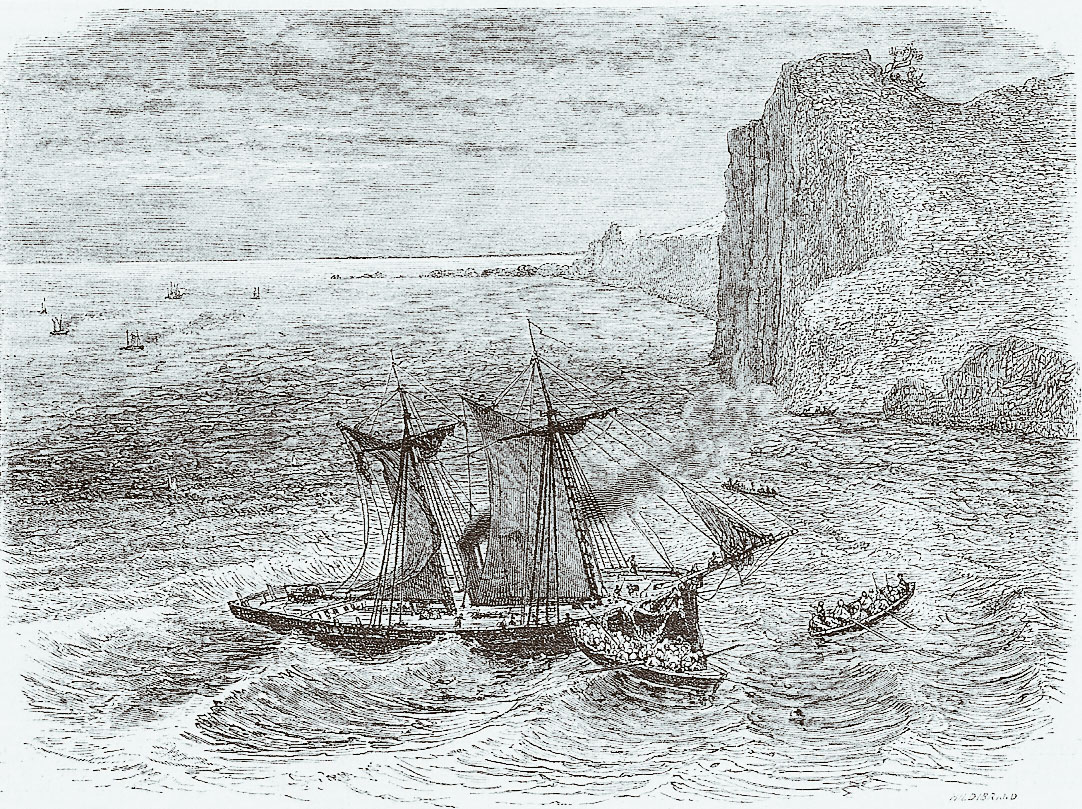
photo credits: wikipedia.org
Kaiten instead planned to enter the port of Miyako with an American flag. Due to engine problems, Takao was sailing after him and at that moment Kaiten joined the battle for the first time by raising the Bakufu flag a few seconds before boarding the imperial warship Kōtetsu. The Kōtetsu managed to repel the attack with a Gatling gun and the Kaiten came out of Miyako bay just as Takao entered it. Eventually, Kaiten fled to Hokkaidō, but Takao was unable to leave the pursuers and was destroyed
At that point, Collache tried to escape with the favor of the mountain, but surrendered after a few days together with his troops to the Japanese authorities. They were taken to Edo for arrest. Collache was judged and sentenced to death, but eventually pardoned and transferred to Yokohama aboard the French Navy frigate Coëtlogon, where he joined the French rebel officers led by Jules Brunet.
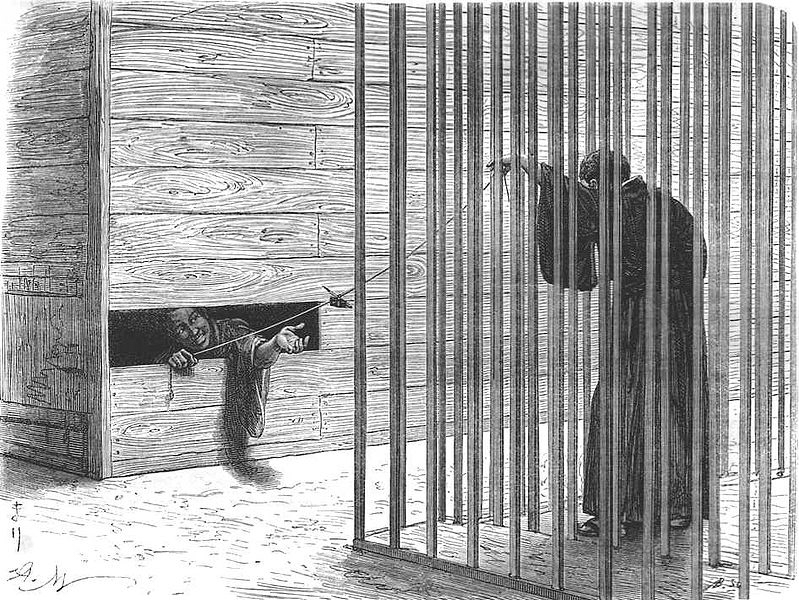
photo credits: wikipedia.org
Return to France
Returning to France, he was discharged from the military and called a deserter, but the sentence was light and he was allowed to return to the list for the Franco-Prussian war together with his friend Nicol.
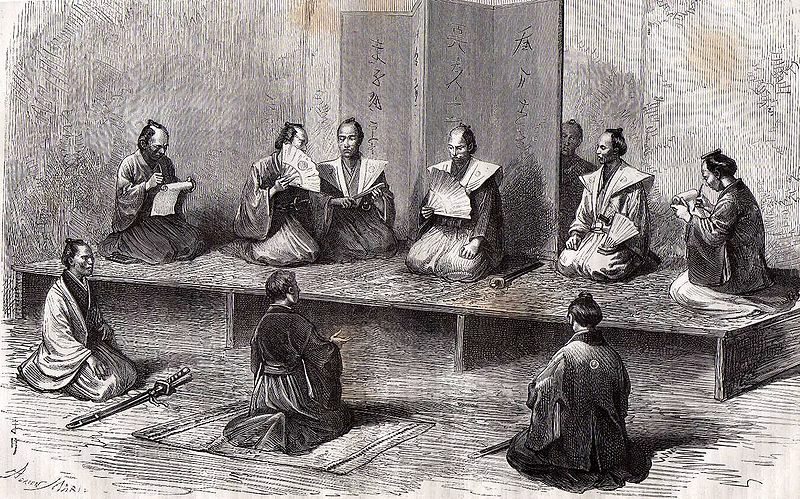
photo credits: wikipedia.org
Books
The experience in Japan was very important, so Eugène Collache wrote "An Adventure in Japan 1868-1869" ("Une aventure au Japon 1868-1869"), which was published in 1874.

Untranslatable words: Mono No Aware, Shakkei, Hikikomori, Omotenashi, Betsubara
It happened to everyone at least once to surf the internet and find articles about "untranslatable words". In fact, we often discover that every nation has special words with a certain meaning without any correspondence in its own language. Today we at Japan Italy Bridge want to try to summarize those special, unique and sometimes magical words that enclose an entire world.
Untranslatable words: Mono No Aware, Shakkei, Hikikomori, Omotenashi, Betsubara
Author: Sara
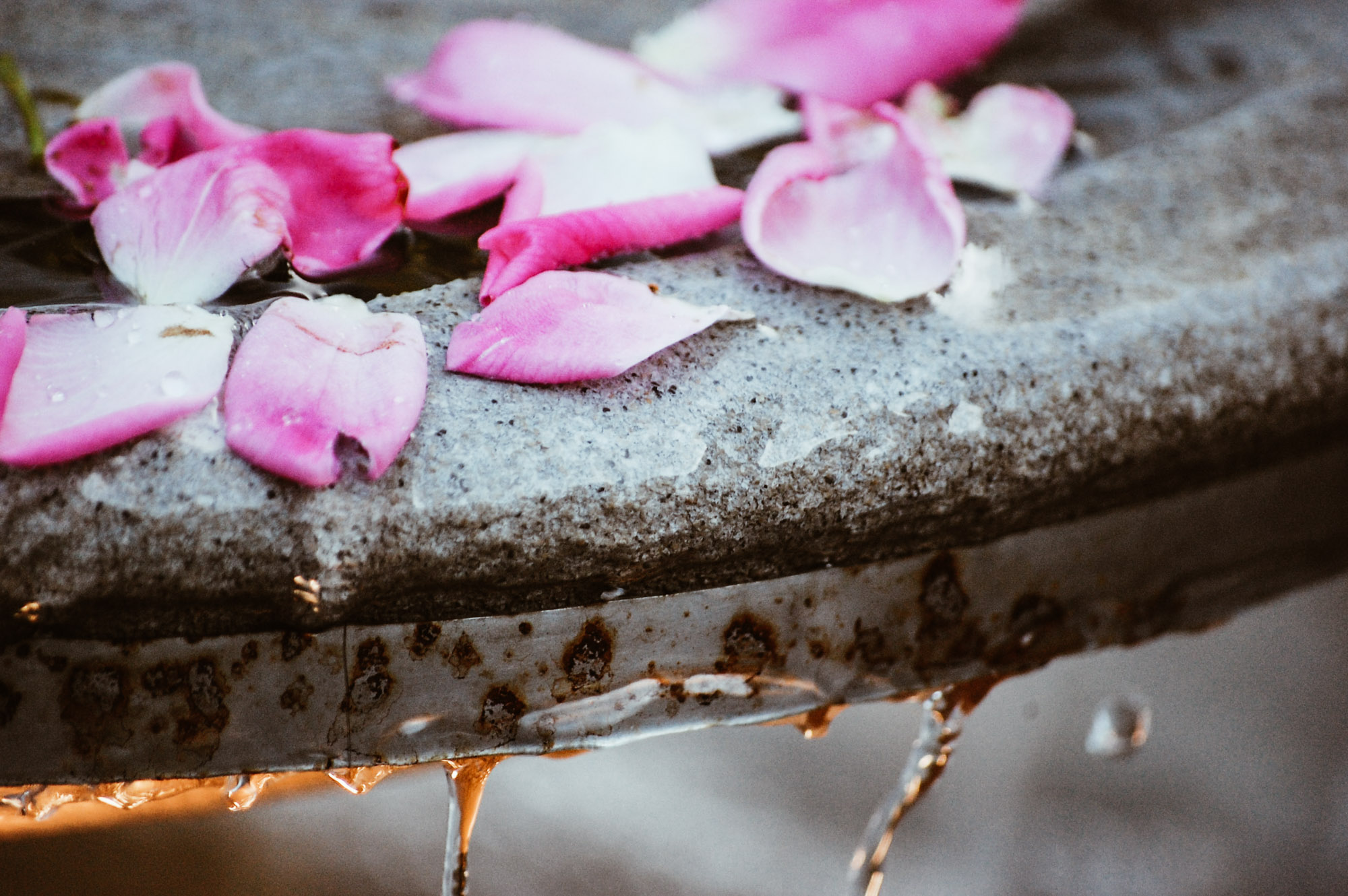
photo credits: Unsplash
Untranslatable words: Mono No Aware
The first on the list of our untranslatable words is 物の哀れ, "mono no aware". An aesthetic concept that expresses strong emotional participation in the beauty of nature and human life with a consequent nostalgic feeling linked to its incessant change. So literally we could translate it as "the pathos of things" or "the beauty of the ephemeral".
Mono no Aware finds its roots in the Heian period, but it spread only in the Edo period when the scholar Motoori Norinaga made a careful analysis and criticism of Murasaki Shikibu's "The Tale of Genji" defining it as a perfect example of "mono no aware", the perfect essence of Japanese culture. From this moment on, the creative path of many Japanese artists has had as its pivot this strange and complex concept. In fact, we find extremely sentimental the "transience" of things to take over, both in literary as well as cinematographic works. This leaves that feeling of "lack" for an ending that neither the reader nor the spectator is satisfied with. A sweet sadness and awareness that everything is destined to die slowly (and for this reason it must be loved deeply).
Shakkei
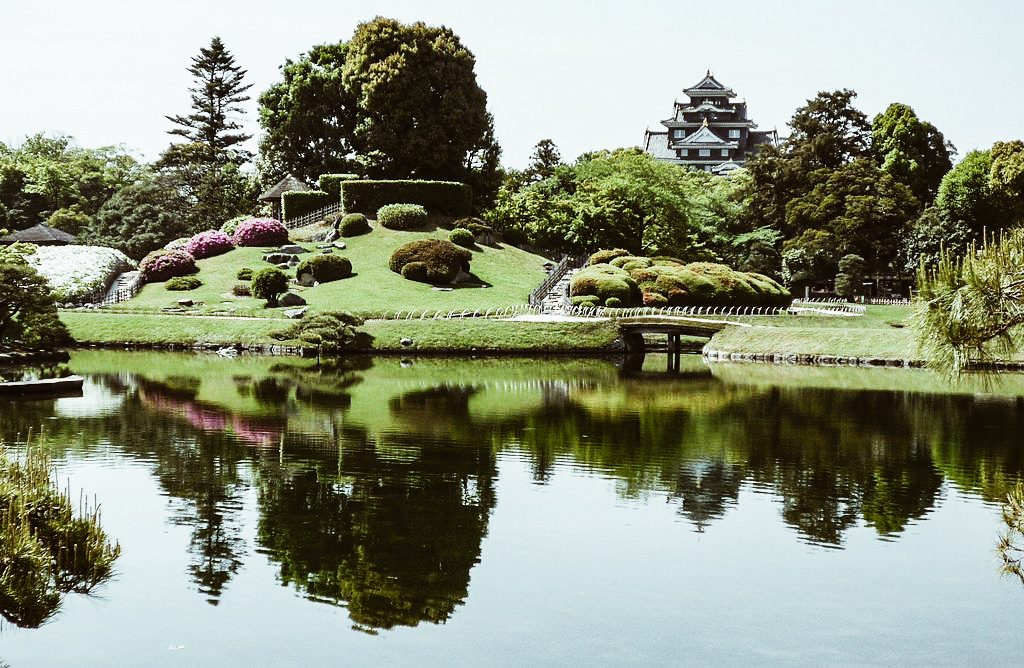
photo credits: wikipedia.org
The second expression we want to analyze is 借景, "shakkei". This time it is a particular technique literally defined as "landscape on loan", i.e. incorporating external elements of the landscape into the composition of a garden, the perfect fusion of the available elements already present with the surrounding aesthetics.
We could say that the whole of Japan refers to the concept of "Shakkei". Everything seems to be exactly in the right place in a harmonious and not shamelessly calculated and studied way. A sort of exaltation of nature as if even skyscrapers were an integral and perfect part of the whole landscape. In reality, however, this expression refers purely to the gardens of East Asia, which gives them the charm we know well. The principles of "borrowed landscape" have their roots in the Sakuteiteki (ancient Japanese gardening treatise), which developed further and further until it reached its maximum popularity during the Meiji and Taisho periods.
Hikikomori

photo credits: emefka.sk
The third word is perhaps among the best known and most "dangerous". We are talking about 引き籠もり, Hikikomori. Today it is a sad social phenomenon that can have extreme consequences and goes beyond mere "isolation". There are people who decide to voluntarily withdraw from social life, seeking extreme levels of loneliness by assuming a deleterious lifestyle both physically and psychologically. Night and day are reversed, direct relationships are often replaced by virtual ones or, in even more extreme cases, none at all. The hikikomori wanders around his room, devoid of any stimuli and this, as is intuitable, are characteristics that distinguish depressed subjects with obsessive-compulsive attitudes.
The first to give a name to this particular phenomenon was the psychiatrist Tamaki Saitō when he observed that the number of those who presented this deep lethargy towards life increased and the characteristics were always the same. Therefore, we can define Hikikomori as a syndrome rather than a word in itself.
Untranslatable words: Omotenashi

photo credits: livingnomads.com
The fourth on the list is お持て成し, "omotenashi". It is really difficult to find an equivalent that can even give an idea of this wonderful concept. We could use the word "hospitality", but it is almost reductive. This word expresses one of the most complex and profound aspects of Japanese culture. Omotenashi is the will to be attentive and take care of others. It also means to give importance to details, to be aware of one's own actions, to have the sensibility to seek harmony and to make others feel good. It was the Buddhist monk Sen no Rikyū who established the principles and good rules of conduct during the famous tea ceremony, an expression of the utmost care towards the guest.
There fore, Omotenashi is a reflection of Japan, the basis on which the behavioural etiquette of the entire country is rooted. Even if it is not said that this sense of "hospitality" is always encountered (the whole world is a country: there are also very unfriendly Japanese!), but you can easily perceive it when you experience it.
Betsubara

photo credits: lickthatspoon.blogspot.com
The last term we will address today is べつばら, "betsubara". It's a word that can make you smile and literally means "separate stomach." This is where all dessert goes when you say you can't eat another bite, but you eat it anyway. It's a bit like when you say, "there's always room for dessert" even though you already feel totally full. Obviously it can be understood for any food you have a weakness for: it can be ramen, sushi, pizza. So everyone has a different "betsubara"! Which one is yours?

The shōchū and its infinite pairings
If you follow us closely, you've surely heard about shōchū several times. I’m about to make a small recap just to remind you what we are talking about: shōchū is a distillate made from barley, sweet potatoes or rice. Generally, it contains 25% alcohol so it is lighter than vodka but stronger than wine. The production area of this distillate is the island of Kyūshū, but today it’s produced practically everywhere in Japan.
The shōchū and its infinite pairings
Author: SaiKaiAngel
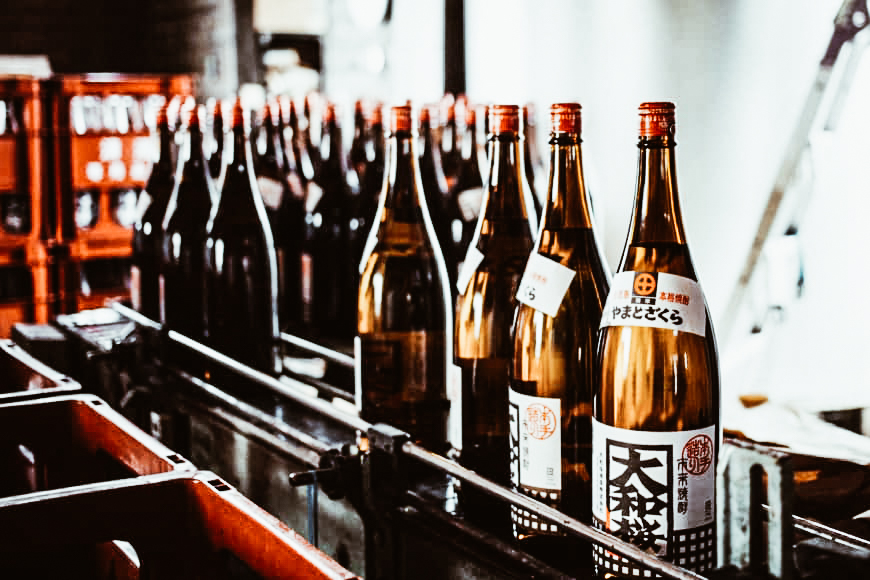
photo credits: japantimes.co.jp
The pandemic caused by COVID-19 has caused or even just resurrected many fears in the minds of many, from the fear of dying to the much lighter fear of gaining weight.
We are all, even more, looking for everything that can be healthy... well, it seems that shōchū may be just one of the things we should be looking for. Shōchū expert Stephen Lyman, the author of the book "The Complete Guide to Japanese Drinks" also nominated for a James Beard Award, has replaced beer and wine with shōchū and thanks to this he has lost seven kilos in seven months! Obviously, if we give importance to weight loss, it is absolutely not for an aesthetic issue, but to avoid serious diseases such as obesity.
The shōchū in 2003 has reached a sales volume even higher than the sales of sake! Its popularity is growing, driven also by its alleged medical benefits - ranging from the prevention of blood clots to the containment of obesity - which make it a healthy alternative to other alcoholic beverages.
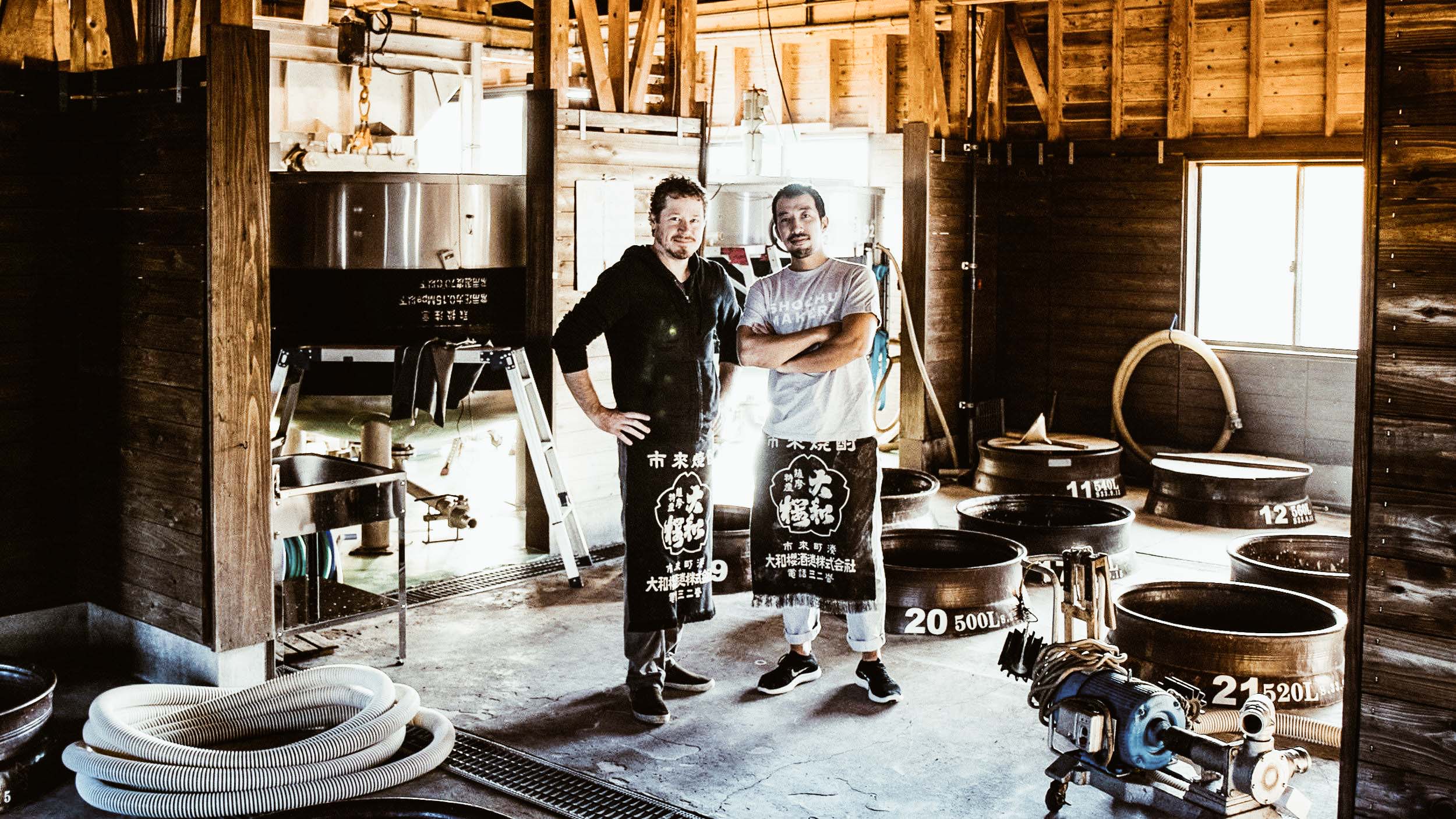
photo credits: japantimes.co.jp
Lyman, a native of New York, discovered this beverage in an izakaya bar in Manhattan more than 12 years ago and it was love at first sight. Lyman explains: "I've always loved wine and craft beer. Distilled drinks were a bit too strong for me and I was always looking for a drink that would have been perfect with food".
Shōchū is good for diet too
In 2011 Lyman's interest in shōchū became a real passion, and he started drinking it, even more, when a sports injury caused him a gain of weight. "I knew that shōchū was low-calorie, so I decided to give up wine and beer for shōchū six days per week," he says. Within a month, Lyman lost two kilos; after two months, five. Because of this, having found the shōchū could make him lose weight without altering his lifestyle, he began to take an interest in this Japanese drink and all possible pairings. Lyman says that the pairing of shōchū is possible with more than 50 possible ingredients! Richer shōchū notes work with heavier foods and, in particular, with miso dishes.
The barley shōchū obtained by vacuum distillation with a lighter and more aromatic style is perfect with white fish dishes, delicately flavoured sashimi and simmered. In general, the sweet-potato shōchū instead goes well with meat such as pork, while the kokutō (black sugar) shōchū, which is similar to rum, harmonizes with grilled meat. The full taste of shōchū is a surprising accompaniment to dark chocolate.
Also, the Iichiko Silhouette also called "the Johnnie Walker of shōchū" tastes like stone fruit and paired with soda water can be served with watermelon and mint soup. The shōchū Yamatozakura resists the sweet and earthy spices of Taiwanese braised pork with aniseed and cinnamon, while the Komaki Issho Bronze, a shōchū of sweet potatoes easy to eat, goes perfectly with a vegan stew of sweet potatoes, chickpeas and peanuts.
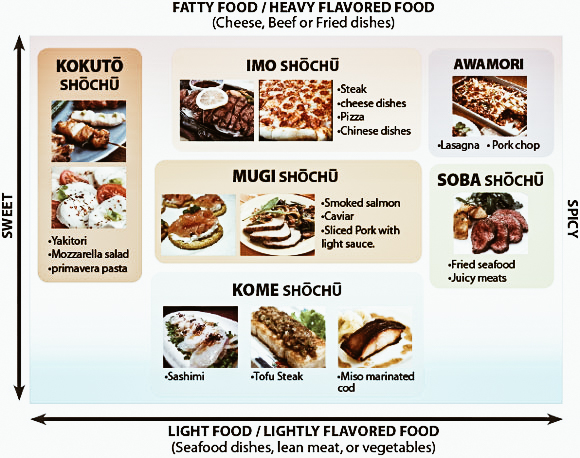
photo credits: mtcsake.com
But let's go more specifically and analyze some of the tastiest combinations:
Imo, sweet potato shōchū
Pork chops, pizza Margherita, fried tempura
Imo has a sweet aroma and taste, which goes well with substantial dishes or fried foods. It also is good with rich Chinese food or pizza with lots of cheese.
Mugi, derived from barley
Smoked salmon, caviar, sliced pork with lemon sauce
The mugi has a very clean and fresh taste. Technically this drink goes well with any kind of food, but it tastes better with a simple dish than with an oily dish. The aroma of barley enhances the vegetable sauce.
Kome, from rice
Sashimi, trout marinated in miso, tofu steak.
The kome has an umami (flavor) that goes well with any kind of food but particularly indicated with the delicacy of sashimi. It can also be enjoyed with rice dishes.
Kokuto, sugar cane shōchū
Yakitori (grilled chicken), pasta primavera, mozzarella salad
The Kokuto is made with sugar cane and can taste a bit fruity. The fragrance of kokuto is similar to the one of sweet syrup, but the taste is very simple and delicate and not extremely sweet. This particular taste can bring out the original flavours of the food and is indicated with soy sauce dishes that have a slight sweetness.
Awamori shōchū
Porkchop, lasagna, banana pancake
Awamori has a special aroma and rich flavour that goes well with spicy or heavy foods such as cheese and creamy dish.
Soba shōchū
Penne arrabbiata, fried oysters, meatballs
The characteristics of soba are very mild and clear-cut but at the same time a little bit bitter. This can be enjoyed with slightly spicy foods or juicy meats.
I'm sure that as soon as you've finished reading this article you're already looking for the perfect shōchū for you, are you ready for a completely new adventure and completely different lunches and dinners?
Chadō, the Japanese Tea Ceremony
If there is anything in which the Japanese are true masters is in living in harmony with life itself, this is demonstrated by the Japanese tea ceremony, also known as Chadō. A real gift, their innate ability to flow naturally with everything that happens from the smallest everyday gestures. Rooted in the here and now, fully in tune with the present moment.
Chadō, the Japanese Tea Ceremony - 茶道
Guest Author: Flavia
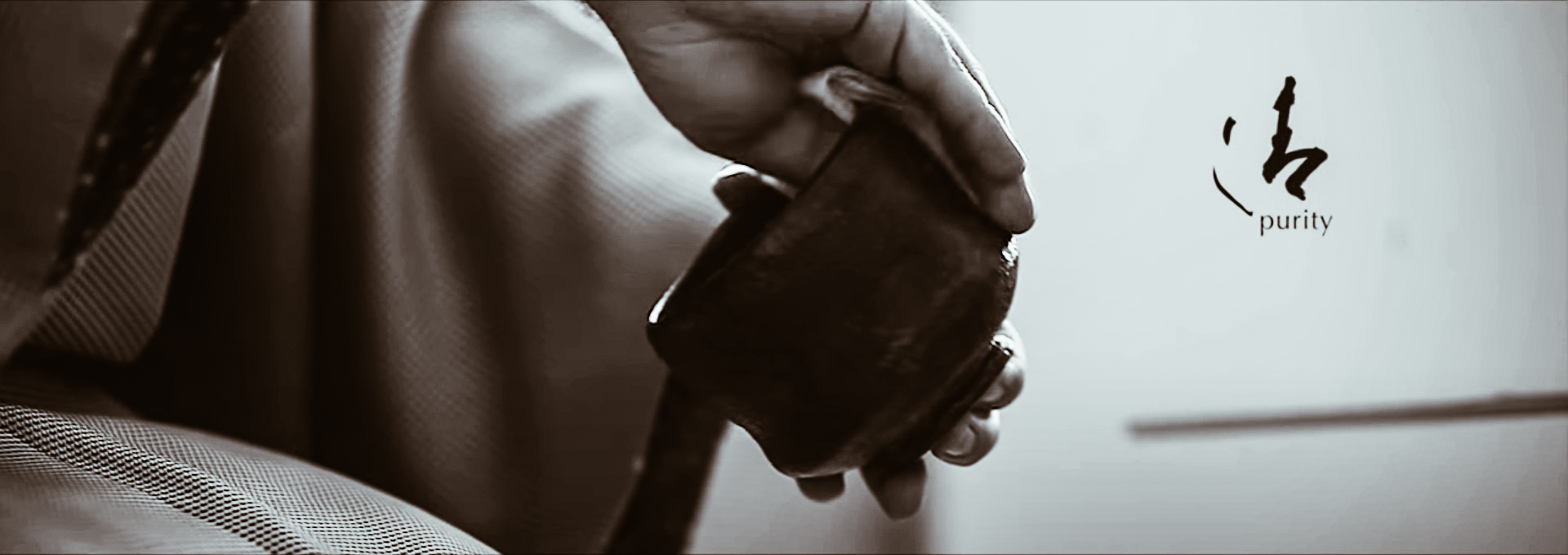
photo credits: YouTube
Therefore, it's not surprising that the people of the Rising Sun have been able to translate this extraordinary talent into various forms of art. They are in fact real ways of living (the so-called Ways - 道, Dō) through which to express their ability to grasp the meaning of existence. The Chadō or Sadō ( 茶道 ), or the Way of Tea, is one of the most significant and appreciated. Otherwise called Cha no Yu (茶の湯) - literally "Hot water for tea" - it is a social ritual aimed at educating the individual. A true philosophy of life and aesthetic form that has strongly permeated Japanese culture. But how did this tradition originate?
The matcha, from southern China in the bosom of Zen
Originally from the Yunnan region, the tea plant has been known for its therapeutic properties since ancient times. Initially, it was in fact used as natural medicine, it will only become a form of "delight" later. It was consumed in a monastic environment, being used by monks to promote concentration during meditation or studies. However, it will land in Japan at the beginning of the Heian period at the hands of Japanese monks who went to China to study Zen (禅, from Chinese chan).
Tradition attributes in particular to the monk Myōan Eisai - who lived between the 12th and 13th centuries - the role of the precursor of the tea ceremony. As it happened, he introduced in Japan the form of Rinzai Zen Buddhism (Linzhi or Linji, in Chinese) and with it a specific method of preserving and preparing tea. In essence, it provides that tea is kept away from light and oxygen and prepared according to the method of suspension (instead of infusion): this allows to better preserve its properties. The tea associated with the ceremony will become known as Matcha (抹茶), that is powdered tea. Actually, from that moment the consumption of tea will begin to spread on a large scale, leaving the monastic and aristocratic circles where it had been confined until then.

photo credits: tesoridoriente.net
Therefore Tea (Cha, 茶) has its roots in the Zen doctrine, which will remain decisive also for the diffusion of Chadō, inexorably permeating it. Zen and theism, therefore, developed at the same pace (since the 12th century). A key role here will be played by the equally nascent Samurai class destined to dominate the scene shortly afterwards. The caste will welcome the Zen doctrine, which will make it totally its own, and the cult of tea as a sort of status symbol.
Rikyū, father of Cha no Yu
After Eisai, other masters will leave their mark on the Chadō still in "embryonic" form. This is Murata Jukō, father of the Wabi-cha style ( 侘茶 ) - already well distinctive of the Japanese style compared to the Chinese one - and Takeno Jō. However, at this stage it cannot yet be configured as a real ceremonial rite. It will be necessary to wait until the sixteenth century for a real codification to take place and transform it into the form that has reached our days.
Creator of this reform, none other than the historic tea master of Oda Nobunaga and Toyotomi Hideyoshi, Sen no Rikyū, whose imprint will be revolutionary. He will go further than Murata Jukō, completely undermining the aesthetic taste of the Shōgun. Before his intervention, in fact, the execution took place focusing on the objects, that is, thought of their performance. With Rikyū, the focus becomes the people and the ceremony becomes less elaborate and more essential. In addition, he sets real rules around the concept of wabi ( 侘び ) - i.e. the beauty that lies in the essentiality and simplicity - applied to the performance of the ceremony and the gestures to be performed. The important Zen vision of Wabi Sabi ( 侘寂 ) - which we will have the opportunity to deepen in a next article - is thus consecrated as a pivotal concept, soul, of Cha no Yu.
Chadō, the four founding principles
4 are the principles Rikyū summarizes for the performance of Cha no Yu. They concern both the people who take part in it and the tools used as well as the room itself. Naturally borrowed from Zen aesthetics, they are:
- Wa (和), Harmony. The absence of imbalances or extremism in the interaction between the surrounding environment, things and people. Particular attention is paid to the interaction between guests and landlord: putting guests at ease becomes a pivotal point.
- Kei (敬), Respect. Recognition for the existence of things and people. A sincere soul is necessary: only an open soul will be able to perceive things and people in their true essence (kokoro, 心) and thus enter into authentic communication.
- You are (清), Purity. The absence of attachment to earthly things. Without such purification, true communion with the All is unattainable. It is taken up symbolically from the roji stone path (路地) placed in the gardens outside the tea houses. The variety of shapes and distances between the stones is not by chance designed to educate the guest already from outside to a conscious exercise of attention.
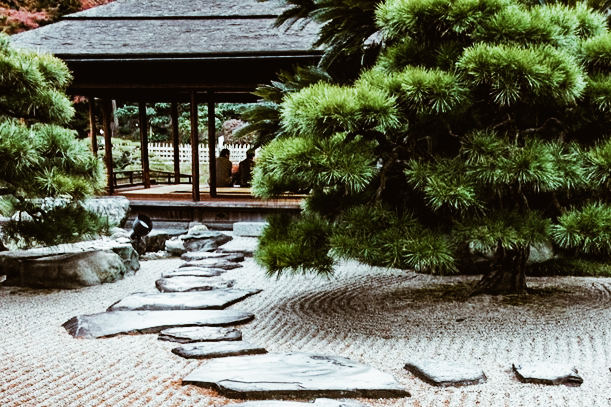
photo credits: iaininjapan.deviantart.com
In a way, the tea ceremony already begins in the garden. Because it helps those who walk this path (a Way) to harmonize with nature even before they set foot in the tea room. The principle is also "evoked" by the symbolic purification of the participants who, once invited to enter by the host, must rinse their mouths and hands.
Jaku (寂), Serenity. The state that is achieved in a natural way by the practice of these three principles already from daily life.
If the hearts of all those present will be open and receptive to the emptiness of that moment if the mind will have left that outside world beyond the garden: a harmony will be born so deep that environment, things and people... will become one. In a perfect fusion where dualism dissolves and it is no longer known where the boundaries of one or the other end or begin.
Chadō, Less is more: beauty according to the Japanese sensibility
In this perspective, negation becomes a positive value, the state of mind par excellence. This is reflected in the research of a frugal style which avoids ostentation and superfluous, already starting from the tea room, the Chashitsu ( 茶室 ).
The latter must be devoid of excessive earthly elements: in the Zen perspective of the master Rikyū it is necessary to limit sensory stimuli as much as possible. Leave space to the void, in order to empty the mind. Then the void itself will give space to the sounds that spontaneously emerge from it and that otherwise too many sensory stimuli would end up eclipsing. Sounds thus assume greater depth and the consciousness is refined. Perception is in fact amplified thanks to silence not only auditory but also visual, olfactory, tactile and gustatory. The senses are literally educated not to be dependent on stimuli, but in this way, they become more receptive. It may seem paradoxical to most people. But if you who are reading have so far understood the sensitivity that underlies this philosophy, you will certainly have understood this too.
The room must, therefore, be minimal, not so much illuminated, "intimate". It must be welcoming. Verbal interactions must be reduced to a minimum, also because non-verbal communication can be done here. Everything is designed in order to create a meditative atmosphere - typical of Zen. It is therefore recommended that we keep our eyes ajar in order to let the images that come into our field of vision flow, avoiding our sense of "feeling" them too much.
The semi-darkness of the room gives back value to the other senses other than sight, usually a little overwhelmed by it. The touch, for example, that emerges in contact with the teacup, in particular, if it is raku ( 楽 ), a symbolic cup in Chadō and Wabi Sabi because of its imperfect shapes that make it unique and unrepeatable. Or, in the case of the traditional Wagashi ( 和菓子, literally "Japanese sweet" ), where the dominant sense would be the taste, we find, on the contrary, also the sight and the other senses involved in a superfine way. But let's dwell on the concept of unrepeatability.
But let's dwell on the concept of unrepeatability.
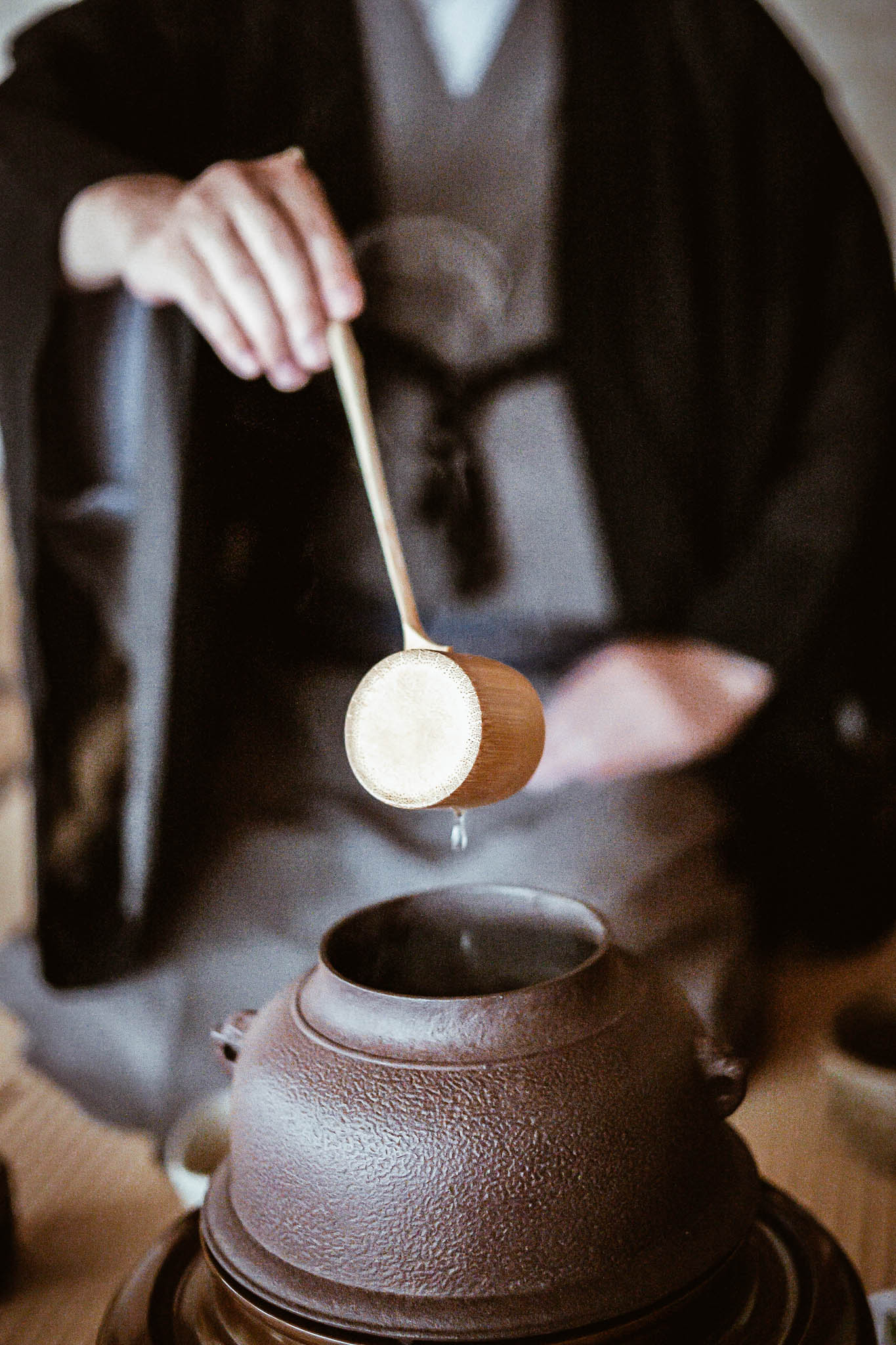
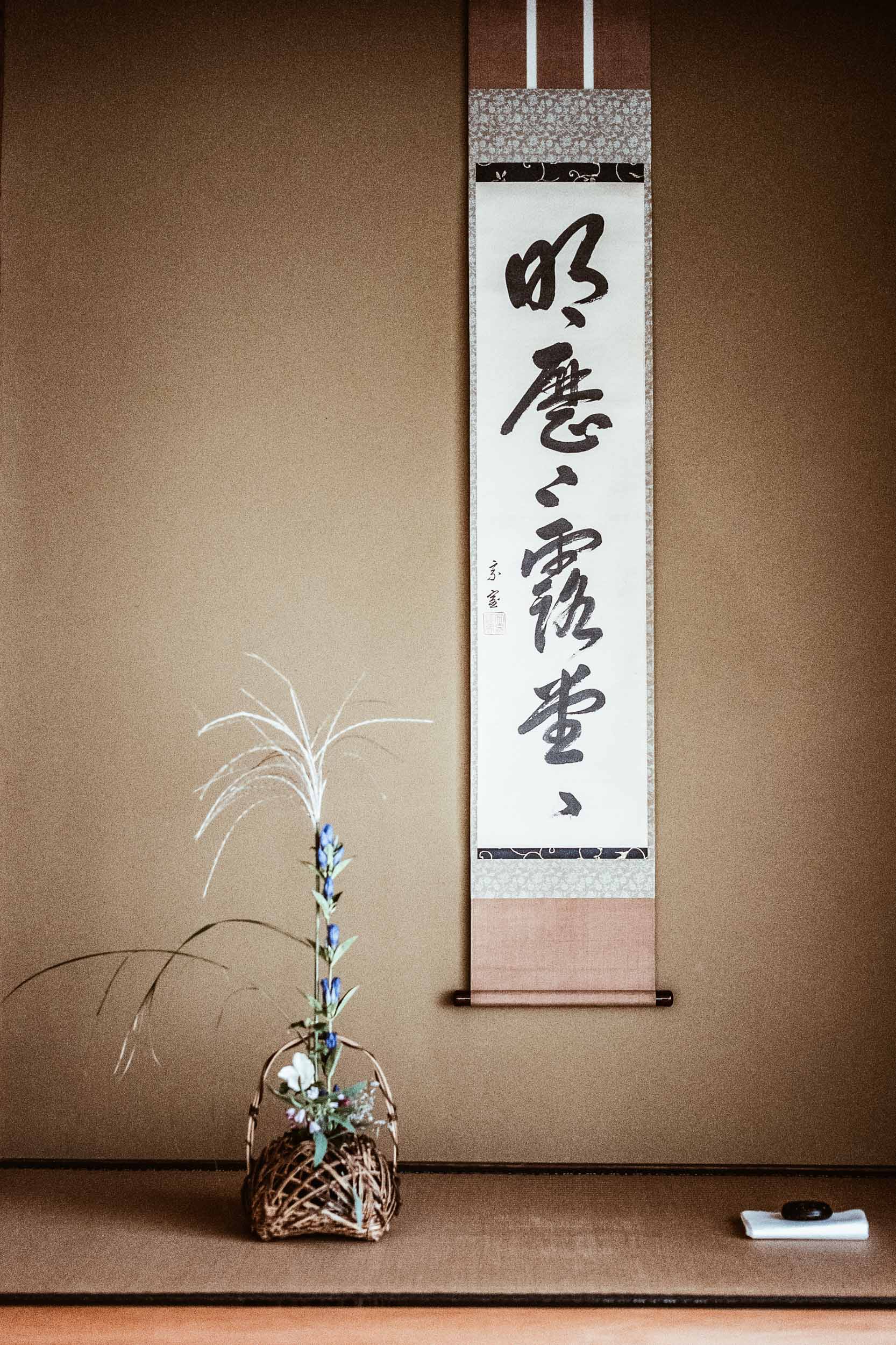
photo credits: moroalberto.com
Ichi go, Ichi e (一 期 一 会), the metaphor of life
Literally "once, an encounter", Ichi go-Ichi and is a Zen expression that refers to the idea of transience. It reminds us how every single encounter is unique and unrepeatable. Yes, in time we can repeat the ritual of Chadō as many times as we want, but each time remains unique in itself and distinct from the others. The atmosphere experienced in each encounter can never be the same the following times. Therefore, each one of them should be appreciated...as an encounter that happens only once in a lifetime.
So in Chadō, so in life: let go past and future. To take from them the knowledge we need for our learning, yes, but just enough not to get stuck with our minds. Otherwise, we run a risk: that of not appreciating in time the things that are with us here and now. Remaining, in that case, with the regret of not being able to see them in their value (remember the Kei, Respect) when they end their time in our lives.
That is when Zen wisdom comes to us, reminding us that this is the time to focus on, in the here and now, appreciating as much as possible what you have now that you have it. You have to live now and live it, in every single unrepeatable moment. But then again, what is the art of Cha no Yu if not life itself?
Kata - Katachi: When form becomes part of you
In Chadō every gesture is not random: movements and breathing must be harmonized, in order to transmit serenity in giving that cup of tea. You should know that Japanese culture attaches great importance to the concept of form (kata, 型), i.e. gestures codified by certain principles. Not schemes that are an end in themselves but a way to achieve a body-mind-spirit fusion and consequently harmony with existence itself (the concept permeates their vision of the world to such an extent that it also has its own small linguistic form).
When a practitioner arrives at embodying kata to the point that they no longer feel as something external to themselves - to be "staged" - then we speak of katachi ( 形) or "internalized forms". Through kata the practitioner learns patience, precision, resilience...and is forged from them. Final goal: the attainment of harmony with oneself and the surrounding world.
Observe-execute, to the point of internalizing: this is the basic approach of all Japanese art forms-disciplines. It is really part of their soul. They do nothing but decline this feeling in various areas of life. A way of life (the Way) that gives rise to forms of art and discipline which, in turn, guide the individual's path of life. A perfect circle that closes...
But the search for the perfect gesture carries within it another magical gift, that of dilating time. The present moment is crystallized and in that moment the depth of the senses puts us in communion with nature.
But beware: it is not an escape from reality. Sometimes for the human mind, the boundary between the two can be very subtle, but it is a mistake: to shun reality means in truth to alienate oneself from being present. No escape, therefore, as well as no attachment (two extremes of avoiding). But lucid, conscious fusion with what is happening in that place, in that moment. With reality.
The Way of tea, therefore, requires a true psycho-physical discipline about oneself and long preparation. So much so that in the process of self-improvement - as in any self-respecting spiritual discipline - the practitioner can be hindered by the human emergence of feelings such as laziness, apathy or other grey areas.

photo credits: moroalberto.com
The ceremony
The ritual is very complex, especially in its extended form. There is, in fact, a traditional version lasting four hours(!) reserved for formal events (Chaji, 茶事 ) and a reduced version for informal occasions (Chakai, 茶会 ). Likewise, Chashitsu can be distinguished in small (Koma, 小間) or large (Hiroma, 広間). The Koma is the wabi-cha room par excellence, while the Hiroma is well suited to more official circumstances.
During the ceremony, the tea water is boiled in an iron or cast iron teapot. When it is ready, pour some into the ceramic cup where the matcha was previously brought. Then, the whole thing is beaten with a bamboo whisk. The appearance of foam indicates that the tea can be served.
But let's see what happens depending on whether we're in a formal or informal event.
茶事Chaji
- Before tea. Since drinking and eating never go hand in hand, the traditional Kaiseki meal is offered first ( 懐石o会席 ). After the meal, Wagashi are offered at a later stage. Different Wagashi will be paired according to whether the tea is dense or not (as we will see shortly also in the Chakai).
- Usucha. The guests individually drink a whole cup of tea, this time no denser, they dry the edges of it and give it back to the master who in turn washes it, dries it, and prepares it for the next guest.
The ceremony in this form is very elaborate, so breaks and even room changes are envisaged.
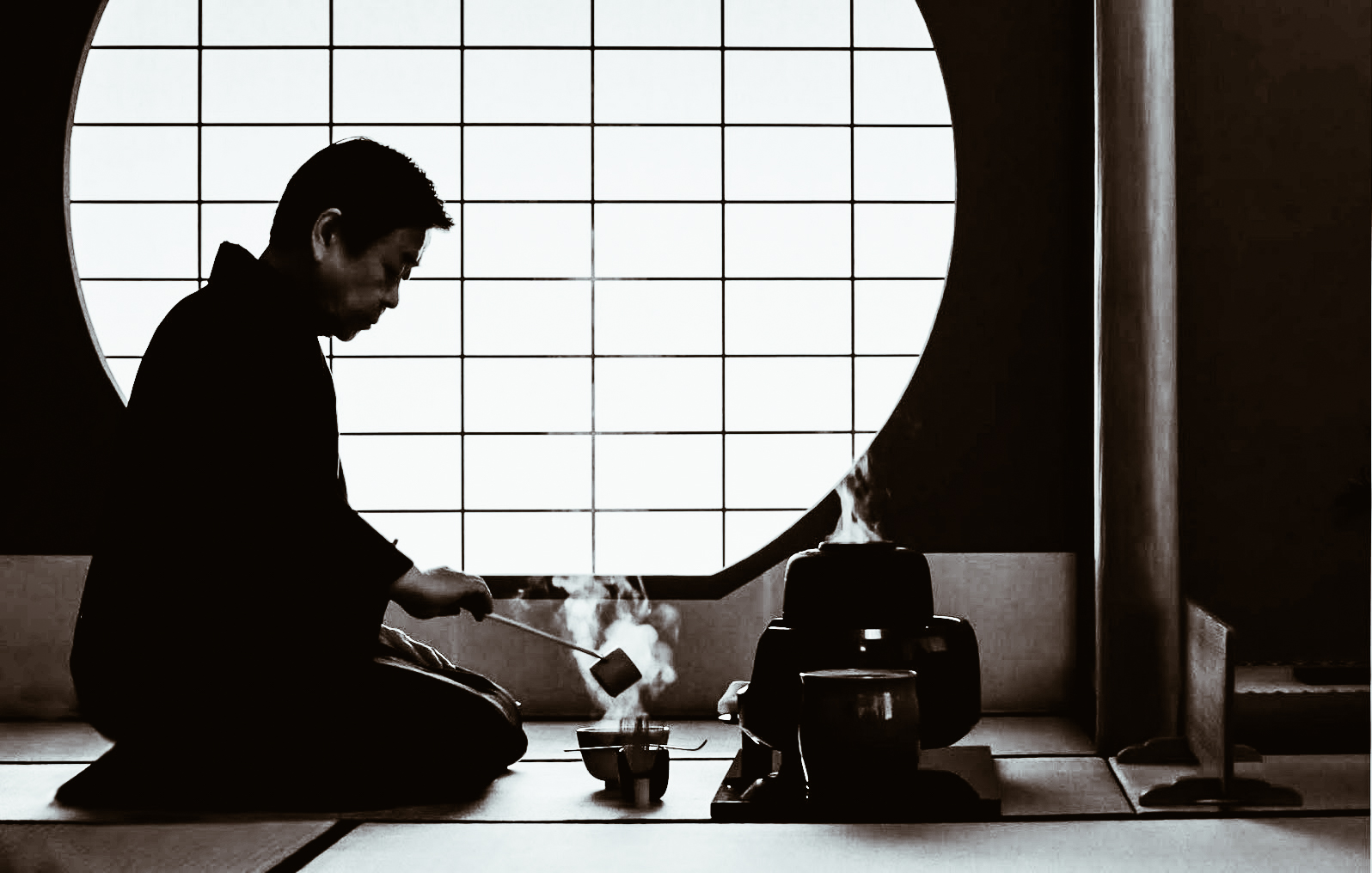
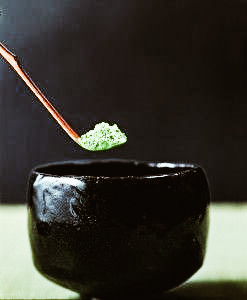
photo credits: pinterest.co.kr, pinterest.it
茶会 Chakai
- Before tea. Here the guests receive only the traditional Wagashi sweets, specifically: Higashi (dry sweets) if Usucha is served, Omogashi (soft sweets) if Koicha is served. In any case, the dessert will have to compensate for the bitter taste of the matcha.
- Koicha or Usucha. As the time available is shorter, only one of the two modes can be presented. It will then be up to the teishu (master of ceremonies) to decide which one to perform.
Everything concerning the behaviour to be held or not during the ceremony is called Otemae (お点前). It is known as "etiquette", but it is much more than that. The very way in which the ceremony is carried out right from the preparations (setting up, cleaning and so on) already constitutes the Tea Route. And therefore, the Otemae.
Ways within the Way, Art within Art
The Tea Route is emblematic. For in itself it contains other forms of art that already constitute a world of their own. Other Paths that intersect and unfold in that of Tea creating a unique association where that perfect fusion - mentioned above - is already taking shape. The artisan technique of Raku ceramics, for example, is perfect for embodying the Zen spirit of the Tea Route: in extracting the still incandescent cups from the kiln, it enhances the naturalness of the irregular shapes randomly generated.
The marvellous art of the Wagashi has evolved parallel to Chadō, finding in it its maximum expression. Influenced by the Yin and Yang philosophy and the five elements, its designs and colours inspired by nature and seasons promise an awakening of the five senses. We also include Chakaiseki (茶懐石, Kaiseki kitchen applied to Chadō), Chabana (茶花, Ikebana applied to Chadō), the architecture itself. Even poetry: among the possible verbal interactions there is the possibility for the landlord to quote a Haiku (typical poetic composition) for seasonal reference. They all remind us that things also have a spirit. And that it must be nurtured, respected, contemplated... just like ours.
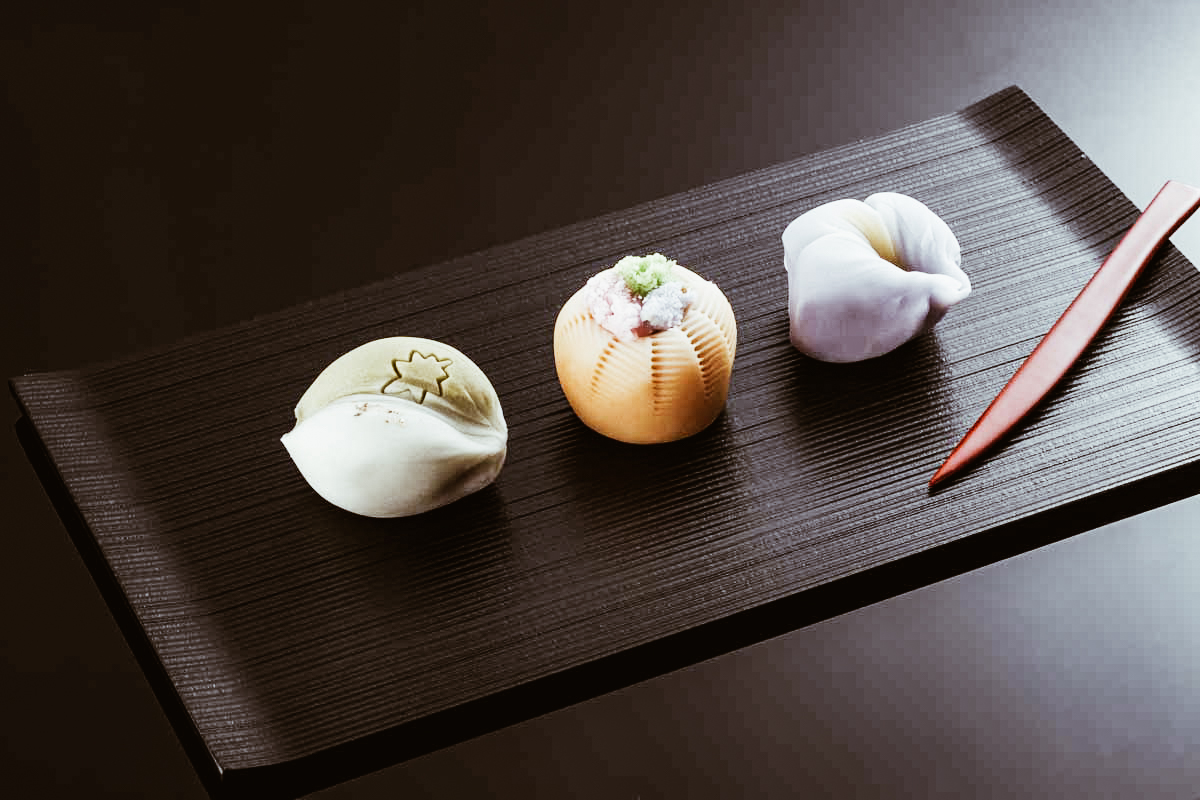
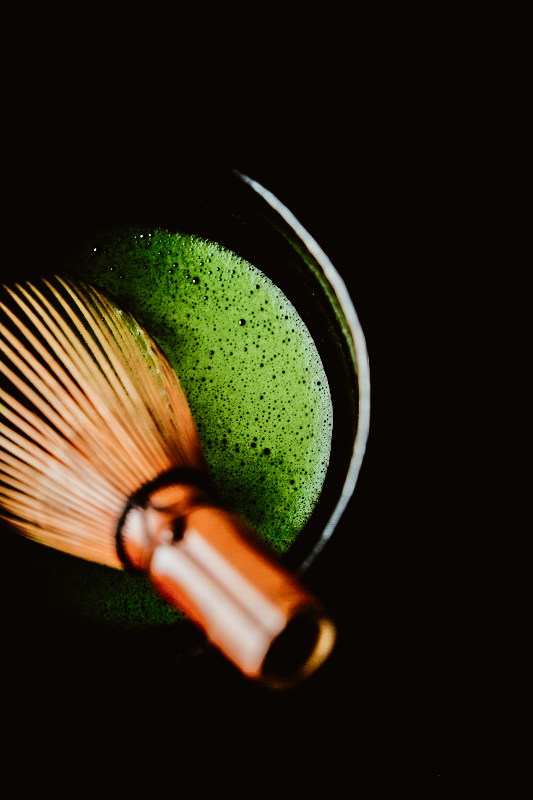
photo credits: sweetsofjapan.com, Flickr
A universe enclosed in a single cup of tea
The Tea Ceremony is, therefore, a meditative practice to all effects that with the "excuse" of a cup of tea leads us to the doorway of our Consciousness. This intent is at the basis of all Japanese art forms: to use earthly things without being harnessed by them. Knowing how to seek, feel, the spirit within the earthly experience inevitably included in it. The key is not to exclude it, but simply not to be harnessed by it.
As a little girl, I myself did not understand the necessity of having to make all those gestures. Now, after experiencing a particular state of emptiness simply thanks to a pair of chopsticks (hashi), everything became crystal clear to me. Understanding in my heart the loving act of these people, in trying to express this truth. That is why only by experiencing it in person can you truly understand.
As of today, in fact, the main Chadō schools come from the descendants of Sen no Rikyū and are the Omotesenke, the Urasenke and the Mushanokojisenke. They present technical and stylistic differences that however do not affect what is the spirit at the base of Cha no Yu. There are also other minor schools. Among these: the Oribe-ryū descending from Furuta Oribe (successor pupil of Rikyū) and the Yabunouchi-ryū founded instead by such Yabunouchi Kenchū Jōchi who was a disciple of Takeno Jōōō as Sen no Rikyū.
Finally, it is worth mentioning the lesser-known Senchadō (煎茶道), the variant "for infusion" of Cha no Yu, which uses the precious green tea leaves. More recent than Chadō, it is born with a more convivial tone and less "spiritually committed", although it is inspired in several aspects. However, it differs in that it is less rigid and more focused on aesthetic pleasure and fine utensils.
Focus on: Nambu ironware
If we think of typical Japanese furniture, we immediately think of an iron teapot, also known as Nambu ironware.
The Nambu ironware and its history
Author: Erika | Source: Tokyo Weekender
Nambu Tekki, or Nambu ironware, is a specific method typical of the city of Morioka in Iwate Prefecture. Created in the middle of the Edo period, this art is named Nambu after the feudal domain of the same name. Modern techniques also use the molten metal produced near Morioka, in Sendai or the present-day town of Oshu.
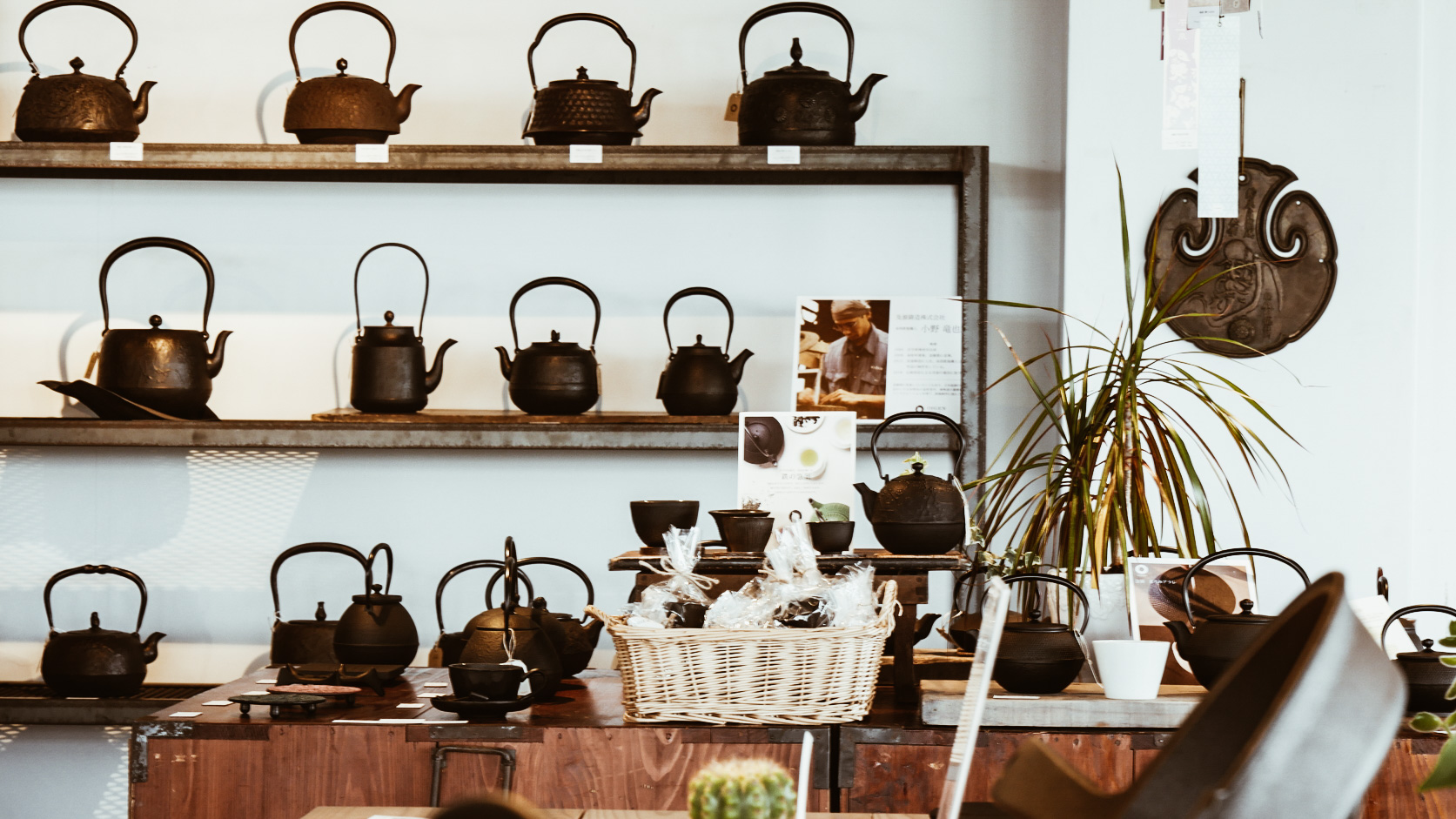
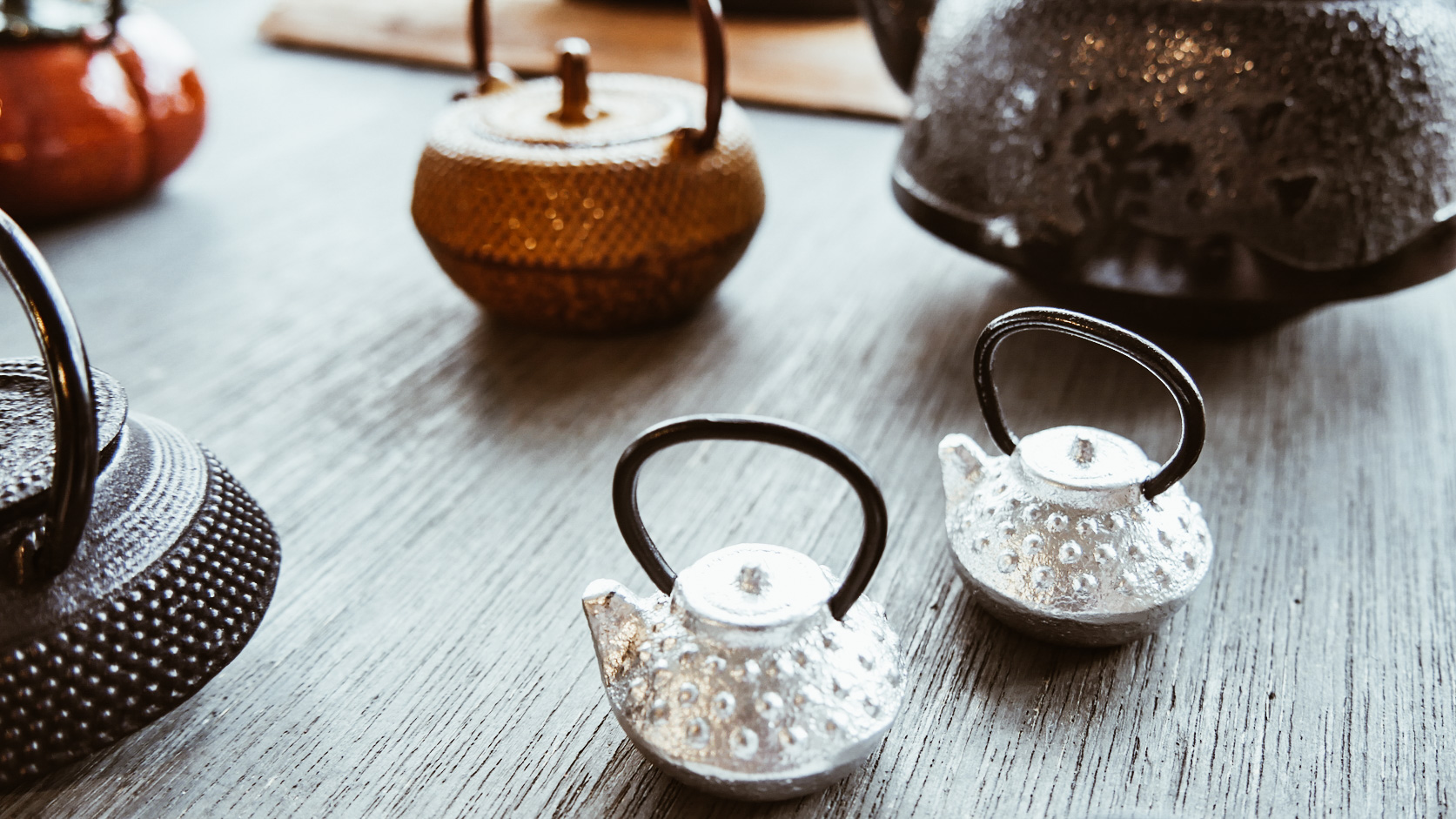
Rust-resistant, durable and well-insulated, these objects provide uniform heat circulation. In fact, the outside of the kettles has an irregular texture called ploughing or hail. This is often used in Nambu ironware dishes and kettles are the representative product. However, the various models change from artisan to artisan because each artist is free to create his or her own model at will.
The History of Nambu ironware
Nambu ironware products sink their history into the production of tableware for the Tea Ceremony during the homonymous domination in the middle of the 17th century. Thanks to the abundance of iron resources, Morioka was a perfect area for the foundry industry.
In fact, in 1659, a feudal lord who wanted to promote the tea ceremony ordered Nizaemon Koizumi to move to Kyoto. It was here, in the area around the castle in Nambu, that the kettles began to be made.
The Koizumi family
Craftsmen par excellence during the Nambu domain, this family launched for the first time the pots used for the tea ceremony. The tea casting technique and control were passed down from father to son. Not only traditional products, but this family was also the focus of innovations for the time. In fact, the famous Nambu Iron Kettle was invented by the third generation of the Koizumi family. The Taisho Emperor himself, who reigned from 1912 to 1926, visited the Tohoku region for this family. In fact, in 1908, on the occasion of the visit, the eighth generation of the Koizumi showed the emperor the production process of these iron tools. This event was so famous that all the national newspapers of the time talked about it. In fact, even today, all the pieces produced in the Morioka and Mizusawa areas in Iwate are still called "Nambu Ironware".
More than just tea
Although the products related to the tea ceremony are the most famous among the Nambu ironware, there are many other items related to the home that can be purchased. In fact, Western kitchen cooks know that one of the best investments you can make is a cast iron frying pan.
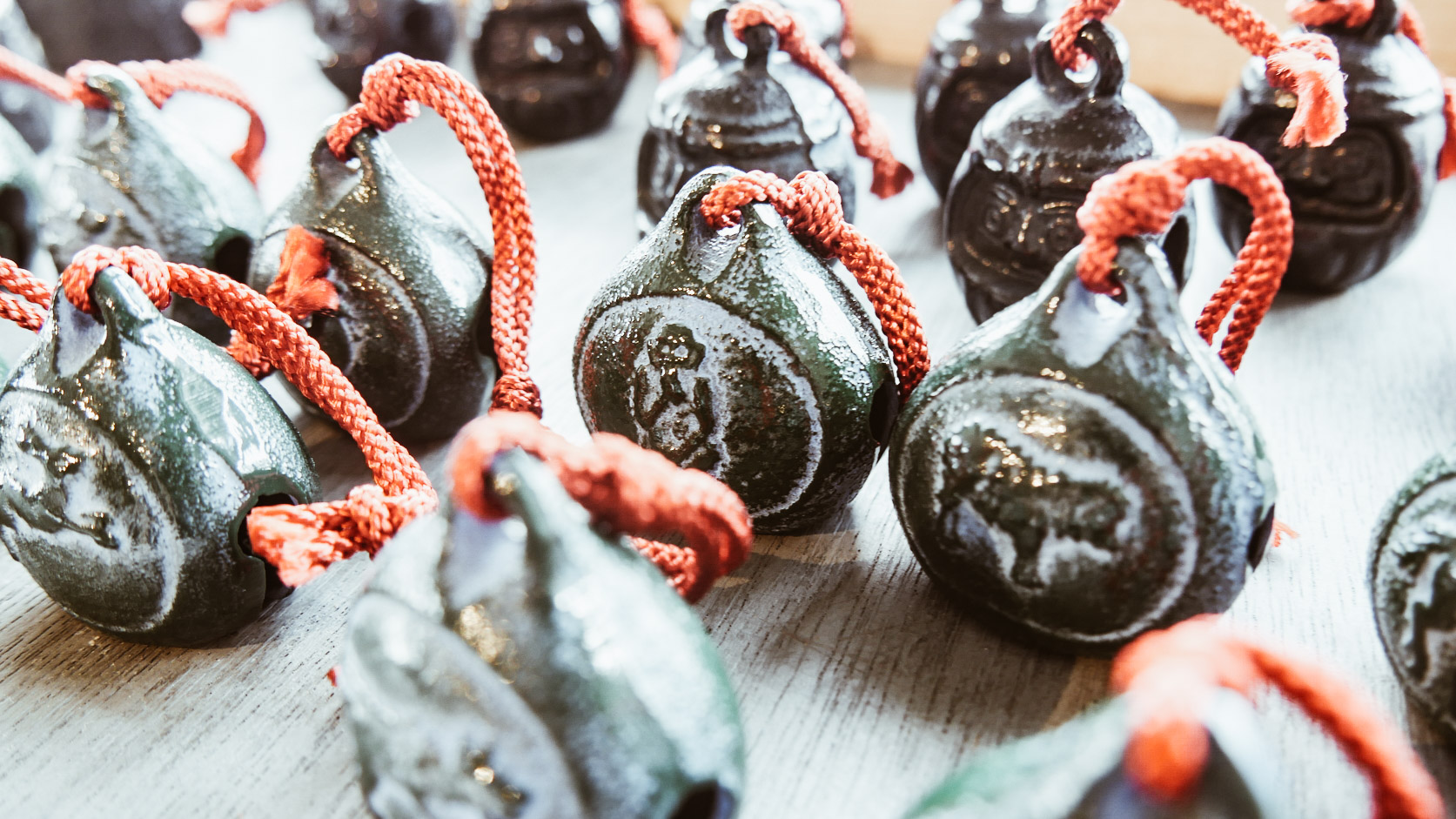
However, other Nambu ironware items that are worth buying are the furin (the Japanese windchimes), incense holders, small decorations but also chopsticks holders.
Have you ever bought any of these items or would you like to take some? Let us know in the comments or on our Facebook page!
Japan History: Yukio Mishima
Yukio Mishima pseudonym of Kimitake Hiraoka (Tokyo, January 14, 1925 - Tokyo, November 25, 1970), was a Japanese writer, playwright, essayist and poet and this year marks the 50th anniversary of his death.
50 years since Yukio Mishima's death
Author: SaiKaiAngel
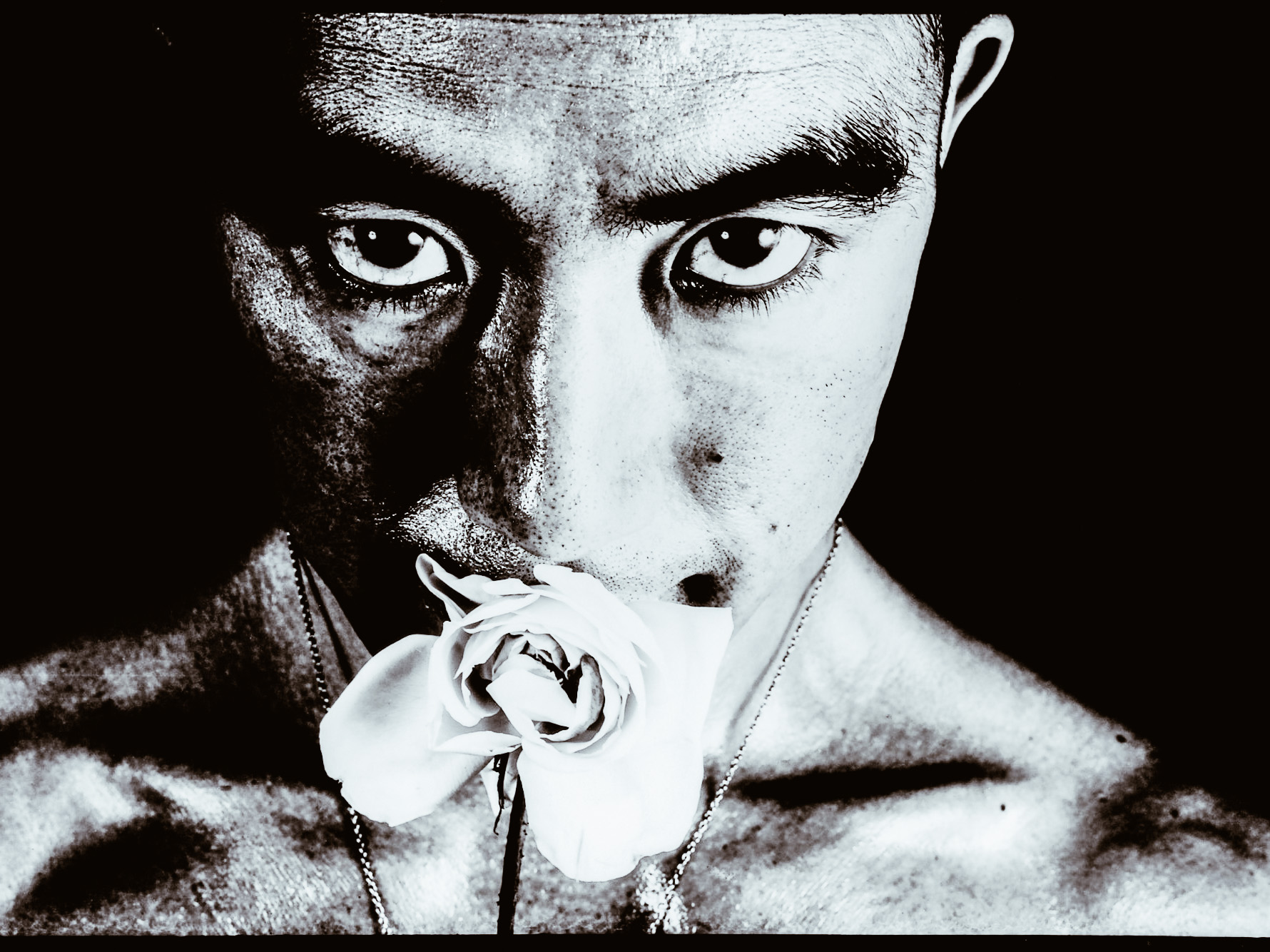
photo credits: @williert
Mishima was a highly controversial character, considered close to Fascism in Europe and, according to many critics, a nostalgic Japanese nationalist. Alberto Moravia called him a decadent conservative. The two met in Mishima's Art Nouveau western home in a suburb of Tokyo. Yukio Mishima, on the other hand, called himself apolitical and anti-political. Strongly patriotic, he also inspired numerous characters of his works, and the cult for the Emperor, seen as an abstract and/or semi-divine ideal, the embodiment of the essence of traditional Japan.
Kimitake Hiraoka was one of the few Japanese authors to have immediate success also abroad. His numerous works range from the real novel to the modernized and readapted forms of traditional Japanese theatre Kabuki and Nō. Yukio Mishima has revisited the Nō theatre in a modern key.
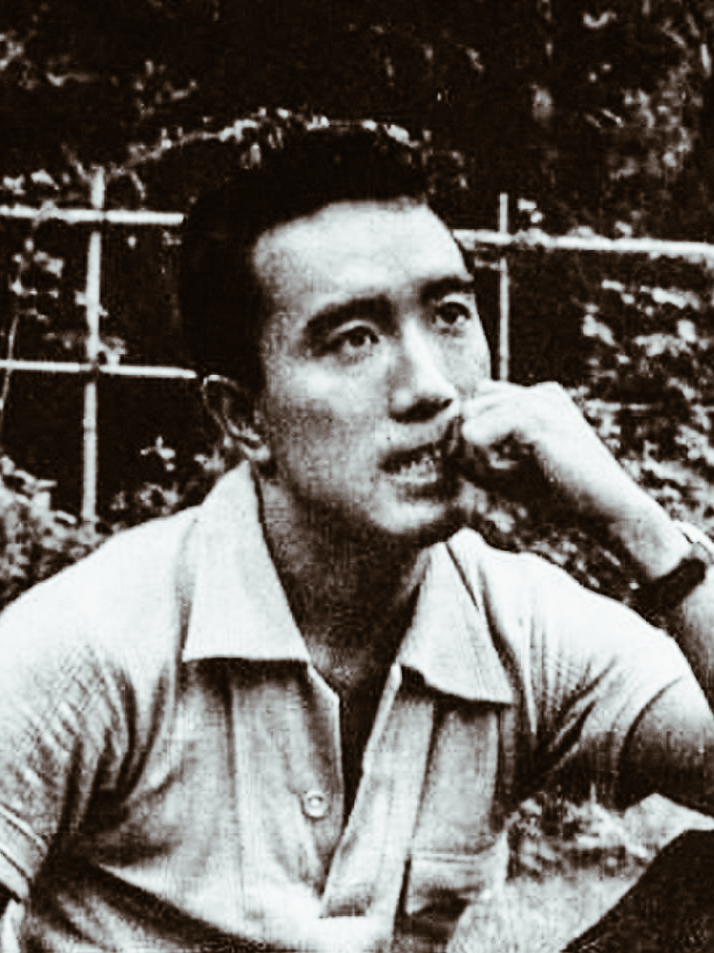
photo credits: thereaderwiki.com
The life of Yukio Mishima
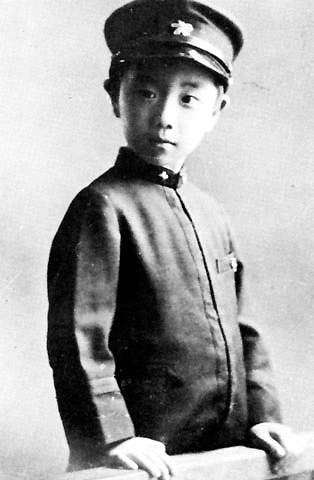
photo credits: wikipedia.org
Yukio Mishima was born in Tokyo on January 14, 1925, in the home of his paternal grandparents, Jotarō Hiraoka and his wife Natsuko. Her parents, Azusa and Shizue, lived together with her grandparents and her grandmother who had an unhappy marriage, assumes all responsibility for the education of the child, usurping the role of the mother. It will be his grandmother to bring the child closer to classical literature and the forms of the theatre Nō and Kabuki.
The relationship that little Kimitake Hiraoka had with her grandmother was something very obsessive, even his mother was allowed to visit him only for breastfeeding.
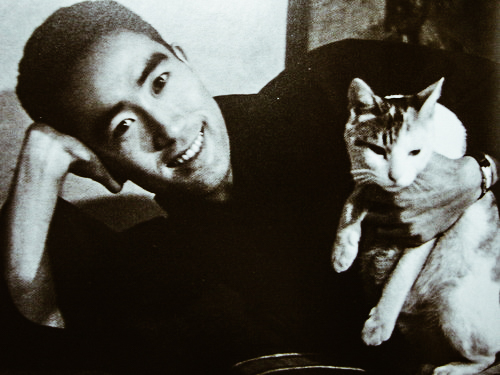
photo credits: paola1chi.blogspot.com
Grandmother never allowed her grandson to leave the house until Hiraoka escaped from her grandmother stolen from her mother in 1934.
These and other experiences of childhood and adolescence are reported in the novel Confessions of a mask of 1949, in-depth self-analysis of his life.
From 1931 he began studying Gakushūin, the school of the Peers, always thanks to the advice of his grandmother. In this school, most of the students were part of the aristocracy. Those who were not aristocrats were called "outsiders". With this school, students became more warriors than writers and Kimitake Hiraoka's poems were published in the school magazine.
His first work, Hanazakari no Mori (The forest in bloom) was completed in 1941 and was heavily influenced by the Japanese romantic school (Nihon romanha). The professor of Gakushūin letters, Shimizu Fumio, immediately noticed his classical style. Bungei Bunka magazine published the story and from there he began to use the pseudonym Yukio Mishima. Hanazakari no Mori will be published in book form together with other short stories: its success will make the name of the writer known to the public for the first time.
After school, convinced by his father, he enrolled in law university. After graduation, he won a competition as a state official at the Ministry of Finance. During the period of work at the Ministry, he lived a "double life": state official until the evening and writer at night, sleeping no more than three or four hours.
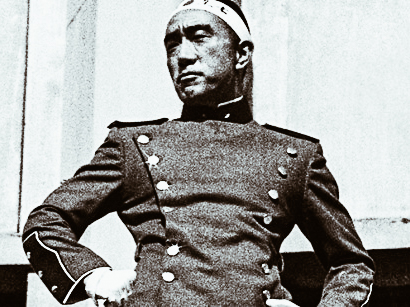
photo credits: oltrelalinea.news
Early works
In 1946 he presented two of his works to the Nobel Prize winner Yasunari Kawabata. Between the two there was a feeling of profound esteem more than that which actually binds teacher and disciple.
In 1948 he began his work at the Kindai Bungaku magazine, linked to leftist circles. Yukio Mishima always tried to avoid any political argument in his novels, apart from the descriptive character that we find in After the feast and the Horses on the run, in fact, Yukio Mishima became part of the leftist group only to get more contacts with the intellectual world.
After the publication of Kamen no Kokuhaku (Confessions of a mask) in June 1949, he received recognition from critics and sales. Between 1950 and 1951 he published three important novels: Thirst for love, The Green Age (1950) and Forbidden Colors (1951). In the novel Thirst for the love he returns to the third-person narrative.
In 1951 he visited the United States, Brazil and Europe as a correspondent for Asahi Shinbun. In Shiosai (The voice of the waves 1954) and the trip to Greece marked the beginning of a new life for Mishima: from 1955 he began to devote himself to bodybuilding, and to kendo.
Yukio Mishima: marriage and sexuality
Yukio Mishima got married on 11 June 1958 with Yoko Sugiyama, under the advice of the family; two children were born from the union, Noriko (2 June 1959) and Ichiro (2 May 1962).
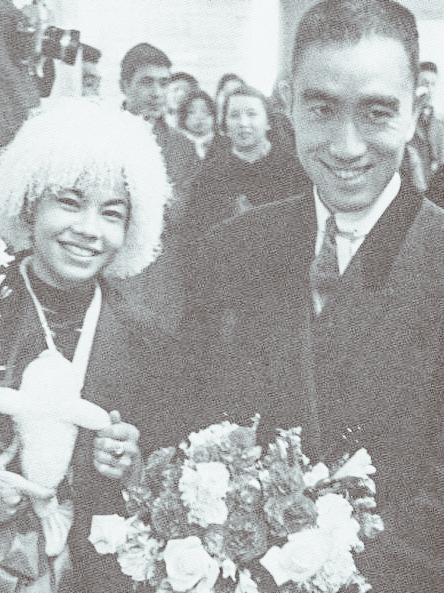
photo credits: paola1chi.blogspot.com
Yukio Mishima's sexual orientation was highly controversial, due to some of his visits to Japanese gay bars. Many testimonies saw him as the protagonist of homosexual relationships with for example the writer Jiro Fukushima. The latter wrote a novel describing very explicit details of the relationship with Mishima. At that point, Mishima's children started a fight for violating privacy.
At that time Yukio Mishima entered into a relationship with Eikoh Hosoe and became the model for some of his photos of Bara-kei, 1961–1962. Abroad, the title will be Killed by Roses or Ordeal by Roses.
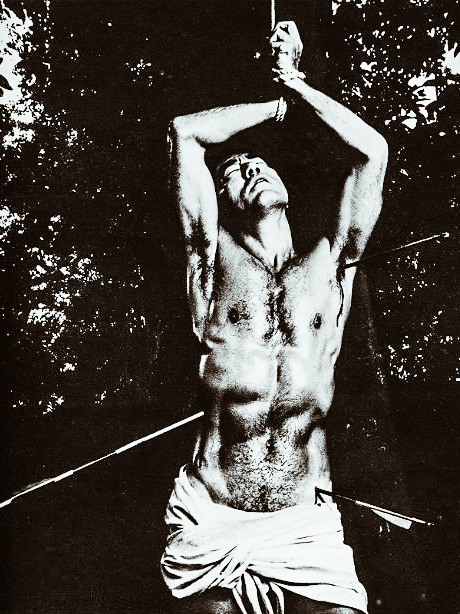
photo credits: dangerousminds.net
He began his acting career in the film based on Yūkoku (Patriotism, 1966), the story of a young officer who decides to do seppuku with his wife. The film was directed, written and played by him. In addition to this, his photos as a bodybuilder and kendōka are published in various newspapers, as well as news of the training periods together with the Jieitai (Japanese Self-Defense Force) and the foundation of the Tate no Kai (Shield Society), his "private army. "
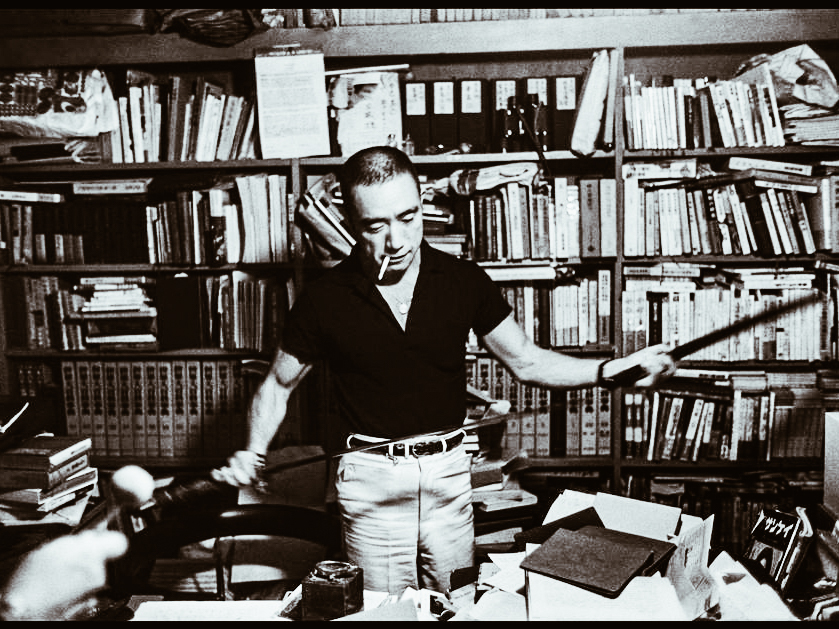
photo credits: lintellettualedissidente.it
The tetralogy Hōjō no Umi (The sea of fertility) began in 1965. The last volume is published in 1970.
Suicide
"A life that suffices to be face to face with death to be scarred and broken, perhaps it is nothing but a fragile glass." (from Spiritual lessons for young samurai and other writings)
Yukio Mishima had always been obsessed with the idea of death and decided to combine this unease with the ideas of traditionalist patriotism.
On November 25, 1970, at 45, Yukio Mishima gathered the most important members of the Tate no Kai ("Association of Shields"), which he himself had found, and occupied the office of General Mashita of the self-defence army. From the balcony of the office, in front of a thousand men of the infantry regiment, as well as newspapers and televisions, he gave his last speech: exaltation of the spirit of Japan, condemnation of the 1947 constitution and the San Francisco treaty, which they made the Japanese national feeling enslaved by westernization.
«We must die to restore Japan's true face! Is it good to have a life so dear to let the spirit die? What army is this that has no more noble values than life? Now we will testify to the existence of a higher value than attachment to life. This value is not freedom! It's not a democracy! It's Japan! It’s Japan, the country of history and traditions that we love. "It was November 25, 1970 in front of an audience of young soldiers, in which after this speech and after praising the Emperor, Yukio Mishima practised seppuku by piercing his belly and then having his head beheaded. Together with him, his most trusted friend and disciple, Masakatsu Morita, committed suicide too.
The choice of Seppuku
The date and manner of killing himself were not random, but chosen as the whole meaning of his life, the purpose for which it had been devoted. It all ended with the extreme act of the Japanese man: seppuku. This sacrifice was based on Wang Yangming's Chinese teaching that "knowing and not acting means not knowing".
Just before seppuku, he had delivered to the publisher the last part of the tetralogy The sea of fertility, which was however completed three months earlier, but with the date "November 25, 1970" just as a testament. He had organized his departure from the scene very coldly, he also left a note: "Human life is short, but I would like to live forever."
The three survivors went to justice and were sentenced to four years in prison for occupying the ministry, but were released for good conduct after a few months.
Summarizing it all, we can say that according to Yukio Mishima the relationships between human beings are reduced to a cloudy and confused mixture of good and evil, of trust and diffidence, distilled in small doses. Despite all this, if the group of people manages to make a pact based on a purity of mind, consumerism, relativism, nihilism and individualism become nothing. Yukio Mishima managed to transform his existence into something more important and profound, thanks to the way he had decided to live and die.

photo credits: wikimedia.org
His works
Romances
The forest in bloom (花 ざ か り の 森 - Hanazakari no mori, 1944)
The doll's house (雛 の 宿 - Hina no yado 1946-1963)
Confessions of a mask (仮 面 の 告白 - Kamen no kokuhaku, 1949)
Thirst for love (愛 の 渇 き - Ai no kawaki, 1950)
The Green Age (青 の 時代 - Ao no jidai, 1950)
Forbidden colours (禁 色 - Kinjiki, 1951)
Midsummer Death (真 夏 の 死 - Manatsu no shi, 1952)
The voice of the waves (潮 騒 - Shiosai, 1954)
A locked room (鍵 の か か る 部屋 - Kagi no kakaru heya, 1954)
Five modern Nō (近代 能 楽 集 - Kindai nōgaku shū, 1956)
The golden pavilion (金 閣 寺 - Kinkakuji, 1956)
A wavering virtue (美 徳 の よ ろ め き - Bitoku no yoromeki, 2007)
Kyōko's house (鏡子 の 家 - Kyōko no Ie, 1959)
After the banquet (宴 の あ と - Utage no ato, 1960)
Animal’s playthings (獣 の 戯 れ - Kemono no tawamure, 1961)
Wonderful star (美 し い 星 - Utsukushii Hoshi, 1962)
The taste of glory (午後 の 曳 航 - Gogo no eiko, 1963)
The school of meat - Nikutai No Gakko, 1963
The sword (1963)
Music (音 楽 - Ongaku, 1965)
Madame de Sade (サ ド 侯爵夫人 - Sado kōshaku fujin, 1965)
The voice of heroic spirits (英 霊 霊 聲 - Eirei no koe, 1966)
Evening dress (夜 会 服 - Yakaifuku), (1966-1967)
My friend Hitler (わ が 友 ヒ ッ ト ラ ー - Waga Tomo Hittorā, 1968)
The sea of fertility (豊 饒 の 海 - Hōjō no umi), 1968-1970, tetralogy composed of:
Spring snow (春 の 雪 - Haru no yuki, 1968)
Horses on the run (奔馬 - Honba, 1969)
The temple of dawn (暁 の 寺 - Akatsuki no tera, 1970)
The mirror of deception (天人 五 衰 - Tennin gosui, 1970)
Middle Ages & The Palace of the Roaring Deer (Mishima, history and secret affairs) (Chūsei, 1945–46 + Rokumeikan 1956)
Essays
1967 - Apollo's cup (ア ポ ロ の 杯 - Aporo no Sakazuki, 1967)
The way of the samurai (葉 隠 入門 - Hagakure nyūmon, 1967)
Sun and steel (太陽 と 鉄 - Taiyō to tetsu, 1970)
1988 - Spiritual lessons for young Samurai (若 き サ ム ラ イ の た め の 精神 講話 - Wakaki Samurai no tameno Seishin kowa, 1970): a collection of essays including the proclamation read by the author a few moments before the ritual suicide.
1997 - Letters 1945-1970 (川端康成 ・ 三島 由 紀 夫 往復 書簡 - Kawabata Yasunari ・ Mishima Yukio Ohfuku Shokan, 1997), SE (ISBN 88-7710-543-7): correspondence between Mishima and Yasunari Kawabata.
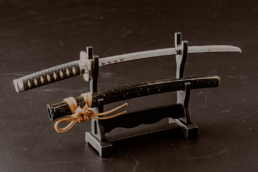
Nikken Cutlery makes you feel like real samurai
Nikken Cutlery not only decided to explain to you how Oda Nobunaga and the greatest Samurai cut the tags from their clothes, but they also created the way to make you do the same nowadays!
Nikken Cutlery makes you feel like real samurai
Autore: SaiKaiAngel | Fonte: Soranews24.com
In ancient times, the Samurai never left the house without their sword, because they didn't know when they should defend themselves. Nowadays, luckily it's less likely to meet enemies or brigands on the street (hopefully!), but still, the need of having to cut something or open a snack could happen. How nice would it be to be able to open a snack with this set of mini scissors in the shape of the real and historic katana? Enjoy the samurai spirit into everyday life!
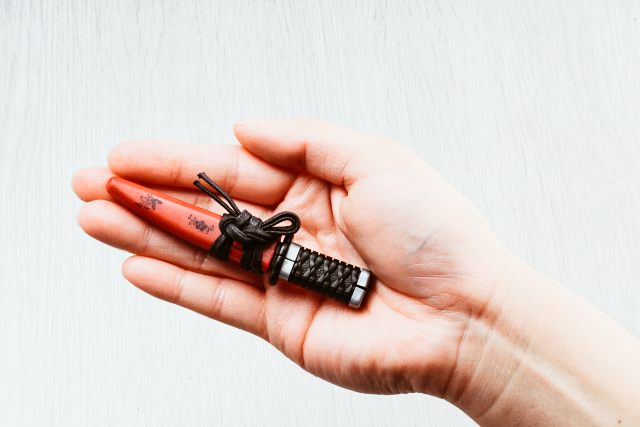

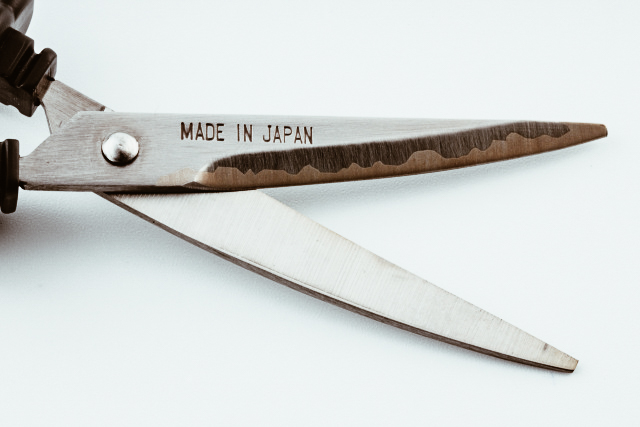
If you look carefully, you can also notice the famous hamon on the metal of these cutters in the shape of a katana, do you know what it is? The hamon (刃 文) is the line of tempering that characterizes the katana obtained through differentiated tempering.
A particular type of "differentiated" hardening between the back and the wire produces a slightly different colour line on the cutting edge, called hamon (刃 文). The shape of the hamon is an identifying sign of the age of the blade and of the author. In fact, the real katana connoisseur, looks at the hamon immediately. Obviously, Nikken Cutlery has also remained faithful to this for these special cutters.


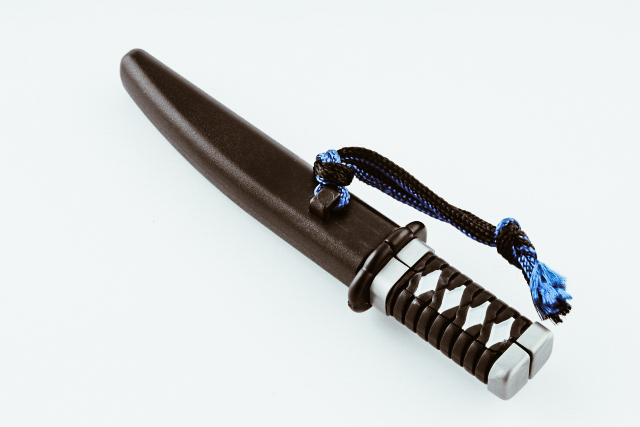
Nikken Cutlery, which is based in the city of Seki in the prefecture of Gifu, offers three models:
- First model: based on the Heshikiri Hasebe, the famous sword of the warlord Oda Nobunaga.
- Second model: Izumi no Kami Kanesada from Hijikata Toshizo, deputy commander of the 19th century Shinsengumi group.
- Third model: it comes from Shinsengumi, in the form of Yamato no Kamiyasusada, the sword of Okita Soji, a member of Shinsengumi.
And there’s more! The mini katana is equipped with a mini katanabukuro (the cloth container), with the blue and white Shinsengumi motif for the swords of Hijikata and Okita, or purple for the Nobunaga katanas.

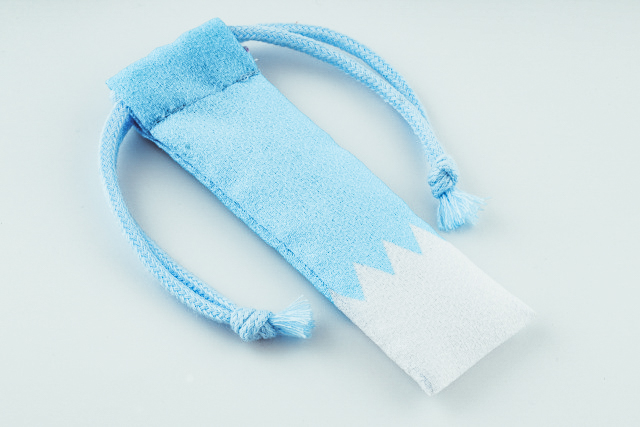
And again! Nikken Cutlery has decided to make you a Samurai also in the office. It’s true, their skills have also expanded in the creation of office tools and we are talking about surprising katana-shaped letter openers with the possibility of personalized engravings. So you want to open the letters like a real samurai? Not a problem thanks to Nikken Cutlery!

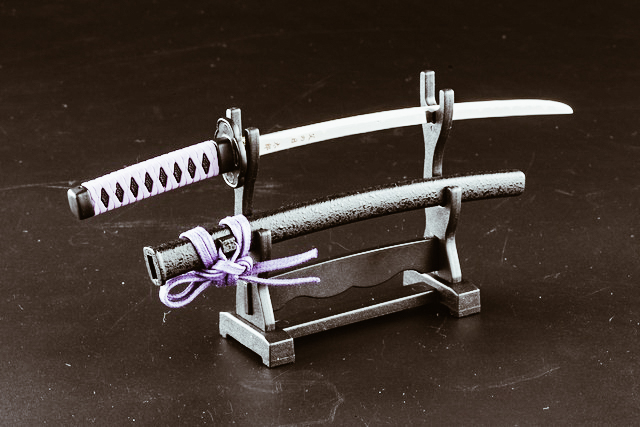
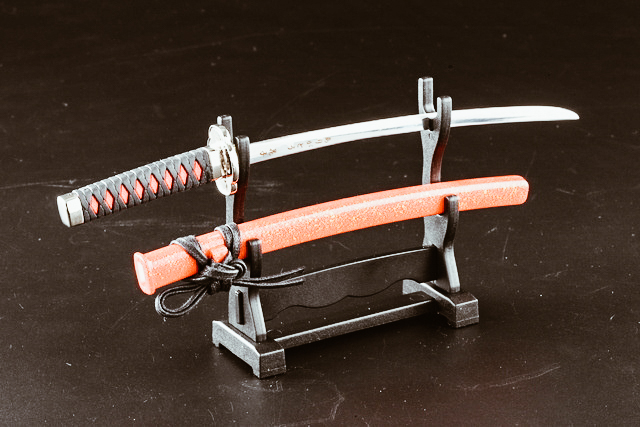
Also here you can choose among three varieties of katana letter openers. Each of them is equipped with support, so you can show your warrior spirit to everyone and with pride!
- First model: "Iron Cloud". Its handle is black and gold, and its sheath seems coated with lacquer since it is a glossy black with golden sparkles.
- Second model: "Scarlet Gold Cloud", with an elegant black and red hilt and a red sheath with splashes of gold.
- Third model: "Black Grains of Rock", which has a purple and black hilt and a black sheath with a rough texture that appears to have been roughly carved from lava rock.
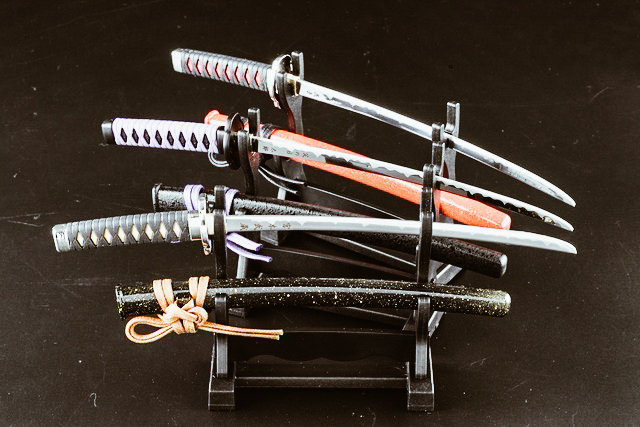
All sheaths are hand-painted by craftsmen, so each of them will be unique, as the blades are always created by Seki craftsmen. Each blade will have a very tapered edge but don't worry, they are specially designed not to cut human skin. It is not a real weapon, be quiet warriors! In addition, the blade is carefully hardened with a heat treatment that uses traditional blacksmith techniques and makes them resistant.
In case you are interested in the very personal engraving, these are made on the blade near the hilt and they can be names, messages, given all within eight kanji, hiragana and katakana characters or 15 Roman letters and numbers including spaces.

Don’t miss the opportunity to dress your day with Japanese tradition, rely on Nikken Cutlery!
For more information on these products: Nikken Cutlery official site | Twitter