







An unusual Pokèmon appeared at Yoshinoya in Japan
A whole generation has been affected by these pocket monsters called Pkémon and now you can find them at Yoshinoya in Japan! But how is that possible?


2019 marks the 120th anniversary in the beef-bowl business for the popular chain Yoshinoya. The popular fast restaurant decided to celebrate it through an interesting partnership with the Pokémon franchise.
To catch’em all will be easy and super delicious, only 6 Pokémon available this time! From December 19th, customers across Japan will be able to order a new type of beef-bowl: The Pokémori!


The Pomémori at Yoshinoya
Available in three varieties, Gyudon, Kid’s Gyudon, and Curry Rice, all for less than 500 yen (US$5), this special menu includes a juice box and Pokémon figure.
The word “gyudon” means “beef bowl” in Japanese, so in honor of this incredible meal of Japanese cuisine something special has been arranged. You will get the chance to find six figures of Pokémon with “don” in their Japanese name.

Left to Right: Charizard (Lizardon), Groudon, Slowpoke (Yadon), Weepinbell (Utsudon), and the West/East versions of Gastrodon (Tritodon)
However, the surprises don’t end here!
We know that the Japanese culture has a strict policy when it comes to respecting the public areas. So for all good boys and girls who clean their plates, there is a special plus! It is, in fact, possible to discover one of these monsters hiding at the bottom of the bowls, which are also specially designed to resemble Pokéballs.
Unfortunately, the surprise bowls are only used for eat-in orders in Japan. However, if you order Pokémori to-go you can get specially designed containers and bags too.
Furthermore, it is possible to enjoy one of those Pokébowls in the comfort of your own home by participating in Yoshinoya’s Twitter contest. All that you need to do is photograph and tweet your receipt from either dining in or taking out a Pokémori order. Follow Yoshinoya’s Twitter account and retweet a specific contest post, you’ll be in with a chance to win one of the Pokébowls (only available in Japan).
\ポケモン+吉野家=『ポケ盛』発売記念‼/
✨ポケ盛専用ドンぶりを抽選で30名にプレゼント✨
🔊応募方法
①@yoshinoyagyudon をフォロー
②このツイートをRT
〆切1/5ポケ盛専用ドンぶりほんっっっとうに可愛い( ;∀;)💗
たくさんの応募待ってます🎶#ポケ盛ゲット pic.twitter.com/jNKdM8Zj2N— 吉野家 (@yoshinoyagyudon) December 11, 2019
All the Pokémons are already waiting for you at Yoshinoya. However, if you want to fully live the experience, you should check out the Yoshinoya Ebisu Station location, also known as one of the swankiest Yoshinoyas around. This location will be, in fact, redecorated in a Pokémon motif too.


Decorations are planned to stay up until 5 January, however, Pokémori itself will only last as long as supplies do. So hurry up, you really should catch’em all!!
Source: Yoshinoya
Photo Credits: Yoshinoya, perfectly-nintendo.com, nintendosoup.com


Travel guide: Tokyo - Episode 01
Can you ever imagine Tokyo as a modest fishing village? Probably not. Like so many other cities in the world - the atmosphere that was breathed in the Edo period was quiet and very far from today's frenzy. It was only when the emperor moved from Kyoto to Tokyo, after 1868, that the city radically changed his identity.

photo credits: visa.com.au
Today Tokyo, with its 23 districts, is the largest megalopolis in the world, a conglomeration of cities, lights and colors fused together that continue to amaze visitors.
Walking around the capital is an almost otherworldly experience. From the very crowded streets, you could turn the corner and find yourself suddenly in an oasis of serenity near some shrine or Shinto temple. Or, decide to venture out shopping in stores that sell strange and wonderful things, or take the subway (or train) and reach incredible places!
In our blog, you will find many articles that focus on Tokyo neighborhoods. However, what we want to suggest to you today are those unusual, unique and extravagant activities that, for those visiting the city for the first time, could turn into unforgettable experiences!
Admire Tokyo in its vastness

photo credits: lonelyplanet.com
A visit to the observatory of the Tokyo Metropolitan Government Office, a visit to the Tokyo Skytree or the Tokyo Tower, or going to Roppongi Hills at Tokyo City View becomes necessary to enjoy a breathtaking view. The unique and incredible scenery of the city will hurt your heart because going back will be difficult, very difficult!
The Pet Cafés and the thematic Cafes

photo credits: ddnews.gov.in
We have already talked about thematic cafés before, enchanted places where we can become children again and dream a little. However, we talked very little about Pet Cafes. In Japan they are very popular and Tokyo is full of these cute cafes. The concept is that of a place with soft lights in which to relax, pampering an animal: cats, dogs, owls, snakes and even hedgehogs!
Compulsive shopping at Daiso!

photo credits: planetyze.com
Exactly, compulsive shopping. In fact, Daiso offers 5 stories of articles of all kinds and all sold only for 100 Yen! Furthermore, the biggest Daiso is located in Takeshita Street and some others are scattered all around town.
Plunge into the green in Tokyo

photo credits: blogdiviaggi.com
There is no shortage of beautiful parks in Tokyo. We'll talk about it in-depth in the second episode of our travel guide on Tokyo, but it is absolutely one of the things to do while walking around the city! Cherry trees in spring and momiji (Japanese red maples) will give you moments of pure relaxation in autumn, so a stop at each of the city's parks is essential. Absolutely not to be missed!
Sumo Tournaments

photo credits: japanistry.com
If you visit the city during tournaments (usually January, May and September) you should give yourself the experience of attending the Japanese national sport combat sessions at Ryugoku! For the Japanese, in fact, Sumo is not just about sports, but about a real unmissable form of art.
Tokyo Museums

photo credits: jrailpass.com
Like any self-respecting city, Tokyo also offers museums, but in this case, they take on an even more special feature because there are so many types of them. From the historic Tokyo National Museum at Ueno, to the Edo-Tokyo Museum to Ryugoku, and the Ghibli Museum for Studio Ghibli lovers or the bizarre Museum of Parasites in Meguro!
Golden Gai

photo credits: theculturetrip.com
The Golden Gai is a small area of Kabukicho in Shinjuku, famous for its network of narrow alleys that are connected by even closer passages. Along these narrow streets, there are more than 200 tiny bars, clubs and restaurants that are absolutely unique and characteristic.
Travel on the Yurikamome-line

photo credits: wow-j.com
The Yurikamome-line is the railway line whose trains are driverless and speed through the skyscrapers of the city! A must-try when the sun goes down and the city lights come on...
Izakaya

photo credits: jamesmagazine.it
Izakaya is a typical Japanese restaurant where food is served to accompany a vast amount of alcohol. Usually they are places frequented by colleagues from a company who, after a long day of work, give themselves a break to talk about a bit of everything.
Sashimi for breakfast at the Toyosu fish market

photo credits: travel.sygic.com
How many times have we eat sashimi or sushi and say "wow, this is really good and fresh!" Well... we probably still have no idea what fresh and good means!!!

photo credits: corriere.it
These are only 10 points we thought of, but in reality, there are really a million things to do in Tokyo. For example, you can taste everything that exists with green tea, go to an onsen, cross the Shibuya intersection, participate in Hanami, pray in a temple, admire Mount Fuji. To not forget yet, Ginza, Shinjuku, Kanagawa, Saitama, Odaiba... Tokyo is not a city, but a wonderful dream!


Luxury Ryokans in Tokyo, Kyoto & Osaka
Finding the ideal hotel is not at all difficult in Japan, especially if you want to stay in a Ryokan! Modernity will always give you unforgettable experiences, but you can also immerse yourself in the rhythm of the countryside.
Tokyo is an amazing city, always on the move and full of wonders to explore. However, if you want to regenerate your soul for a few days around the big metropolis, then the ryokan are what you are looking for!

photo credits: gorahanaougi.com
When time stops
The ryokan (旅館) is nothing more than a hotel with very few rooms whose style has remained unchanged since the Edo era. From the well-kept aesthetics, in these traditional hotels there is always a garden visible from any point of the washitsu (和室). In this typical essential Japanese room we find the tokonoma (床の間). It’s a small closed and raised window in which we find Japanese parchments, called emakimono, ikebana and bonsai. Here, the floor is strictly composed of tatami (畳), above which lies the futon (布団, literally "rolled mattress"). The only traces of modernity are given by the presence of air conditioning, television and telephone.
Guests of the ryokans are entrusted to the care of an old maid. The latter welcomes visitors by serving them welcome tea, collects orders and accompanies them to the Osen (thermal bath) or Ofuro (bathing in hinoki wooden tubs).

photo credits: gorakadan.com
The Ryokans are scattered a little throughout Japan, especially in the inland areas. However, today we will limit ourselves to those that can be reached more easily, located between Tokyo, Kyoto and Osaka!
Ryokan of the Hakone region
The Hakone region is located along Tokaido, the historic streets of the Edo period and is perfect if you want to move comfortably between Tokyo, Kyoto and Osaka. Moreover, if like me you are madly in love with Mount Fuji, the ryokans that I am about to present offer a breathtaking view!

photo credits: yado-resort.com
The first ryokan is the GORA HANAOUGI in the most famous area of Hakone and surrounded by a beautiful natural landscape.
Address: 1300-681 Gora, Hakone-machi, Ashigara-shimogun, Kanagawa 〒250-0408
Phone: + 81-460-87-7715
Website: https://gorahanaougi.com/

photo credits: kiwicollection.com
The second ryokan is the GORA KADAN which stands on the grounds of Villa Kan’in-no-miya, the former summer villa of a member of the imperial family in the city of Gora in Hakone.
Address: 1300 Gora, Hakone-machi, Ashigarashimo-gun, Kanagawa, 〒250-0408
Phone: +81-460-82-3331
Website: https://www.gorakadan.com/

photo credits: ryokancollection.com
Finally the splendid YAMA-NO-CHAYA that rises in a bamboo grove through a suspension bridge.
Address: Tounosawa, Hakonemachi, Ashigarashimo-gun, Kanagawa, 〒250-0315
Phone: +81-460-85-5493
Website: https://luxury-ryokan.com/
The Ryokan of the Izu Peninsula
The Izu Peninsula is located south of the Hakone region and Mount Fuji. Being less known than the Hakone region, it is a slightly less touristy destination, but one that will not disappoint you!

photo credits: ryokancollection.com
For this area I selected the YAGYU NO SHO, a ryokan where traditional cuisine, baths, hospitality and Japanese architecture blend together.
Address:1116-6 Shuzenji, Izu, Shizuoka 410-2416
Phone: +81-558-72-4126
Website: https://www.yagyu-no-sho.com
Ryokan between the Sea of Japan and the Alps
In the Chubu region, between the Sea of Japan and the Japanese Alps there are two areas of extraordinary beauty. We are talking about Hokuriku and Hida, about 3/4 hours away from Tokyo with the Shinkansen. Are you ready to immerse yourself in the generosity of nature?

photo credits: japanish.tours
BENIYA MUKAYU is a place where everything that you have always considered useless, will acquire great value. A place where your mind will finally be stripped and you will find the peace you have been looking for so long.
Address: 55-1-3 Yamashiro Onsen, Kaga, Ishikawa, 922-0242
Phone:+81-(0)761-77-1340
Website: http://mukayu.com

photo credits: jetsetter.com
WANOSATO absolutely deserves our attention. Located in the heart of Gifu prefecture, near Hida-Takayama, it offers the opportunity to live a unique experience, immersed in nature, in tradition and tranquility.
Address: 1682 Ichinomiyamachi, Takayama, Gifu 509-3505,
Phone: +81 577-53-2321
Website: http://www.wanosato.com
Don’t you feel that strong desire to run away from everyday life and take refuge in one of these magnificent traditional hotels? I do. I would leave in this very moment and let myself be pampered by the scents and sounds of my beloved Japan.

photo credits: Masa Angenieux

Yuki-Onna: the mysterious incarnation of the Japanese winter
In the endless world of yokai (supernatural creatures of the Japanese tradition), the figure of Yuki-Onna (雪女) stands out. Legendary snow woman, with her icy and lethal charm, embodies the terrible beauty of winter in the mountains of Japan.
Despite being known by different names and stories in the various prefectures, this character is renowned above all in the coldest and most inaccessible areas of the archipelago.

The Yuki-Onna is described as a beautiful woman with white skin, which appears on mountain trails and in snowstorms. She is dressed in a light white kimono or naked and covered only by very long hair, black or white depending on the legends. Ethereal and floating apparition in the snowy landscape on which it leaves no footprints, it can suddenly disappear turning into a cloud of fog or very fine snow.
Yuki-Onna: the Origins
The origin of this figure, like other yokai, is lost in the most ancient times. The first written trace of its history is found in the Sōgi Shokoku Monogatari, dating back to the Muromachi period (1333-1573). Here the monk Sogi describes the encounter with a woman of extraordinary beauty during his stay in the province of Echigo (current prefecture of Niigata). This mysterious woman was dressed in white, tall and with a very pale complexion and long white hair. From a young appearance, she mysteriously appeared one morning in the frozen garden of the monk. However, it disappeared just as mysteriously under the incredulous gaze of man.
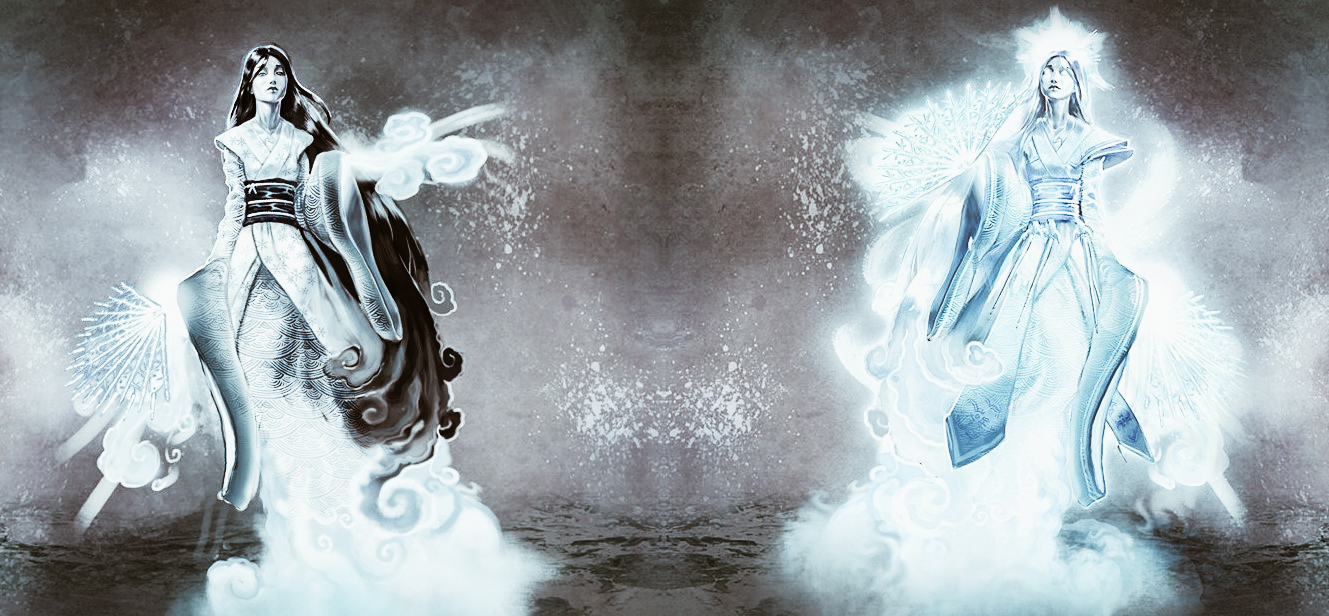
photo credits: smitefire.com
The two faces of winter
Like the winter that can manifest itself with a dazzling and serene splendor or with a cruel and lethal force, so is the Yuki-Onna. Sometimes it appears as a ruthless predator that attracts lost travelers into the storm to feed on them with their life energy. At other times it appears as a benevolent presence or even in its turn seduced by human charm.
In the most ancient stories, the monstrous and destructive aspect prevails. In fact, in these stories, parents who have lost their children in the mountains are approached by a woman. She asks them to pick up a child she can't bring herself. The unwary who accept this invitation are destined to freeze to death, overwhelmed by the fatigue of carrying a heavier burden at every step.
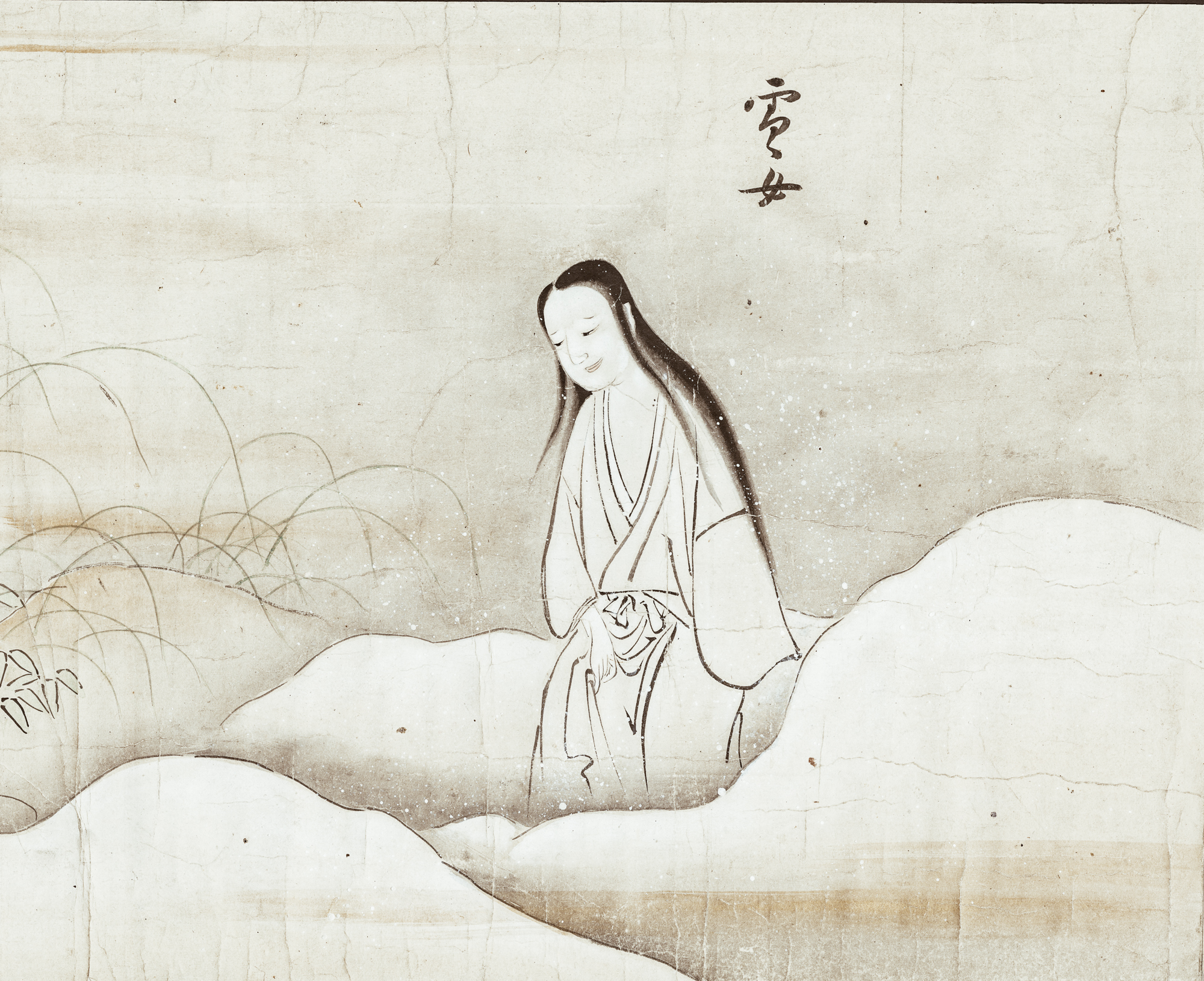
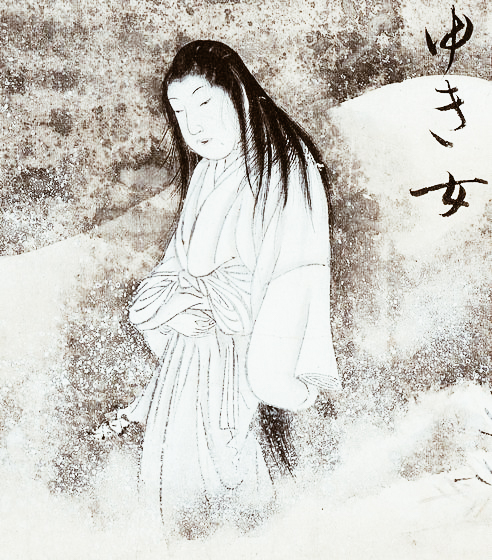
photo credits: wikipedia.org
Or in the stories, the Yuki-Onna seduces men subjugated by its otherworldly charm. They end up succumbing to his mortal kiss, able to drain their life force and freeze their hearts. Or again in dramatic stories, in which Yuki-Onna does not simply wait for the passage of bewildered travelers. Here, in fact, it enters the houses forcefully, opening doors and windows in the form of violent snowstorms, killing the unfortunate inhabitants.
In the West, we know a more romantic aspect of this reading. This is mostly thanks to the work of Patrick Lafcadio Hearn, a Ireland-born journalist and writer from Japan, also known as Koizumi Yakumo (小泉八雲).
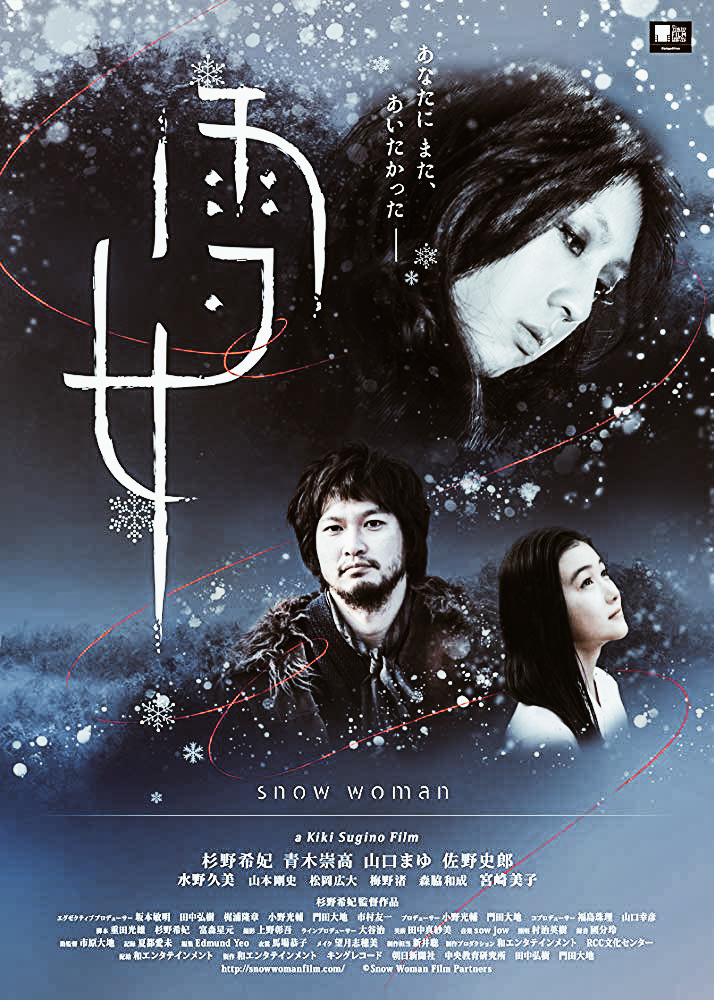
photo credits: letterboxd.com
The Lafcadio version
"Kwaidan: Stories and Studies of Strange Things" is a 1904 work containing a collection of popular beliefs and also an interpretation of the culture and customs of Japan. Here the legend narrated by Hearn speaks of two woodcutters, Elder Mosaku and his young apprentice Minokichi, who return home after a day's work on a cold evening. The two characters surprised by a violent snowstorm find shelter in a hut near a river. Afterward, the two men lay on the floor of the hut and, overcome by fatigue, they fall asleep. During the night Minokichi is awakened by an icy wind, which seems to have opened the door and windows of the hut. Still confused by sleep and believing he is dreaming, he sees a woman dressed in white and with long hair, bending over Mosaku, intent on breathing a cold mist like breath over him.
When the woman turns to Minokichi, the young man remains enchanted by her incredible beauty. However, he cannot sustain that look that inspires an unspeakable terror. Softened by the youth and the attractiveness of the boy, the woman decides to spare his life on condition that he never reveals to anyone the existence of such a creature. If he ever spoke to any of those events, his death would be certain.
The following morning a boatman, owner of the hut, finds in his interior the now frozen body of the elderly Mosaku, but manages to rescue Minokichi, now semi-frozen to safety.
A year later...
Having overcome the terror and exhaustion of that terrible night, the young man marries a beautiful young woman named O-Yuki. Suddenly appearing in his village she was immediately well-liked by everyone for her charm and her gentle manner. For many years the two live a happy marriage, blessed by the girl's inexplicable eternal youth, whose beauty seems to endure unchanged over time despite the birth of ten children.
Until one-day Minokichi, forgetting the promise he made, recklessly tells his wife of a supernatural creature he met many years before and that somehow seems to remind him of his charming bride. To his immense surprise, O-Yuki, suddenly transfigured by anger, reveals herself to be the woman he met that night. After having reproached her husband for not having been able to keep the promise of secrecy made so many years before, she decides to spare his life for the sake of their children. So, after warning him to take good care of them, she disappears forever.
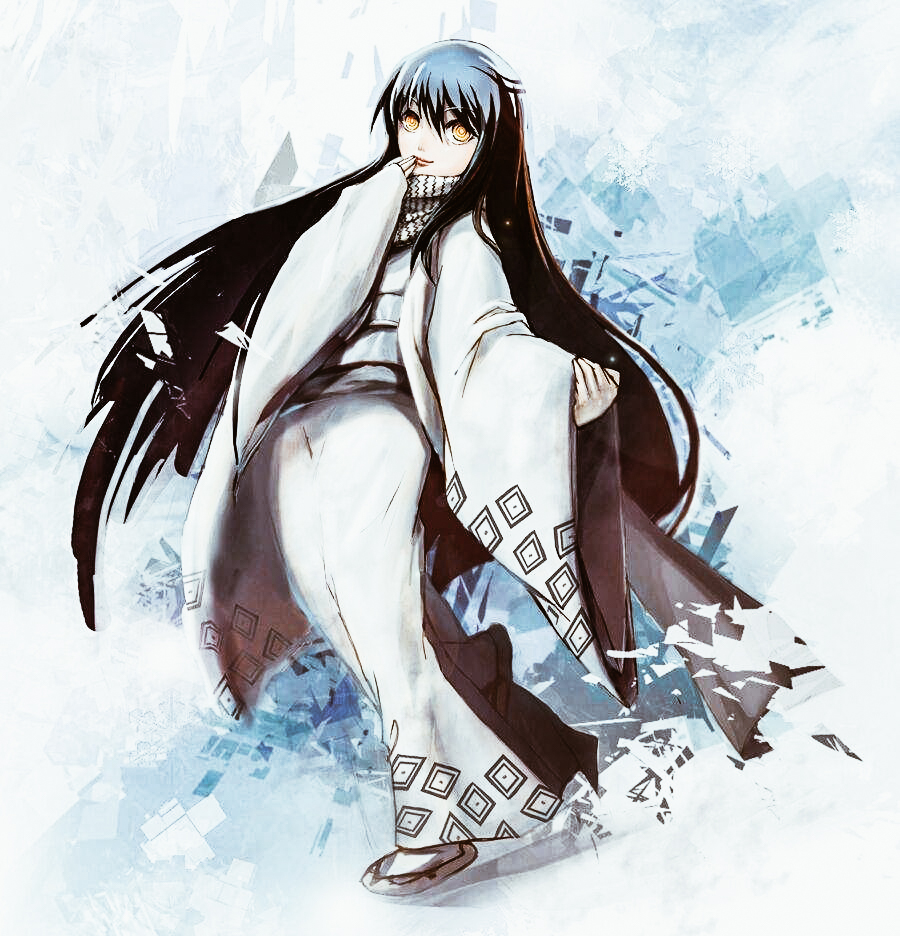
photo credits: aminoapps.com
Yuki-Onna in the contemporary age
Like the bride of Minokichi, the legend of Yuki-Onna, cruel and romantic at the same time, seems to preserve its charm over the centuries.
In fact, in contemporary times it has inspired numerous films. We remember in fact Kwaidan (怪怪) of 1965, directed by Masaki Kobayashi, winner of the special prize of the jury at the Cannes Festival. Kwaidan was also in the running for the Academy Awards with a nomination for Best Foreign Language Film.
The success of this film was followed, in 1968, by Kaidan Yukijoro by Tokuzô Tanaka, until 2016 with Yuki-Onna, directed and performed by Kiki Sugino.
The beautiful and lethal snow woman, in her innumerable variations, then appears as a protagonist or leading figure in a vast range of video games, anime and manga. Nurarihyon no Mago or Ranma ½, just to name a few. However, its timeless charm will continue to enchant us for a long time, with its eternal, candid winter.

Festa del Giappone 2019 Video Report
On June 9th, we had the pleasure of participating in the "Festa del Giappone". Organized by our friends from Giappone in Italia at the Circolo Magnolia in Milan, the event was a real success!
Among stalls, workshops, conferences, and shows connected to Japan, the public was able to dive even for a little bit into the true Japanese culture. Furthermore, Kokeshi dolls, paintings and many delicacies that have attracted the attention of all visitors. While starting from the Okonomiyaki passing through the typical Japanese curry rice to the famous Takoyaki, the Japan Festival also involved several personalities from the Rising Sun scene in Milan.
We at Japan Italy Bridge have made a little video recap and we hope to see you at the next Japan Festival!

Bringing Japan to Italy: episode 04 – Takeuchi Hideki
On the occasion of the Far East Film Festival, we had the honor and pleasure of being able to interview Takeuchi Hideki, director of "Fly me to the Saitama" (翔んで埼玉 - Tonde Saitama), presented in Italy during the festival for its European premiere!
Takeuchi Hideki made his debut working for Fuji Television and in 1996 he directed the first of his series for this TV station. In 1998 he won the award for best director at the Television Drama Academy Awards for "Just a Little More, God" but the awards won didn't stop there.
His movie debut came in 2009 with the dramatic two-part musical comedy Nodame Cantabile. Takeuchi Hideki continues to alternate between the big and small screen with Thermae Romae and two television series, passing with great ease from the historical drama to the brilliant comedy.
Thermae Romae has achieved such a resounding success in the Japanese box office that Takeuchi-san created the sequel, Thermae Romae II, released on April 26, 2014 and previewed after a week at the 16th Far East Film Festival in Udine, Italy.
This year, the director returned to the Far East Film Festival with "Fly me to the Saitama", a brilliant and somewhat surreal comedy about the parochialism that exists between Saitama and Tokyo, starring singer and actor GACKT-san and actress Fumi Nikaido, supported by other famous names within the cast. Fly me to the Saitama, also won the MyMovies.com award for best film acclaimed by the public.
The one with Takeuchi-san was an interesting and entertaining interview that tells the backstage of the film, curiosities and perspectives for future collaboration between Italy and Japan. Enjoy the video and we are curious to know your feedback!
Japan History: Sanada Yukimura
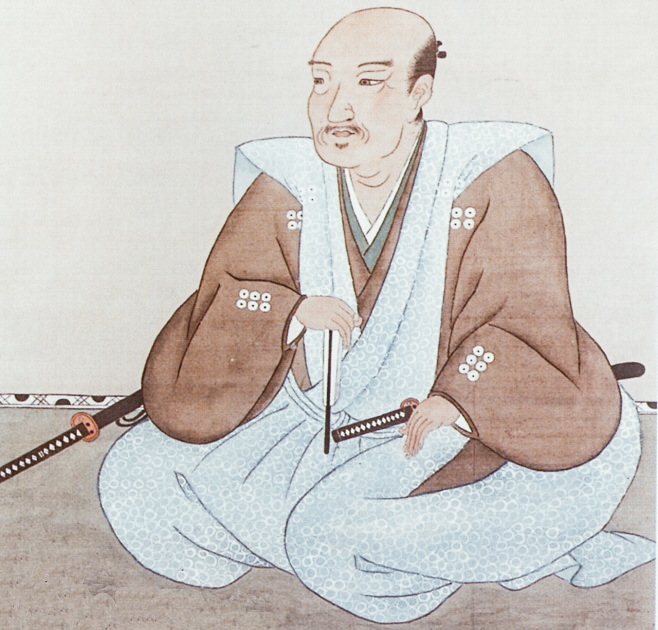
photo credits: wikipedia.org
Sanada (Yukimura) Nobushige was one of the greatest samurai of the Sengoku period. Second child of Sanada Masayuki and younger brother of Sanada Nobuyuki, he was never called "Yukimura" during his lifetime, since his real name was Nobushige. It seems that Yukimura was obtained at the end of the Edo period. Known as "Crimson Demon of War" for his blood-red banners and red armor, he was also recognized as "the greatest warrior of Japan" and even "The last Sengoku hero" by his peers.
As a young man, he was sent by his father as a hostage to the Uesugi clan in exchange for Uesugi's support against the Tokugawa. The father who later sided with Toyotomi Hideyoshi, as Uesugi had done, allowed him to return home to Ueda.
Sanada Nobushige served Hideyoshi directly. His first wife, Aki-hime, was the daughter of Otani Yoshitsugu even though adopted by Toyotomi Hideyoshi. Nobushige had seven daughters and three children with four wives, the last was born two months after his father's death.
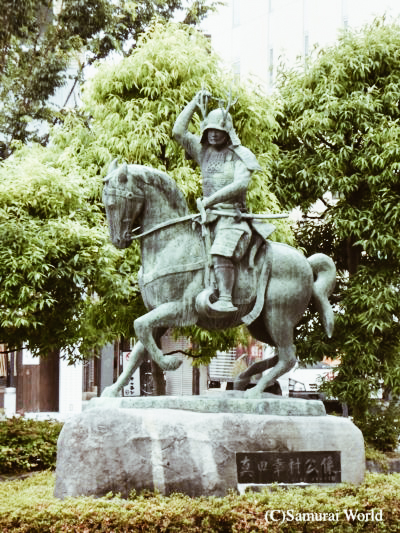
photo credits: samurai-world.com
Ueda Castle, built in 1583, was the home of the Sanada clan. The fact that it was well built was first tested in 1583 when the castle resisted the attack of a numerically superior Tokugawa force. The defeat would have been embarrassing for the Tokugawa in the future. Another similar siege of Ueda Castle in the 1600s at the time of the Battle of Sekigahara also saw Tokugawa Hidetada, son and heir of Ieyasu, who led his army along Nakasendo, strategically important. Along the way, he stopped and besieged Ueda Castle. Although there was a great distance from the battlefield of Sekigahara, events at Ueda Castle would have almost destroyed the intentions of the Tokugawa legions. The Sanada resisted long enough for Hidetada to arrive late to the battle itself, depriving Tokugawa of about 38,000 men. Nobushige commanded only 2,000 men inside the castle.
Sanada Masayuki and his son Nobushige kept Ueda's castle as an ally of Western forces, however, Sanada Nobuyuki, was fighting for the Tokugawa. This ensured that at least one member of the Sanada family would be among the winners, regardless of the outcome. This was clearly a plan to preserve the family name. Following Sekigahara, Nobushige and his father were deprived of their domain and exiled to the holy mountain, Koya.
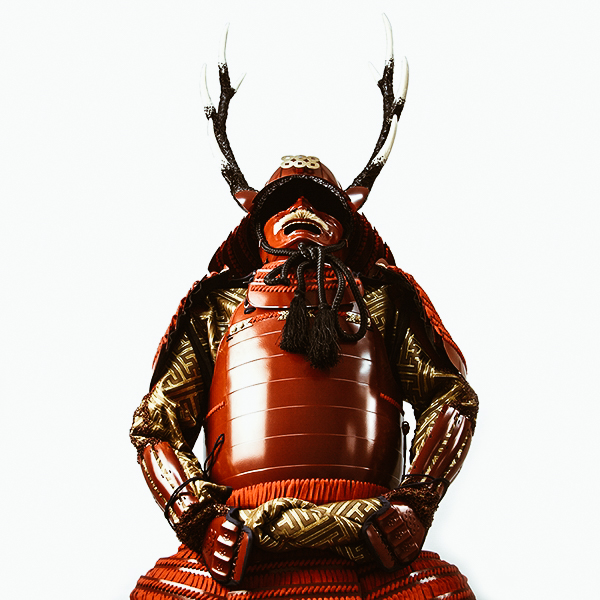
Photo Credits: tozandoshop.com
14 years after Sanada's father and son were sent into exile, Nobushige would rebel against the Tokugawa again during the winter siege of Osaka, and again the following year in the summer campaign. Nobushige had built a crescent-shaped fortress in the southwestern corner of Osaka Castle, known as Sanada Maru. The fortified outpost was surrounded by a wide, deep and dry moat. The earth of the moat was piled up inside, and along the top of this embankment, there was a simple two-story wooden wall, with platforms at regular intervals. Apparently, the Sanada Maru was armed with cannons along the walls. Sanada Nobushige and about 7,000 men repeatedly repulsed around 25,000 Tokugawa allies. Sometimes the Sanada samurai left the borders of the Sanada Maru to counter the enemy troops.
The following year, during the summer siege of Osaka, Sanada Nobushige commanded the right flank of Toyotomi's forces. On June 3, despite being completely exhausted from the battle against Date Masamune's forces, Nobushige and his men had returned to Osaka Castle to find the 150,000 Tokugawa men preparing to make one final assault. Hoping to catch them off guard and destroy their formations, Nobushige sent his son, Daisuke, to instruct Hideyori to look for opportunities to get out of the castle and attack the Tokugawa.
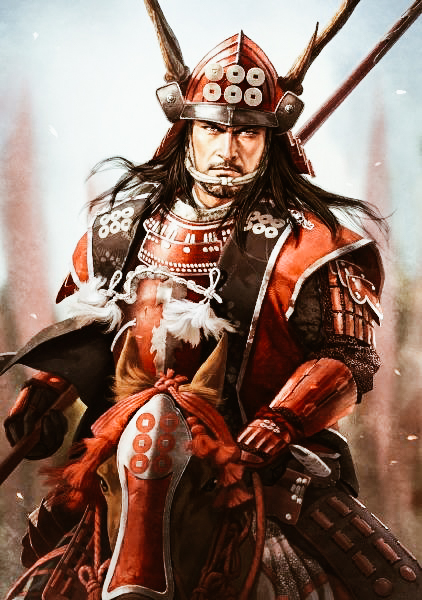
photo credits: pinterest.it
However, at the time of the attack, Hideyori appears to have lost control and failed to launch a counterattack that could have reversed the siege. The Sanada troops were overwhelmed. Seriously wounded in the fierce battle against Matsudaira Tadanao who had pledged him for most of this day, from 12 to 17, Nobushige sat under a pine tree in the Yasui Shrine grounds, unable to continue. When the wave of enemy forces approached, he calmly said his name, and saying that he was too tired to continue fighting, he allowed a Tokugawa samurai named Nishio Nizaemon to take his head. Sanada Nobushige was 47 years old. The news of his death spread rapidly and the morale of Osaka's troops fell.
The name Yukimura was known throughout Japan due to its fearless fighting.
Shimazu Iehisa of Satsuma praised Yukimura, writing "Sanada was the greatest warrior in Japan, stronger than any warrior in the stories of ancient times. The Tokugawa army was half defeated. I say this only in general."
A statue of the weary warrior is now found under the second-generation pine tree in the ground of the sanctuary.
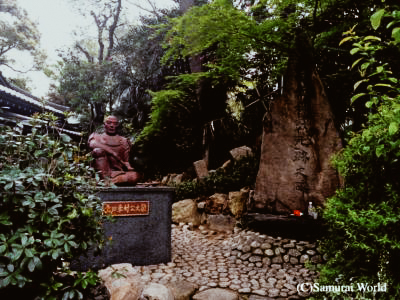
photo credits: samurai-world.com

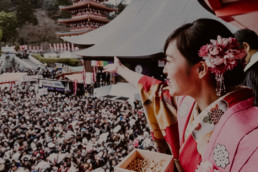
Japan Folklore: Setsubun, how to drive away the demons of winter to welcome spring

photo credits: pinterest.it
Traditional Japanese culture has always been characterized by a constant and loving observation of the natural world, its manifestations and its seasonal cycles. Therefore, the attention given to spring, the special moment when nature awakens in all its creatures the necessity of renewal, must not marvel.
This season is celebrated in Japan with the haru matsuri (春祭, spring festival), a set of events whose beginning is marked by the occurrence of Setsubun (節 分). In the traditional Japanese lunisolar calendar, in fact, every change of season is introduced by a day called, indeed, setsubun (literally "division of the seasons"). Spring setsubun, which falls on 3 February, represents the last day of winter and the day before the start of the new season. It marks the transition from "Taikan" (大寒, big cold) to "Risshun" (立春, first day of spring) and is therefore the most favorable moment for a special "cleaning" from winter burdens, which will drive away evil spirits and favor the entrance of the new life-giving energy. This is the meaning of the traditional "demon expulsion" that takes place on this day through different rituals and customs.
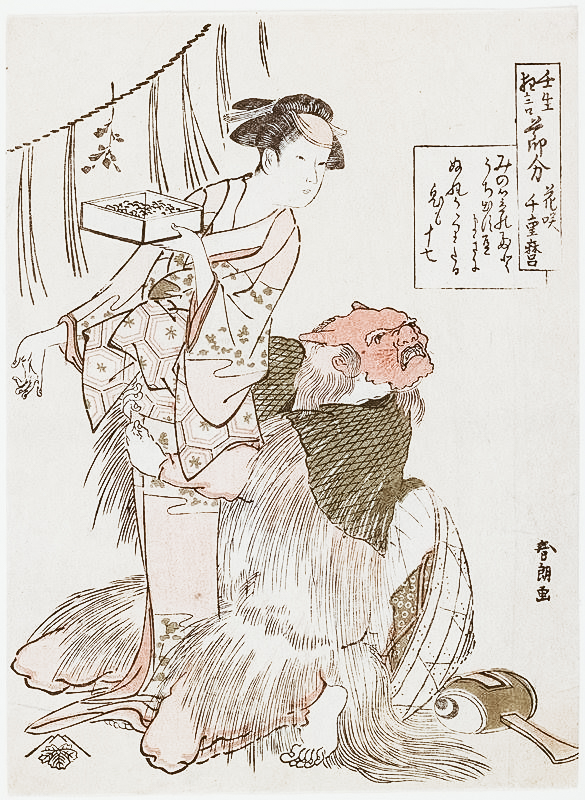
photo credits: pinimg.com
Ancient rituals and family fun
The most famous ritual is undoubtedly the mamemaki (豆 撒 き), which is the launch of soy beans. In the domestic sphere it is entrusted to Toshi Otoko (年 男, man of the year), that is the man of the family of the zodiacal sign of the lunar year entering or in his absence the oldest of the house. He has the task of driving out the harmful spirits and negativities from the house and the new year that is about to start by throwing around irimame (炒 り 豆, toasted soy beans) to the cry of "Oni wa soto! Fuku wa uchi! (鬼は外! 福は内, "Outside the demons! Inside fortune!"). In alternative, he can hurl the beans at another member of the family who plays the part of the demon wearing a mask of oni (Japanese folklore ogres). Subsequently, each member of the family must collect and eat a number of beans corresponding to their age plus one to ensure a year of success and good health (in the popular tradition, in fact, the demons are considered carriers of natural disasters and diseases).
When the oni is expelled, it is necessary to keep the evil spirits away from the house. For this reason it is possible to see in this period of the year some very special amulets, the Hiiragi Iwashi (柊 鰯), exposed at the entrance of the houses. These are holly branches that have the head of a dried sardine skewered on the end, sometimes complemented by pieces of garlic or onion, which have the purpose of keeping demons away, scared by the thorns and the pungent odor emanating from these talismans.
In both cases it is a tradition that has its roots in antiquity. Nowadays it is possible to buy "Setsubun sets" - made of oni masks and roasted beans - in any combini, but in reality the mamemaki custom would have originated in the Muromachi period (1392-1573) and seems to be inspired to an ancient legend, whose plot is still represented in the form of pantomime in the temple of Mibu-dera in Kyoto. Here the kyogen (ancient Japanese theatrical form) titled "Setsubun" is repeated several times during the day and it is said that it is sufficient to watch it to be purified by any negative or evil spirit. Its plot follows the folk tale that tells of an ogre who, in human form, goes one day to visit a widow. Thanks to its magic hammer, the ogre makes a beautiful kimono, which attracts the widow's attention. Eager to take possession not only of the kimono but also of the magic hammer, she decides to get him drunk to be able to steal them both. The ogre, however, aware of the theft, reveals his demonic nature and attacks the woman, who defends herself with the first thing that is within reach: a handful of soy beans. The oni, wounded but again in possession of his goods, flees leaving the widow safe and sound and perhaps a little wiser.

photo credits: toyokeizai.net
Knowing how to look in the right direction
A tradition of more recent origins, born in Osaka but later spread to the rest of the country, is instead linked to the ehōmaki (恵 方 巻, scroll of lucky direction). In this case, to ensure that the good luck is on our side in the year that is about to begin, it is necessary to eat a special sushi roll in a single solution, without interruptions and in silence, facing the lucky direction of the year. The act is less simple than it may seem, considering that the ehōmaki is much more often than a common sushi roll (having to contain seven ingredients to propitiate the seven gods of luck) and is 20 centimeters long. It is not worth eating it cut into pieces, because doing so would also cut luck. To perform the ritual correctly, it is therefore necessary to arm yourself with concentration, determination and a precise compass. For those interested in experimenting with this custom, the most common ingredients to obtain for the filling are cucumber, surimi, salmon, tuna, anago (sea eel), tamagoyaki (Japanese omelette), dried kanpyo strips and seasoned (Japanese pumpkin) and shiitake mushrooms, as well as rice and nori seaweed, while the lucky direction for 2019 is East-North East.
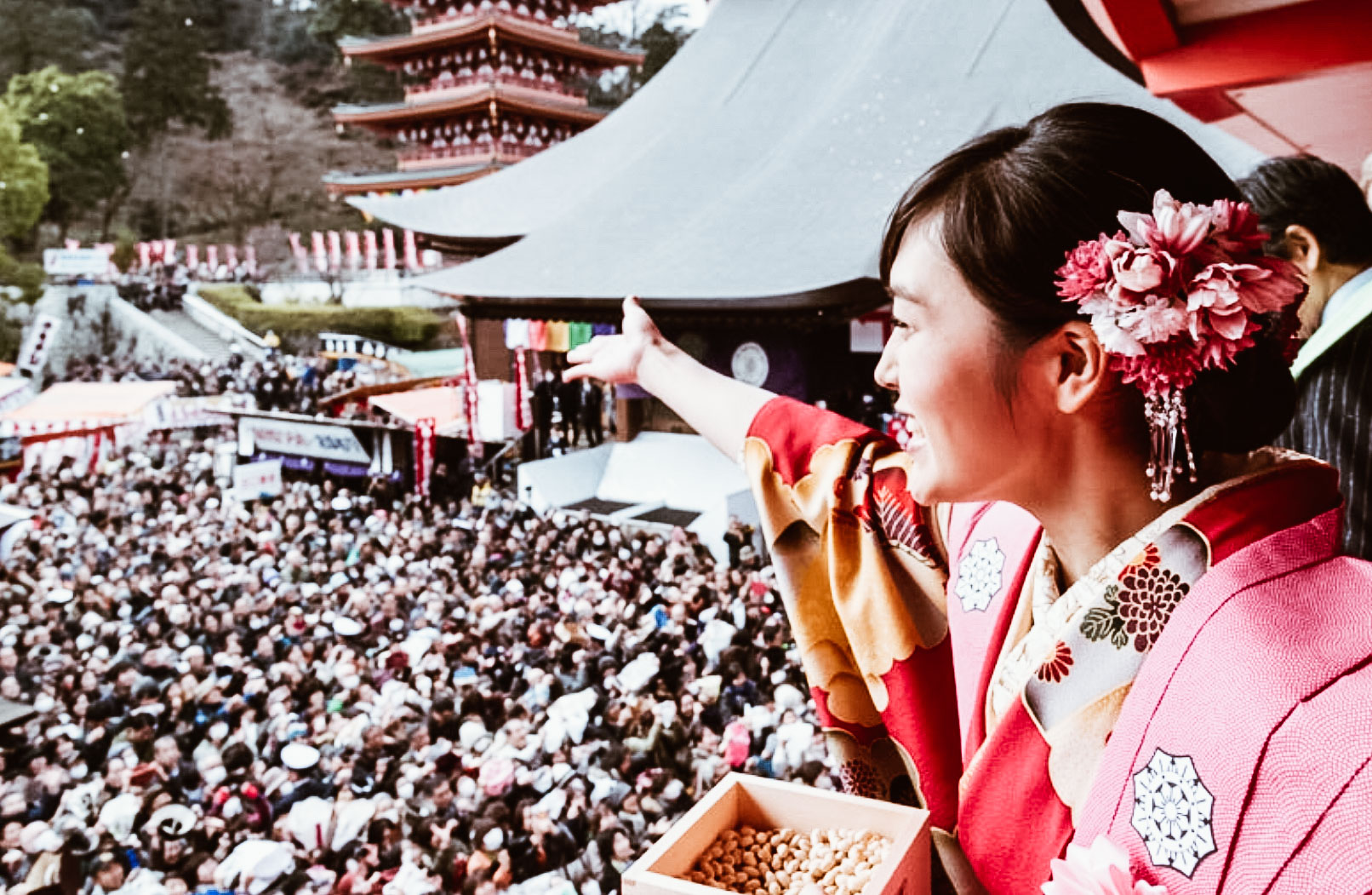
photo credits: shinsenhino.com
Festive temples
The Setsubun can be celebrated in a domestic environment or at least in a private dimension, with relatives and friends, but it is also and above all a recurrence to be lived in community. For example, schools often organize moments of recreation for children, who wear oni masks or have fun chasing adults dressed as demons while hurling beans against them. But it is especially in the temples that it is possible to experience the collective dimension of the party, participating in the events specially created for this day. First of all, of course, the mamemaki, carried out by the monks who throw soy beans from the top of the stages on the crowd gathered for the event. In some temples more shifts are organized for this ritual, reserving some special ones for children, who in addition to the beans receive sweets or small gifts. In addition to the monks, celebrities are often present, such as sports champions, personalities of the entertainment world, actors of the kabuki theater, geisha and maiko, television celebrities, who add a note of attractive glamor to traditional festivities. Among the latter we must remember the theatrical performances, the various purification ceremonies or even the striking archery performances, in which the archers throw their arrows at targets that have demon-like features.
In short, Setsubun is the ideal day for those who wish to live in company a start of the year that helps to renew their energies and for families who have the opportunity to spend a moment of joy together, something that always remains the best talisman against all evil at every latitude.