





November 2nd and Obon: two ways to remember those we have lost
Remembering those who came before us is a gesture that belongs to every culture. What changes are the colors, the sounds, the words. Above all, what changes is the tone. Between late October and early November, in Italy we prepare for November 2nd, the Commemoration of the Deceased: cemeteries, chrysanthemums, silence. Around the same time, Japan celebrates Bunka no Hi, Culture Day, on November 3rd. There, the memory of the departed has another appointment: Obon (お盆).
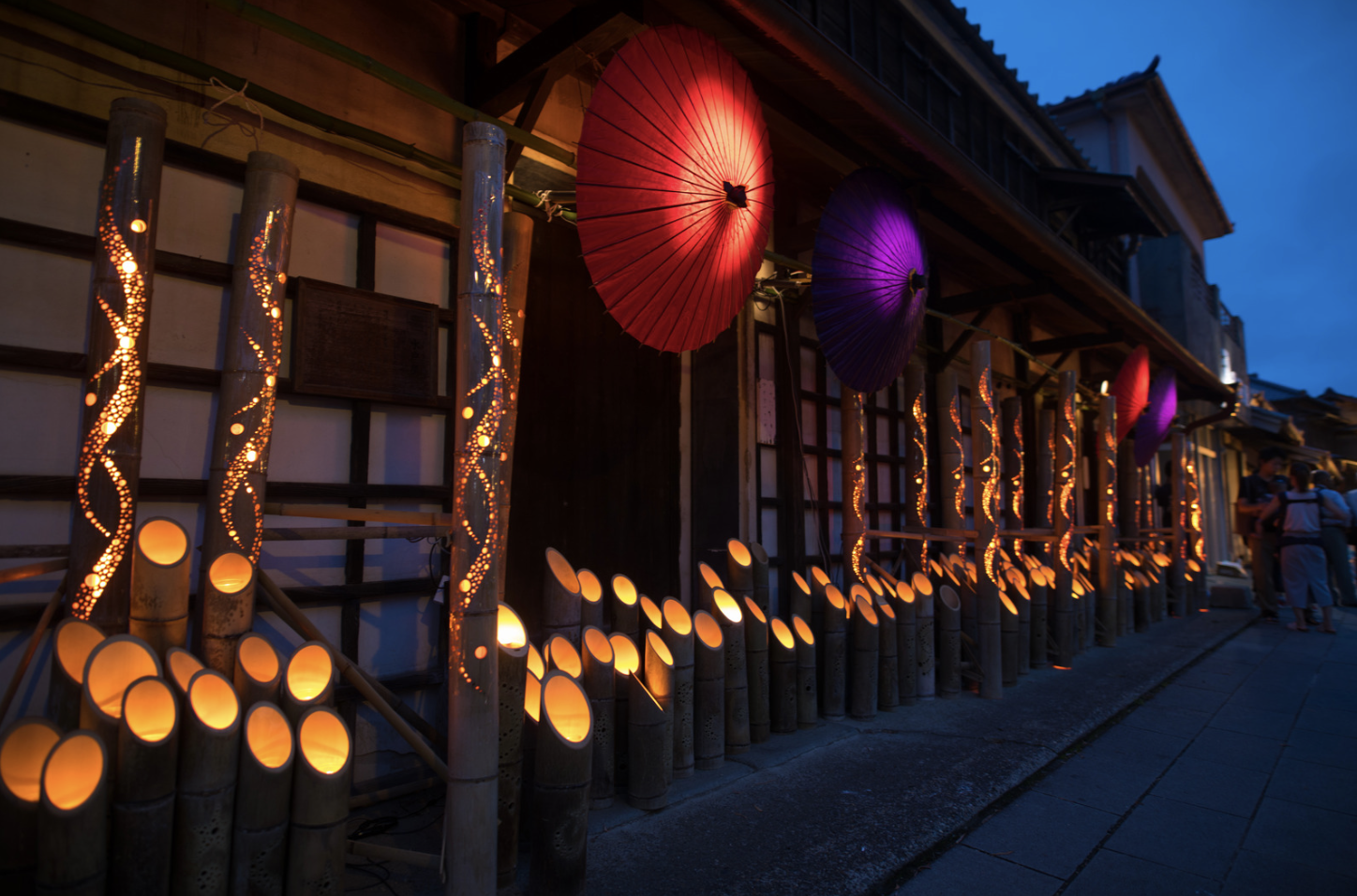
When the spirits return home
Obon is celebrated in mid-August across most of Japan and in July in Tokyo and a few other regions. According to a tradition that blends Buddhist teachings with folk beliefs, during those days the spirits of ancestors return to visit their families. Small welcome fires, called mukae-bi, are lit in front of homes to guide them back. Family altars are prepared with offerings of fruit and sweets, relatives gather, and graves are visited. In public squares, people dance the Bon Odori, often wearing yukata. At the end, farewell fires (okuri-bi) and paper lanterns set adrift on rivers (tōrō nagashi) accompany the souls on their journey back.
It is not a celebration in the lighthearted sense: there is reflection, gratitude, and the visiting of family graves. Yet the atmosphere feels more like a welcoming than a goodbye.
What about Italy?
Here, the simple contrast between “our solemnity and their festivity” doesn’t entirely hold up. November 2nd has a quiet, composed side, the one most of us know best. But in Sicily, on the night between November 1st and 2nd, children wake up to gifts brought by their deceased relatives, alongside traditional frutta martorana and sweets. In Sardinia, traditions like Is Animeddas and Su Mortu Mortu see children knocking on doors. In Lombardy and Tuscany, bakers prepare pan dei morti. Even here, in certain places, remembrance carries the flavor of shared meals, play, and family gatherings.
Two distant countries, a similar gesture: inviting the departed back home for a day, and welcoming them with something to share.
What this has to do with our work
We share this because it reflects what we see every day. The underlying feeling is identical, but the code changes. What represents respect in one culture can be misinterpreted as coldness or, conversely, casualness in another. And that code varies even within the same country: Italy is not a monolith, and Europe even less so. Cultural barriers exist. When we learn to recognize and understand them, they stop being walls and become the foundation for building lasting relationships.
Is there a Japanese tradition, whether related to memory or any other aspect of the culture, that has always fascinated you?